
UN Rapporteur Warns That Rapid Expansion of Madrassas in Afghanistan Threatens Social Cohesion and Deepens Education Crisis

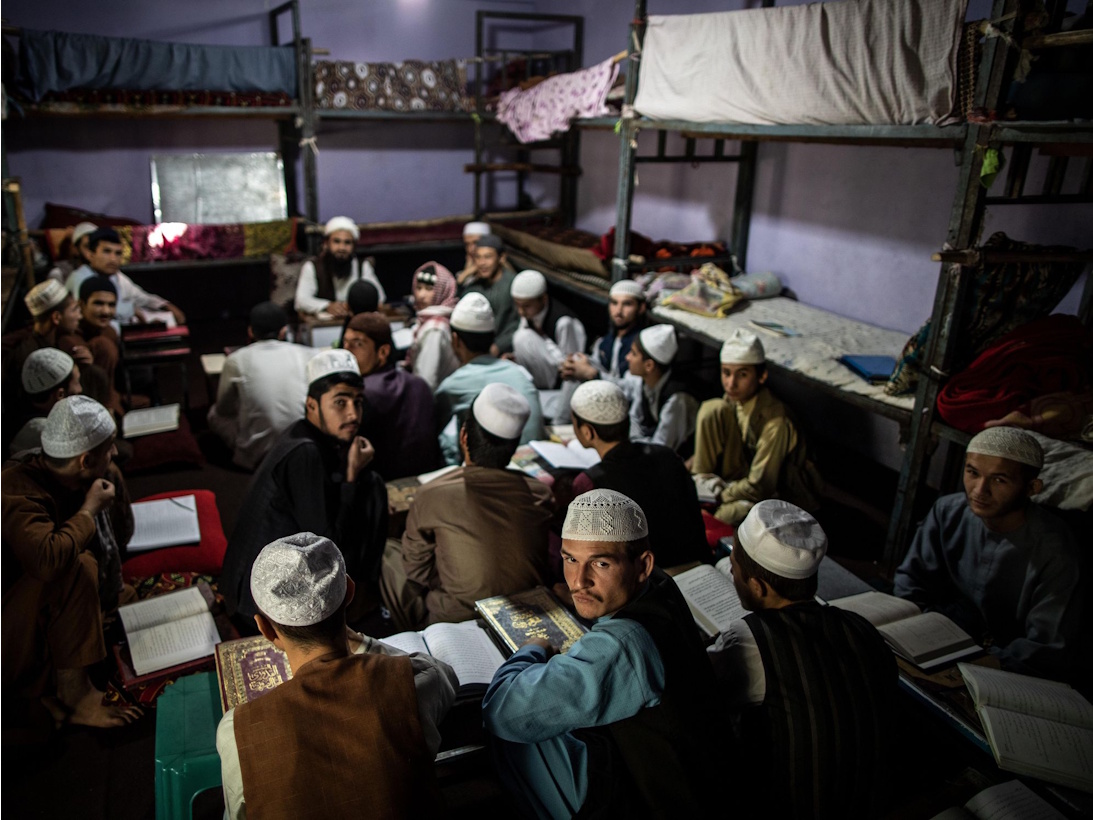
The unprecedented expansion of religious seminaries known as madrassas under Afghanistan’s current de facto authorities risks permanently altering the country’s social fabric and exacerbating an already severe education crisis, warns Richard Bennett, the UN Special Rapporteur on the situation of human rights in Afghanistan, in a newly released report.
While Bennett acknowledges that religious instruction has historically coexisted alongside formal schooling in Afghanistan, he stresses that the current growth of madrassas is qualitatively different. Rather than complementing the national education system, these institutions are increasingly supplanting it particularly in rural and underserved areas where state-run schools have closed or come under pressure.
According to the report, the number of registered madrassas has surged from approximately 5,000 prior to the Taliban’s return to power in August 2021 to more than 23,000 by September 2025. This nearly fivefold increase, Bennett notes, is not organic but reflects a deliberate policy of centralising religious education under a single, state-aligned curricular framework. The report cautions that this top-down expansion, combined with severe restrictions on secular education, especially the ongoing prohibition of girls’ access to secondary schools and universities, could have enduring socioeconomic repercussions for the country.
For millions of Afghan girls now barred from formal secondary and tertiary education, madrassas have become one of the few remaining pathways to any form of continued learning. However, Bennett underscores that this access comes with significant caveats. Concerns persist regarding the narrow scope of instruction heavily weighted toward Quranic memorisation, Islamic jurisprudence, and Arabic as well as the restrictive environments within many institutions. While some madrassas have begun incorporating basic subjects such as mathematics and English, the report notes that these additions are inconsistent and often superficial.
Bennett’s findings align with separate investigative reporting, including a recent Al Jazeera feature based on news-agency material, which documented a sharp rise in madrasa enrolment as Afghan families seek alternatives amidst the collapse of public education infrastructure. The same report highlighted that many parents, despite their desperation, remain uneasy about the ideological and social influence these schools exert over their children.
Indeed, Bennett’s report cites repeated testimonies from families who have observed marked shifts in the attitudes and behaviour of children attending madrassas. Women and girls, in particular, have reported that some male relatives studying in these institutions have become more controlling toward female family members dictating dress codes, restricting mobility, and criticising everyday conduct. In one striking example, a young girl recounted how her sister, who attended a madrasa in Kabul and had a passion for painting, was told by a teacher that drawing was contrary to Sharia law; she subsequently abandoned her artistic pursuits.
Such anecdotal evidence, Bennett warns, points to a broader societal transformation. The growing influence of religious education, he argues, must be assessed in tandem with the systematic dismantling of Afghanistan’s formal education system. The UN has repeatedly called for inclusive, equitable, and non-discriminatory access to education for all Afghan women and girls, yet the de facto authorities continue to defy international appeals by maintaining bans on female secondary and higher education a policy widely condemned as gender-based discrimination and possibly a crime against humanity.
Complementing Bennett’s assessment, recent research by the HAMRAH Network a regional civil society organisation has characterised the madrasa boom as the creation of a parallel, state-endorsed religious education system. By September 2025, HAMRAH documented over 23,000 registered madrassas serving more than 3.65 million students. Their analysis warns that this parallel system not only undermines the prospects for a unified national curriculum but also carries profound implications for gender relations, social mobility, and long-term stability in a country already fractured by decades of conflict.
Bennett has presented these findings in multiple international human rights forums, including the UN Human Rights Council, urging member states to intensify diplomatic pressure and explore targeted accountability measures. He has also called for increased support for community-based and informal education initiatives that operate outside state control, as well as for the documentation of human rights violations linked to education policies.
The expansion of religious seminaries unfolds against the backdrop of a deepening educational emergency. According to UNESCO, more than 2.5 million Afghan girls remain out of secondary school alone, and the number of university-enrolled women has plummeted by over 90% since 2021. Human rights organisations warn that this systematic exclusion is not only depriving a generation of women and girls of their fundamental right to learn but also shrinking Afghanistan’s future pool of teachers, doctors, engineers, and public servants undermining any prospect of sustainable recovery.
Bennett’s final warning is stark: the consequences of Afghanistan’s shifting educational landscape may extend far beyond classroom doors. If left unaddressed, the current trajectory could reshape family dynamics, entrench patriarchal norms, restrict economic participation, and stifle social development for decades to come. He stresses that without urgent and concerted international action, Afghanistan risks trading one form of crisis for another exchanging a collapsed state system for a theologically driven one that offers little room for critical thought, diversity, or the aspirations of its youth, especially its girls and young women.
Our Pashto-Dari Website

Support Dawat Media Center
If there were ever a time to join us, it is now. Every contribution, however big or small, powers our journalism and sustains our future. Support the Dawat Media Center from as little as $/€10 – it only takes a minute. If you can, please consider supporting us with a regular amount each month. Thank you
DNB Bank AC # 0530 2294668
Account for international payments: NO15 0530 2294 668
Vipps: #557320

Comments are closed.