
‘We Walk for Water’: Drought and Declining Groundwater Grip Northwestern Afghanistan

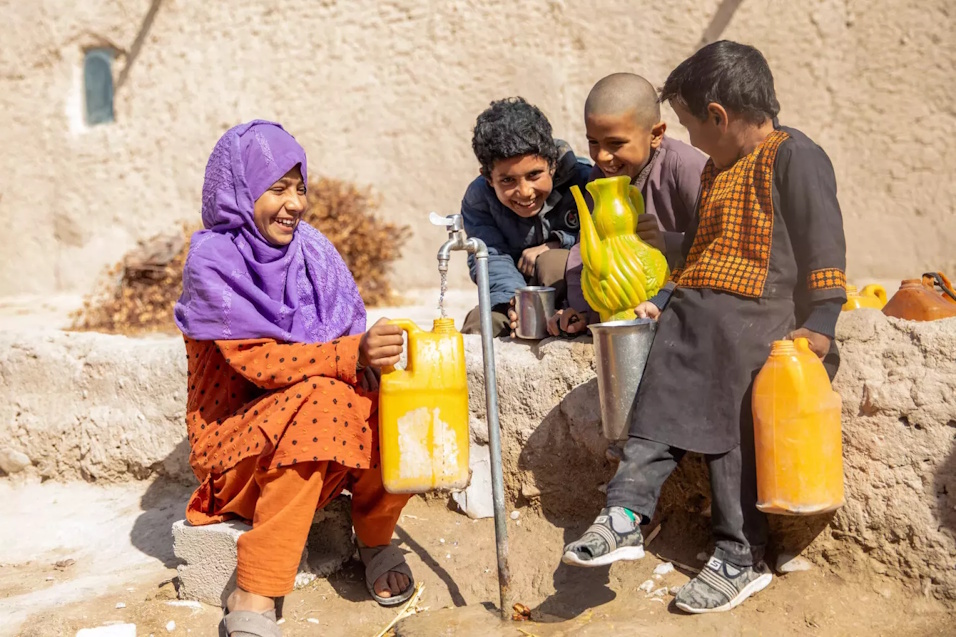
BADGHIS, Afghanistan – For 77-year-old Abdul Rahim, each day begins with a familiar, grueling trek: a one-kilometer walk under the rising sun to the only well in his village. He joins a long queue of neighbors, waiting hours to fill a few plastic containers with water, which he then loads onto a donkey for the slow journey back home.
“We have to transport the water home by donkey because the well is far away,” said Abdul Rahim, a resident of the Ab Kamari district in Badghis province. “There is only one well in our village, and everyone lines up to get a little water. More than 600 families depend on this single source.”
Residents across Badghis say a combination of falling groundwater tables, scorching summer heat, and the collapse of ancient irrigation systems has pushed their communities into a chronic water emergency. What was once a seasonal challenge has now become a year-round crisis, forcing families especially women and children to dedicate hours each day to a basic survival task, sacrificing time for work, education, and farming.
Local residents told Amu that access to potable water has overtaken employment and security as the region’s most pressing concern. In several villages, the famed karez system a sophisticated network of underground tunnels that has channeled mountain meltwater to arid plains for over a millennium has run completely dry. These traditional waterways, once the lifeblood of Badghis’ agriculture, now lie as cracked, silent tombs, their tunnels choked with silt and their wells empty.
“Our karez have completely dried up,” said Mohammad Naim, another resident. “People here no longer have access to enough water for drinking, let alone for irrigating their wheat and almond crops. We are facing severe hardship.”
The agricultural toll is already visible. Farmers report that orchards are withering and rain-fed barley has failed, pushing many families deeper into poverty. With no surface water and vanishing groundwater, some villagers have resorted to digging deeper wells often up to 40 meters only to find brackish or unusable water. Those who cannot afford the excavation costs are left to rely on shared, overburdened wells that are rapidly depleting.
Compounding the crisis is a profound lack of external support. Residents told Amu that they have received little to no assistance from aid organizations or government institutions, despite the Taliban administration’s public pledges to tackle water scarcity.
“We have almost no access to water, and no one is paying attention to our situation,” said Sharafatullah, a young father from a nearby hamlet. “We see trucks carrying water to the city centers, but the remote villages are forgotten.”
In a puzzling twist, locals noted that Badghis experienced relatively heavy snowfall and rainfall this past winter a season that typically replenishes aquifers. However, groundwater levels have continued to drop sharply this year, raising fears that the reserves are being permanently depleted due to over-extraction and porous geological layers that fail to retain moisture.
“The rain helps the surface for a few weeks, but it doesn’t reach the deep water tables anymore,” explained Abdul Rahim, pointing to the dusty ground. “The heat comes, and everything evaporates. We are afraid this summer will be the worst we have ever seen.”
Afghanistan ranks among the countries most vulnerable to the accelerating effects of climate change. According to the UN Development Programme, rising average temperatures, erratic rainfall patterns, and intensifying droughts are reshaping the country’s rural landscape. In Badghis one of the poorest provinces, bordering Turkmenistan these climatic shocks are colliding with decades of underinvestment in water infrastructure, leaving communities with few adaptive options.
Environmental experts warn that without urgent intervention—such as rehabilitating karez systems, building small-scale water retention basins, and enforcing groundwater extraction limits the crisis will escalate. But for the families of Ab Kamari, such solutions seem distant. For now, survival means joining the daily line, waiting under the blazing sun, and hoping the well does not run dry before their turn comes again.
Our Pashto-Dari Website

Support Dawat Media Center
If there were ever a time to join us, it is now. Every contribution, however big or small, powers our journalism and sustains our future. Support the Dawat Media Center from as little as $/€10 – it only takes a minute. If you can, please consider supporting us with a regular amount each month. Thank you
DNB Bank AC # 0530 2294668
Account for international payments: NO15 0530 2294 668
Vipps: #557320

Comments are closed.