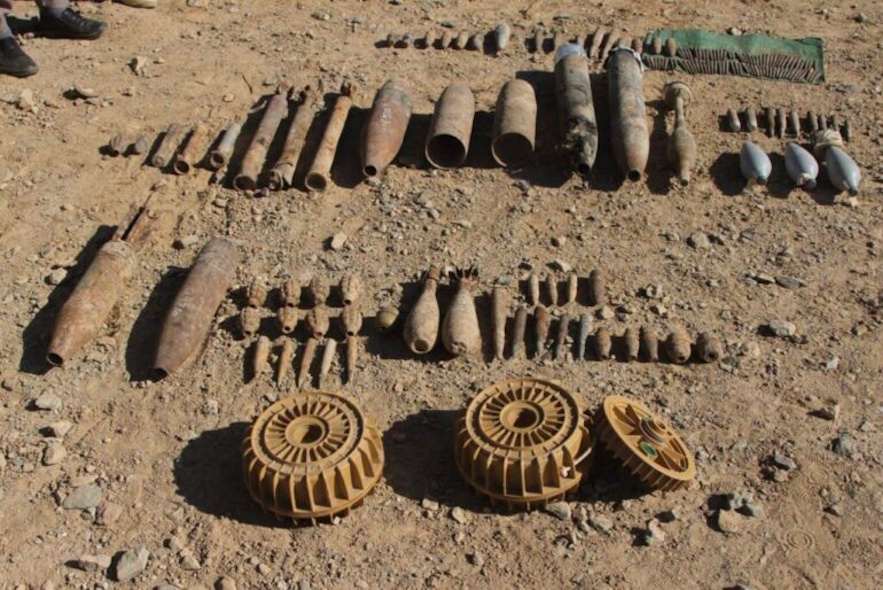
The United Nations Assistance Mission in Afghanistan (UNAMA) has reported that Afghanistan holds the grim distinction of ranking third in the world for casualties caused by unexploded ordnance (UXO). Decades of successive conflicts have littered the country with hidden explosives that continue to claim and devastate lives long after the fighting has ceased.
In a recent statement on its official Facebook page, UNAMA detailed the ongoing crisis. These lethal remnants of war—including landmines, artillery shells, grenades, and cluster munition submunitions—contaminate fields, roads, and residential areas. The mission emphasized that while active conflict has diminished, the threat from these dormant explosives remains pervasive and deadly.
Children Pay the Highest Price
The report highlights a particularly tragic dimension: children constitute approximately 80 percent of all UXO victims. Curious and often unaware of the danger, children are frequently injured or killed while playing with or near the unidentified devices. These incidents result in catastrophic loss of life, severe injuries, amputations, and lasting trauma for families and communities.
A Call for Sustained Support and Awareness
UNAMA underscored that the work of non-governmental demining organizations is critical to saving lives. These groups perform the dangerous, daily task of locating and safely clearing landmines and UXO, while also conducting essential community education programs.
The mission issued a urgent appeal for increased and sustained financial support for these humanitarian demining efforts. It stressed that enhanced resources are needed to accelerate clearance operations and expand public awareness campaigns, particularly in high-risk areas.
“Awareness-raising and timely action on the risks posed by unexploded ordnance could save many lives,” UNAMA stated. The combination of effective clearance and community education is seen as the most effective strategy to prevent further tragedies.
A Legacy of War
Afghanistan’s landscape is one of the most heavily contaminated by explosive remnants of war globally. The legacy stems from the Soviet-Afghan War in the 1980s, subsequent civil conflicts, and more recent international military operations. Despite years of demining efforts, the scale of contamination means that for countless Afghans, the daily risk of encountering an explosive device remains a harrowing reality, severely hindering safe movement, agricultural use of land, and overall post-conflict recovery.





Comments are closed.