

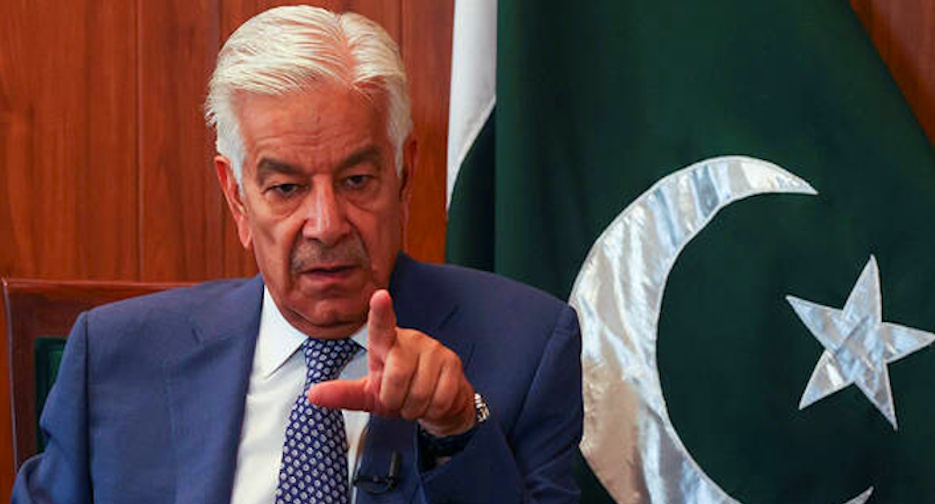
Pakistan’s Defence Minister Khawaja Asif sat before the cameras, his voice steady but his message sharp. In a matter of days, he said, before the holy month of Ramadan casts its quiet over the land, Pakistan may be left with no choice but to act—unilaterally, if necessary—against militants operating from Afghan soil.
The threat was not new. For years, Pakistan has watched the Tehrik-e-Taliban Pakistan, or TTP, find sanctuary just across the border, in provinces where the reach of Kabul’s Taliban rulers remains thin or deliberately indifferent. What has changed, Asif suggested, is the frequency. The boldness. The cost.
“We are still in contact with the Afghan authorities,” he told ARY News. “But dialogue alone has not stopped the bloodshed.”
In recent months, militant attacks have spiked across Pakistan with an intensity not seen in years. Not only in the rugged tribal districts of Khyber Pakhtunkhwa, where security forces have long fought an invisible enemy, but now in the heart of the capital itself.
It was a Friday afternoon when a young man approached a Shiite mosque in Islamabad. He exchanged fire with guards at the gate, forced his way into the crowded prayer hall, and detonated his vest among worshippers bowing in supplication. When the smoke cleared, 31 lay dead. More than 160 were wounded. The attack sent a tremor through the country—not just for its brutality, but for its location.
If no militant sanctuary was off limits, what was?
Asif did not detail what form Pakistani action might take. He did not need to. Military officials have long signaled that surgical strikes or aerial operations—similar to those conducted in the past against Baloch separatist groups on Iranian soil—remain viable options. But he made one thing clear: if the interim government in Kabul cannot or will not rein in the TTP and its affiliates, then the consequences will be theirs to bear.
Still, he paused long enough to add a qualification. “Our preference is peace. Our preference is dialogue.”
It was a small opening, but a meaningful one. Even now, with funerals underway and the wounded still fighting for breath in overcrowded hospitals, Pakistan has not closed the door entirely. The question is whether anyone on the other side is willing to answer.
Our Pashto-Dari Website

Support Dawat Media Center
If there were ever a time to join us, it is now. Every contribution, however big or small, powers our journalism and sustains our future. Support the Dawat Media Center from as little as $/€10 – it only takes a minute. If you can, please consider supporting us with a regular amount each month. Thank you
DNB Bank AC # 0530 2294668
Account for international payments: NO15 0530 2294 668
Vipps: #557320

Comments are closed.