

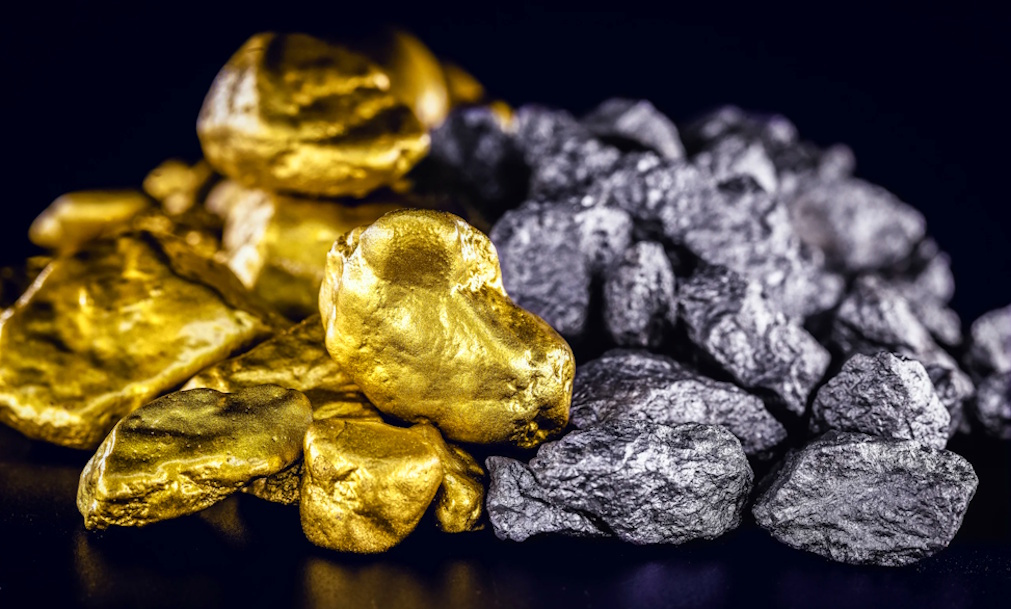
Gold and silver prices have suffered steep declines, defying traditional safe-haven dynamics as investors prioritize rising interest rate expectations over ongoing geopolitical turmoil in the Middle East.
Gold recorded one of its sharpest drops in decades, falling to its lowest level of 2026. The sharp sell-off underscores a shifting market dynamic: despite heightened tensions in the Middle East and surging oil prices, bullion has been undermined by expectations of tighter global monetary policy. Analysts point to a combination of persistent inflation fears, the likelihood of further interest rate hikes, and profit-taking as the primary drivers behind the collapse.
Other precious metals followed suit, posting dramatic losses. Silver tumbled 8.9% to settle at $61.76 per ounce, while platinum plunged 9% to $1,749. Palladium also declined, dropping 5.2% to $1,330.
On Monday, spot gold fell approximately 5.8% to $4,226 per ounce, marking its ninth consecutive session of losses. Prices fluctuated wildly during the trading day, swinging between $4,160 and $4,536, and finished roughly 6% lower than Friday’s close. The decline also pushed gold below the $4,300 threshold for the first time since December 2025. U.S. futures markets mirrored the weakness, with April gold contracts sliding 7.5% to around $4,231. Last week, gold posted a loss of over 10% its largest weekly drop since 1983.
The Interest Rate Factor
Escalating tensions in the Middle East, particularly mounting pressure on Iran, have driven oil prices to a range of $100–$110 per barrel. While such geopolitical risk would typically boost gold’s safe-haven appeal, it has instead fueled inflation concerns, reinforcing expectations that the Federal Reserve and other major central banks will maintain or increase interest rates.
Gold, which offers no yield, becomes less attractive in a rising-rate environment as investors can earn meaningful returns from interest-bearing assets such as bonds or high-yield savings accounts. The recent sell-off has been exacerbated by forced liquidation, with investors selling gold to cover losses in other asset classes amid broader market volatility. Additionally, concerns over potential energy supply disruptions including the threatened closure of the Strait of Hormuz have added to inflationary pressures and raised production costs across industries, further complicating the outlook.
Broader Market Reaction
Asian stock indices fell sharply in response to the dual shock of geopolitical instability and tighter monetary policy expectations, while the U.S. dollar strengthened as investors sought safety in dollar-denominated assets. Market-implied probabilities from futures trading indicate that the Federal Reserve is now more likely to hike rates than to cut them before the end of 2026 a stark reversal from earlier expectations of easing.
In the near term, a potent mix of geopolitical risks, rising energy prices, and a hawkish shift in global monetary policy is placing significant downward pressure on gold and other precious metals. For investors, the current environment signals a departure from traditional haven behavior, introducing heightened uncertainty and challenging long-held assumptions about portfolio diversification.
Our Pashto-Dari Website

Support Dawat Media Center
If there were ever a time to join us, it is now. Every contribution, however big or small, powers our journalism and sustains our future. Support the Dawat Media Center from as little as $/€10 – it only takes a minute. If you can, please consider supporting us with a regular amount each month. Thank you
DNB Bank AC # 0530 2294668
Account for international payments: NO15 0530 2294 668
Vipps: #557320

Comments are closed.