
First Filipino novel translated into Arabic is Jose Rizal’s classic ‘Noli Me Tangere’

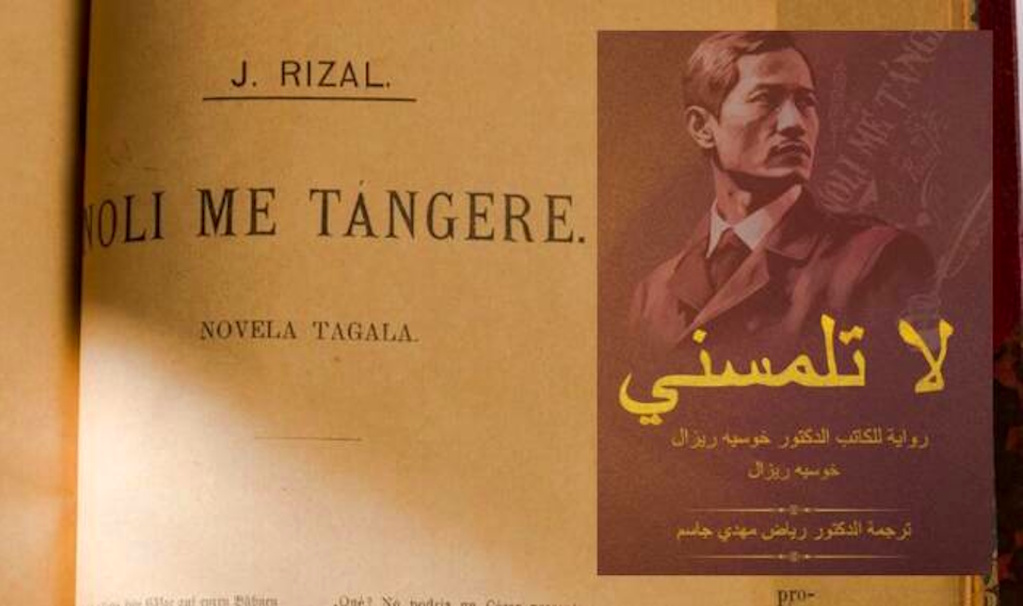
MANILA: In a landmark moment for cultural exchange, the classic Filipino novel “Noli Me Tangere” by national hero Dr. José Rizal has become the first literary work from the Philippines to be translated into Arabic. The translation is scheduled for a formal release in mid-2026.
Rizal, a polymath, nationalist, and revolutionary writer, is a foundational figure in Philippine history. His writings and activism, which exposed the injustices of colonial rule, directly inspired the movement that eventually won independence from Spain. Noli Me Tangere (Latin for “Touch Me Not”), originally written in Spanish, was first printed in Berlin in 1887. Its subversive critique of power meant it could only be published in the Philippines in 1899—three years after Rizal’s public execution by the Spanish colonial government on charges of sedition and rebellion.
The novel, a cornerstone of Philippine literature and a mandatory reading for students, is a searing social critique. It follows the story of the idealistic young Crisostomo Ibarra, who returns to the Philippines after his education in Europe, only to confront the brutal realities of clerical abuse, colonial oppression, and deep-seated social inequities under Spanish rule.
While the novel has been translated into dozens of languages worldwide, the new Arabic edition marks a significant diplomatic and cultural milestone. The project was commissioned by the Philippine Embassy in Iraq, led by Ambassador Charlie Manangan, who initiated the effort in 2024.
“The timing is particularly meaningful,” Ambassador Manangan told Arab News. “For Iraq specifically, this is our way of commemorating 50 years of formal diplomatic relations between our nations. Beyond this, however, translating the ‘Noli’—which is one of the most important literary works in the Philippines—introduces Rizal and the historical context that shaped our nation to the entire Arabic-speaking world.”
The translation also serves to bridge cultures for the vast overseas Filipino community. “This is important because of the significant number of Filipinos living and working in Arabic-speaking countries,” Manangan added. “Through Rizal, we introduce a bit of Philippine history and culture, fostering a deeper understanding among our hosts.”
The complex task of translation was entrusted to Dr. Reyadh Mahdi Jasim Al-Najjar, former head of the Spanish Department at the University of Baghdad’s College of Languages. Dr. Al-Najjar worked directly from Rizal’s original 19th-century literary Spanish text—a specialized and rare skill.
“As a direct translation from the source language, it captures the nuances and historical context of Rizal’s prose,” explained Philippine Embassy Vice Consul Anthon Cayaco. “Dr. Al-Najjar’s ability to translate Rizal’s intricate Spanish directly into Arabic is a feat by itself. It is very rare to find a scholar with such a command of both classical literary forms.”
The Philippine government announced the completion of the translation during the 2024 Christmas holiday season. The forthcoming publication, slated for 2026, is poised to open a new chapter in Philippine-Arab literary dialogue, making a pivotal Asian revolutionary text accessible to over 400 million Arabic speakers for the first time.
Our Pashto-Dari Website

Support Dawat Media Center
If there were ever a time to join us, it is now. Every contribution, however big or small, powers our journalism and sustains our future. Support the Dawat Media Center from as little as $/€10 – it only takes a minute. If you can, please consider supporting us with a regular amount each month. Thank you
DNB Bank AC # 0530 2294668
Account for international payments: NO15 0530 2294 668
Vipps: #557320

Comments are closed.