

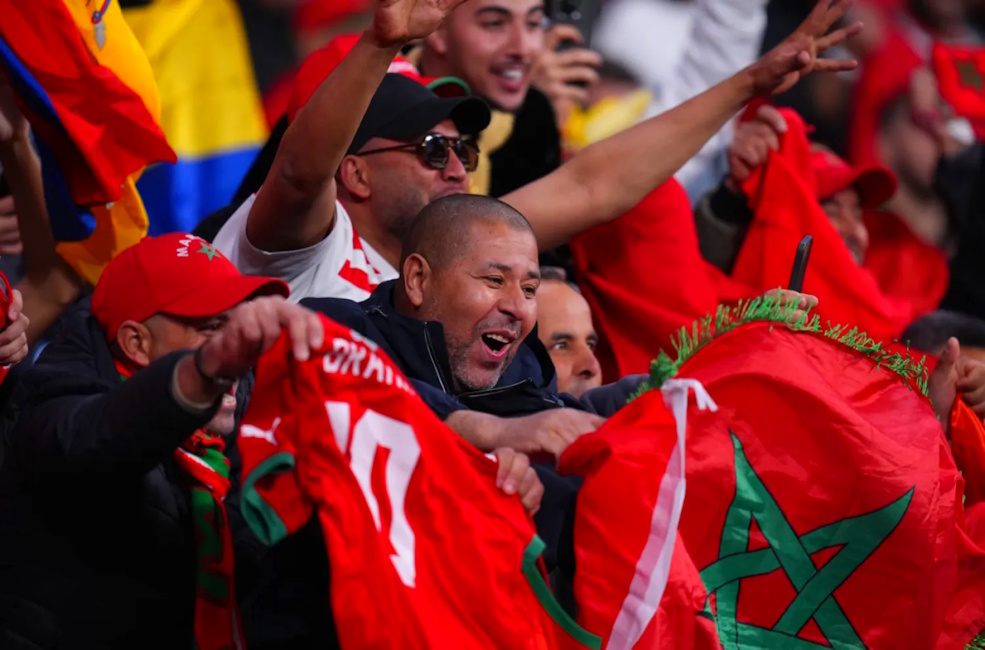
Five-time champion Brazil faces African powerhouse Morocco in what promises to be a blockbuster Group C clash at this summer’s World Cup. Joining them are two emotional returnees: Scotland and Haiti, both ending long absences from football’s biggest stage.
All group matches will be played across the United States, with Brazil headlining in New York, Philadelphia, and Miami. Scotland will play both Haiti and Morocco in Boston, while Haiti and Morocco will meet in Atlanta.
Brazil: The Weight of History and Hope
Brazil, the most successful nation in World Cup history, last lifted the trophy in 2002. Since then, the quest for a sixth title has become a national obsession tinged with trauma. The Seleção has been eliminated in the quarterfinals at every tournament since except in 2014, when, as host nation, it reached the semifinals only to suffer a humiliating 7–1 loss to Germany on home soil.
Four years ago in Qatar, Croatia sent Brazil home in a penalty shootout, adding another chapter of heartbreak.
This time, Brazil will be led by two of La Liga’s brightest stars: Real Madrid’s Vinícius Júnior and Barcelona’s Raphinha. However, Madrid forward Rodrygo has been ruled out of the tournament due to a knee injury, a significant blow to the attack’s depth.
Brazil’s road to the World Cup was rocky. The team underperformed in qualifiers, including stinging losses to archrival Argentina, prompting the Brazilian football confederation to recruit veteran coach Carlo Ancelotti from Real Madrid. While Ancelotti steadied the ship and guided the team across the finish line, Brazil finished only fifth in South American qualifying its lowest position since the current format was introduced.
Ancelotti has won five Champions League titles, but his World Cup experience is limited. In 1994, he served as an assistant manager for Italy under Arrigo Sacchi during the tournament in the United States the same event where Italy lost the final to, ironically, Brazil. Now, 30 years later, Ancelotti returns to American soil, this time as the man in charge of the tournament’s most decorated nation.
Morocco: African Trailblazers in Transition
Morocco arrives as the continent’s standard-bearer after finishing fourth at the last World Cup the best result ever by an African team. In Qatar, the Atlas Lions beat Spain in the round of 16 and Cristiano Ronaldo’s Portugal in the quarterfinals before falling to eventual runner-up France in the semifinals.
But their buildup has been anything but smooth. Morocco hosted the Africa Cup of Nations in December and January, a chaotic tournament that ended in controversy. The team lost the final to Senegal, but in March, the Confederation of African Football overturned the result, ruling that Senegal had forfeited the final by leaving the field without the referee’s authorization. Morocco was declared champion, though the decision remains bitterly disputed.
Coach Walid Regragui, the architect of Morocco’s historic World Cup run, quit after the final. In his place, Morocco will have a new man in charge at the World Cup: Mohamed Ouahbi, who led Morocco’s under-20 team to the Youth World Cup title. The transition raises questions about continuity, but also signals Morocco’s long-term ambition. The nation is set to co-host the 2030 World Cup with Spain and Portugal, and this summer’s performance will be seen as a crucial dress rehearsal.
Haiti: The Underdogs Return
The Caribbean nation is set to make only its second World Cup appearance, and first since 1974, after winning its CONCACAF qualifying group. That debut campaign ended in three consecutive losses against Italy, Poland, and Argentina. This time, with Brazil and Morocco awaiting, Haiti faces another steep climb.
Coached by Frenchman Sébastien Migné, Haiti currently sits 83rd in FIFA’s world rankings ahead of only New Zealand among the 48 qualified teams. But rankings don’t tell the full story of a resilient squad that scraped and fought its way back to the global stage.
The team will be led by 32-year-old Duckens Nazon, the joint-top scorer in CONCACAF qualifying with six goals. His most memorable moment came off the bench: a hat trick in a 3–3 draw at Costa Rica that kept Haiti’s dream alive. For a nation enduring profound hardship off the pitch, the World Cup offers a rare moment of collective pride and escape.
Scotland: Breaking a 26-Year Drought
Scotland will play in its first World Cup since 1998, thanks to a dramatic last-gasp win over Denmark in its final qualifier last year. The 4–2 victory at Hampden Park was a cathartic release for a nation that had come painfully close in previous cycles.
The team will be led by Scott McTominay, who scored one of the goals on that famous night. Coach Steve Clarke, in charge since 2019, will become the first man to lead Scotland at three major tournaments. While the Scots were eliminated in the group stage at both the 2020 and 2024 European Championships, Clarke has instilled a resilience and tactical identity that were previously missing.
Scotland has never advanced past the group stage in eight previous World Cup appearances. In 1998, they opened against Brazil, narrowly losing 2–1 to the then-defending champions. Now, 28 years later, they face Brazil again a poetic full circle. With Morocco’s transition and Haiti’s inexperience, Scotland will see this group as a genuine opportunity to finally reach the knockout rounds. For a nation that invented the passing game and lives for its football, the wait may finally be over.
Our Pashto-Dari Website
Support Dawat Media Center
If there were ever a time to join us, it is now. Every contribution, however big or small, powers our journalism and sustains our future. Support the Dawat Media Center from as little as $/€10 – it only takes a minute. If you can, please consider supporting us with a regular amount each month. Thank you
DNB Bank AC # 0530 2294668
Account for international payments: NO15 0530 2294 668
Vipps: #557320

Comments are closed.