
Israeli NGOs Alarmed by Plan to Effectively Expand Jerusalem’s Borders for First Time Since 1967

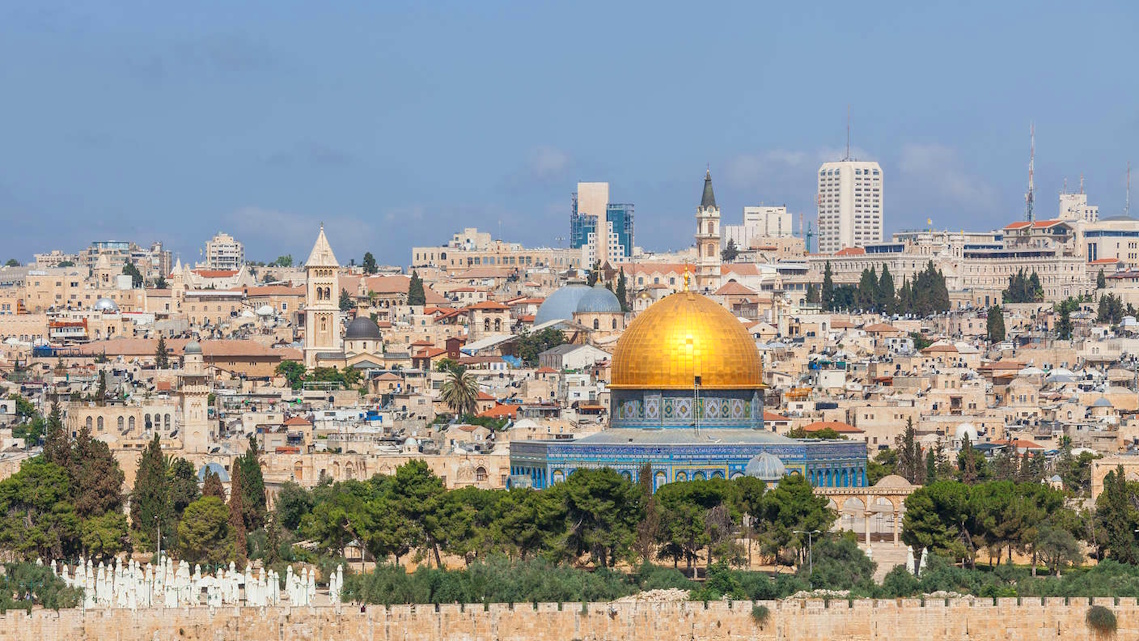
Israeli NGOs have raised the alarm over a government-endorsed settlement plan which, they argue, would mark the first expansion of Jerusalem’s municipal borders into the occupied West Bank since 1967. The proposal has been published against a backdrop of mounting international outrage over a series of creeping measures by Israel’s government aimed at strengthening its control over the West Bank, which critics charge amount to the de facto annexation of Palestinian territory .
The planned development, announced by Israel’s Ministry of Construction and Housing in early February, is formally presented as a westward expansion of the Geva Binyamin, or Adam, settlement. Adam is situated north-east of Jerusalem in the West Bank. According to a ministry statement, the signed development agreement includes the construction of around 2,780 housing units, with an investment of roughly 120 million Israeli shekels (around $38.7 million) . Some reports have also mentioned a larger figure of up to 6,000 additional housing units as part of the broader planning .
However, the geography of the plan reveals its potential significance. The area slated for development lies on the Jerusalem side of the separation barrier built by Israel in the early 2000s. In contrast, the existing Geva Binyamin settlement sits on the West Bank side of the barrier, with the two areas separated by a road. This has led Israeli settlement watchdog Peace Now to assert that there would be no “territorial or functional connection” between the new neighborhood and the settlement it is purported to expand .
“The new neighbourhood will be integral to the city of Jerusalem,” Lior Amihai, Peace Now’s executive director, told AFP. “What is unique about that one is that it will be connected directly to Jerusalem, but it will be beyond the annexed municipal border. So it will be in complete West Bank territory, but just adjacent to Jerusalem,” he said .
Aviv Tatarsky, a researcher at Ir Amim, an Israeli NGO focusing on Jerusalem within the context of the Israeli-Palestinian conflict, said the move amounts to a de facto expansion of the city. “If it is built, and people live there, the people who will live there, they will be living there as Jerusalemites,” he told AFP. “In all practical terms, it’s basically not the settlement that will be expanded, but Jerusalem,” he added . The area is considered by experts to be an actual extension of the nearby Israeli settlement of Neve Yaakov, which lies within Jerusalem’s municipal boundaries, and is intended for the ultra-Orthodox population .
Peace Now has condemned the project as a “backdoor annexation,” arguing that the government is concealing a significant land grab under the guise of routine settlement expansion . The development agreement was signed by Israel’s Construction and Housing Ministry, the Finance Ministry and the Binyamin Regional Council, which represents settlements north of Ramallah in the central West Bank. It has yet to be reviewed by the Civil Administration’s Higher Planning Committee, a process which could take several months or years .
A Wider Policy of Land Seizure and International Condemnation
The Jerusalem border expansion plan is part of a broader, more aggressive policy in the West Bank. On February 15, 2026, the Israeli government approved a separate, landmark proposal to register vast swathes of occupied West Bank land as “state property.” This is the first time such a land registration process has been authorized since the 1967 Middle East war .
The plan, submitted by Finance Minister Bezalel Smotrich, Justice Minister Yariv Levin, and Defence Minister Israel Katz, empowers a government authority under the Justice Ministry to carry out the registration with a dedicated staff and budget . Critics argue this move could strengthen Israeli claims to the land, facilitate further settlement expansion, and effectively begin the formal annexation process . The Palestinian Foreign Ministry declared the decision “legally null and void,” stating it constitutes a “flagrant violation of international peace and security principles” and directly challenges UN Security Council Resolution 2334, which affirms the illegality of settlements .
The twin moves have sparked a wave of international condemnation. UN Secretary-General Antonio Guterres condemned the decision to resume land registration, warning on X that it “could lead to the dispossession of Palestinians of their property & risks expanding unlawful Israeli control over land in the area” .
A joint statement signed by 85 countries, including Germany, France, China, and Russia, strongly denounced the unilateral Israeli measures. “Such decisions are contrary to Israel’s obligations under international law and must be immediately reversed. We underline in this regard our strong opposition to any form of annexation,” the statement read . A separate joint statement from eight Muslim-majority countries—Türkiye, Egypt, Saudi Arabia, Qatar, the UAE, Jordan, Bahrain, and Kuwait—also condemned the move as a “dangerous escalation that will further heighten tensions and instability” .
The Palestinian Presidency called the land registration decision a “dangerous escalation” and a de facto annexation, while Hamas described it as “null and void” and an attempt to impose a “Judaizing settlement reality by force” . The Arab League also denounced the step as a “blatant violation of international law,” warning it would undermine the two-state solution and threaten regional stability .
Israel has occupied east Jerusalem since 1967 and later annexed it in a move not recognized by the international community. Palestinians view east Jerusalem as the capital of their future state. Excluding east Jerusalem, more than 500,000 Israelis currently live in West Bank settlements and outposts, which are considered illegal under international law and the 2024 advisory opinion of the International Court of Justice. Around three million Palestinians live in the territory .
Our Pashto-Dari Website

Support Dawat Media Center
If there were ever a time to join us, it is now. Every contribution, however big or small, powers our journalism and sustains our future. Support the Dawat Media Center from as little as $/€10 – it only takes a minute. If you can, please consider supporting us with a regular amount each month. Thank you
DNB Bank AC # 0530 2294668
Account for international payments: NO15 0530 2294 668
Vipps: #557320

Comments are closed.