
Iran Intensifies Crackdown, Detains Dozens of Undocumented Afghan Migrants Amid Regional Tensions

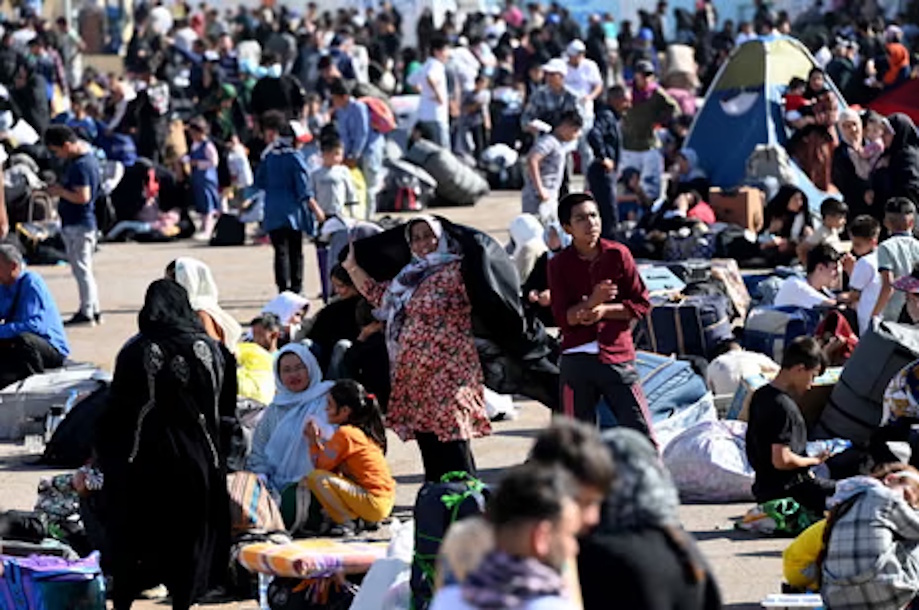
Iranian authorities have detained 43 undocumented Afghan migrants in the northern city of Tonekabon, Mazandaran province, marking a significant escalation in Tehran’s nationwide campaign of arrests and deportations. This crackdown comes amid heightened security anxieties and increasing political pressure over migration.
The Recent Arrests
According to Bahador Dailami, the police commander of Tonekabon, the arrests were conducted after intelligence reports indicated the presence of “unauthorised foreign nationals” in the area. Security and intelligence units, acting with judicial approval, identified and apprehended the individuals. Iranian officials routinely label undocumented Afghan migrants as “illegal foreign nationals,” asserting that those detained in Tonekabon had entered the city unlawfully.
In a statement reflecting the government’s hardening stance, Commander Dailami issued a direct warning to Iranian citizens, cautioning them against employing undocumented Afghan migrants. He emphasized that violators would face legal action and prosecution under existing laws, signaling an effort to target the economic incentives that drive irregular migration.
A Broader Crackdown in a Tense Climate
The enforcement measures have intensified notably following the recent, unprecedented 12-day direct conflict between Iran and Israel in April 2024. Iranian officials cite this escalation as a primary reason for tightening border security and internal controls, framing the migrant population as a potential security vulnerability.
The numbers behind the campaign are substantial. In recent weeks, Iran has been deporting an average of up to 400 Afghan migrants daily, utilizing both forced and voluntary return mechanisms. This surge continues despite consistent criticism from international human rights organizations and migrant advocacy groups, who decry the often harsh conditions of detention and expulsion.
Scale of the Afghan Population in Iran
The context for these actions is the massive Afghan presence in Iran. Earlier this year, Nader Yar Ahmadi, head of Iran’s Bureau for Foreign Nationals and Immigrants Affairs, stated that approximately five million Afghan migrants currently reside in Iran. He noted that since the initiation of the government’s “return of unauthorised nationals” plan, 1.6 million undocumented individuals have already been expelled.
In a separate interview with the ISNA news agency, Yar Ahmadi highlighted a persistent challenge: irregular re-entry. He noted a recent increase in such attempts, describing a “floating population” of hundreds of thousands who continuously cross the porous Iran-Afghan border illegally, undermining deportation efforts.
Historical Context and Deepening Crisis
The current crackdown is the latest chapter in a decades-long, complex relationship. Iran has hosted Afghan refugees since the Soviet invasion in 1979, with successive waves fleeing the Afghan civil war, the U.S.-led invasion, and now the Taliban’s return to power in 2021. While Iran has granted legal residency to some, a vast number remain undocumented, living on the margins of society with limited access to work, healthcare, and education.
The Taliban’s takeover in Afghanistan has crippled the country’s economy and erased decades of social progress, making the return of migrants fraught with danger and destitution. Human rights groups, including Amnesty International and Human Rights Watch, argue that Iran’s deportations violate the principle of non-refoulement, as returnees face severe risks of persecution, hunger, and violence under the Taliban regime.
Regional and International Implications
Iran’s policies also reflect broader regional trends. Neighboring Pakistan has similarly accelerated the deportation of hundreds of thousands of Afghans, creating a compounded humanitarian crisis at Afghanistan’s borders. Furthermore, Western nations’ strict asylum policies and border externalization efforts have reduced legal pathways for Afghans, indirectly increasing pressure on frontline states like Iran.
The intensified crackdown exposes a stark contradiction: while Iranian leaders publicly condemn the Taliban’s treatment of women and minorities, their deportation drive effectively forces vulnerable Afghans back into the Taliban’s grasp. As security concerns and economic pressures mount in Iran, the fate of millions of Afghans remains caught in a cycle of displacement, detention, and forced return, with no durable solution in sight. The international community continues to watch, with aid agencies warning of a worsening human tragedy both inside Iran and across the border in Afghanistan.
Our Pashto-Dari Website

Support Dawat Media Center
If there were ever a time to join us, it is now. Every contribution, however big or small, powers our journalism and sustains our future. Support the Dawat Media Center from as little as $/€10 – it only takes a minute. If you can, please consider supporting us with a regular amount each month. Thank you
DNB Bank AC # 0530 2294668
Account for international payments: NO15 0530 2294 668
Vipps: #557320

Comments are closed.