

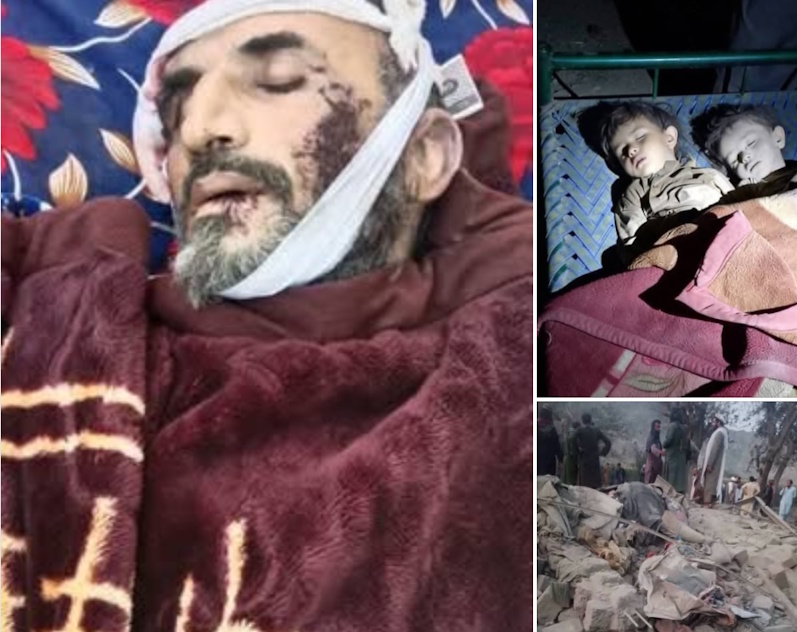
Pakistan increasingly frames its confrontation with Afghanistan in the language of national security, terrorism, and self-defence. Islamabad accuses the Taliban authorities of allowing the Tehreek-e-Taliban Pakistan (TTP) and other militant groups to operate from Afghan territory an allegation Kabul repeatedly denies. But behind this interstate dispute lies another reality: ordinary Afghans refugees, children, students, journalists, patients, traders, and families have repeatedly borne the consequences. This report examines the civilian toll of Pakistan’s security policy through multiple lenses: mass deportation and detention, institutional exclusion, the targeting of journalists, and military operations inside Afghanistan that have caused significant civilian casualties. It argues that while Pakistan has legitimate security concerns, the indiscriminate treatment of Afghan civilians risks violating fundamental legal and moral distinctions that should remain inviolable, even in times of conflict.
The relationship between Pakistan and Afghanistan has long been defined by a complex interplay of shared history, cross-border ethnic ties, strategic interests, and mutual suspicion. Since the Taliban’s return to power in Kabul in August 2021, this relationship has entered a volatile new phase. Pakistan, grappling with a resurgence of militant violence within its own borders particularly attacks claimed by the TTP has adopted an increasingly coercive posture toward its western neighbour. Islamabad maintains that the Taliban government has failed to honour its commitments to prevent Afghan soil from being used as a launchpad for attacks against Pakistan.
This security dispute is serious, and Pakistan’s losses to terrorism are real and deeply painful. However, the manner in which Pakistan has pursued its security objectives has produced a parallel crisis: the systematic erosion of safety, dignity, and rights for millions of Afghan civilians. The pattern extends far beyond the battlefield. It runs from homes searched in Pakistani cities to families separated during deportation; from Afghan students ordered out of universities to journalists facing return to the Taliban government they fled; from border restrictions disrupting livelihoods to Pakistani military operations that have caused significant civilian casualties inside Afghanistan.
This report seeks to document and analyse these consequences, drawing on data from United Nations agencies, human rights organisations, and court proceedings. It argues that while Pakistan is entitled to address its security concerns, the methods it has employed risk blurring distinctions that should remain fundamental: the Taliban government is not the Afghan population; militant organisations are not Afghan refugees; and nationality is not evidence of involvement in terrorism.
The Illegal Foreigners’ Repatriation Plan
Pakistan’s Illegal Foreigners’ Repatriation Plan, introduced in 2023 and progressively expanded, has become perhaps the most visible expression of state pressure on Afghan civilians. Officially framed as a measure to address undocumented migration, the plan has in practice functioned as a mass deportation mechanism targeting Afghans regardless of their legal status, length of residence, or vulnerability.
According to joint monitoring by the UN Refugee Agency (UNHCR) and the International Organization for Migration (IOM), 2,704,064 Afghans returned from Pakistan between 15 September 2023 and 29 August 2026. This figure represents one of the largest forced population movements in South Asia in recent decades. During the first eight months of 2026 alone, approximately 79,436 Afghans were arrested or detained. Balochistan accounted for 57 percent of those arrests and detentions the largest share of any province followed by other regions with significant Afghan populations.
UN agencies caution that figures involving undocumented Afghans are likely underreported, as many avoid contact with authorities and fear that any engagement with state institutions could result in detention or deportation. The true scale of the displacement and detention crisis is therefore likely greater than official statistics suggest.
Patterns of Enforcement
Human Rights Watch (HRW) has documented Pakistani police conducting door-to-door raids, late-night home searches, and arrests without warrants, including the detention of Afghans holding valid visas. These practices suggest that the enforcement of the repatriation plan has not been confined to undocumented migrants but has swept up individuals with legal status and protection needs.
Refugees interviewed by HRW described restricting their movements, avoiding hospitals, and keeping children indoors because they feared arrest. In some cases, families were forcibly separated, including children as young as 13 being returned to Afghanistan alone while their parents remained behind. Such separations create immediate protection risks and long-term psychological trauma, particularly for minors who may have no family support in Afghanistan.
The fear of arrest has had cascading effects on Afghan communities in Pakistan. Access to healthcare, education, and livelihoods has been severely curtailed as families avoid public spaces and essential services. The psychological toll of living under constant threat of detention is difficult to quantify but deeply consequential for individual and community well-being.
Legal and Ethical Concerns
The repatriation plan raises serious questions under international law. Pakistan is a signatory to the 1951 Refugee Convention and its 1967 Protocol, though it has never enacted domestic legislation to implement these obligations. The principle of non-refoulement which prohibits the return of individuals to territories where they face a serious risk of persecution is a cornerstone of customary international law and binds all states regardless of formal treaty ratification.
Many Afghan refugees in Pakistan have fled persecution, conflict, and targeted violence. For journalists, activists, former government officials, and members of minority groups, return to Afghanistan under Taliban rule could expose them to grave danger. The blanket application of deportation measures without individualised assessment of protection needs risks violating Pakistan’s international legal obligations.
The Hardening of Official Discourse
At the same time that enforcement measures have intensified, official rhetoric toward Afghans has hardened. In March 2025, Pakistan’s Defence Minister Khawaja Asif called the country’s decades-long hosting of Afghans its “gravest mistake.” Responding to accusations surrounding Pakistani military action in Afghanistan, he described those attacking Pakistan after receiving refuge there as “ungrateful.” Prime Minister Shehbaz Sharif has similarly invoked Pakistan’s four decades of hosting Afghan refugees while linking that history to Islamabad’s current security grievances.
Such statements carry significant weight. When senior officials characterise an entire population as a burden or a mistake, they create a permissive environment for discrimination and abuse. Rhetoric that conflates refugees with militants, or that frames an entire nationality as a security threat, undermines social cohesion and legitimises harsh treatment.
The Need for Distinction
Pakistan is entitled to raise legitimate security concerns. The TTP and other militant groups have carried out devastating attacks that have killed civilians and security personnel. Islamabad maintains that armed groups operating from Afghanistan pose an intolerable threat a position that merits serious engagement.
However, the distinction between the Taliban government and the Afghan population must remain fundamental. Militant organisations are not synonymous with refugees. Nationality is not evidence of involvement in terrorism. When these distinctions are blurred, the consequences fall disproportionately on civilians who have no connection to armed conflict.
The treatment of Afghan students, journalists, and refugees demonstrates how security framing can lead to policies that violate fundamental rights and undermine Pakistan’s own stated values.
The PMDC Directive
The treatment of Afghan students illustrates the consequences of conflating security with nationality. On 1 September 2025, the Pakistan Medical and Dental Council (PMDC) directed Afghan students already enrolled in medical and dental programmes to return to Afghanistan and barred new Afghan admissions for the current academic session.
The Human Rights Commission of Pakistan estimated that about 100 Afghan medical and dental students in Lahore alone could be affected, including between 20 and 40 women. Nationwide, the number of affected students is likely significantly higher.
Gendered Consequences
For Afghan women, the consequences are particularly severe. Taliban restrictions have effectively shut women out of universities and medical education inside Afghanistan. Returning a female medical student is therefore not simply a change of country; for many, it could mean the end of their education altogether.
Afghanistan is already facing a profound shortage of female healthcare professionals. The exclusion of women from medical education under Taliban rule has created a crisis in maternal and reproductive healthcare, as many women are unable or unwilling to seek treatment from male providers. Every Afghan woman who completes medical or dental training abroad represents not only a personal achievement but a potential lifeline for women and girls in Afghanistan. Forcing them to return and thereby ending their education carries implications that extend far beyond individual lives.
Judicial Intervention
The Lahore High Court intervened after 13 Afghan students challenged the directive, suspending its implementation and allowing the petitioning students to continue their studies and examinations. On 18 September, the court extended that suspension while respondents sought additional time to submit their replies.
The court’s intervention represents an important check on executive overreach and affirms that even in times of security concern, due process and individual rights must be respected. However, the underlying policy remains contested, and the students’ long-term status remains uncertain.
Detention and Deportation
Afghan journalists have faced a similar insecurity. The Committee to Protect Journalists (CPJ) has documented Afghan reporters being detained in Islamabad even after presenting valid Pakistani visas and passports. Reporters Without Borders (RSF) says at least 50 Afghan journalists have been forcibly returned from Pakistan to Afghanistan since Pakistan launched its mass deportation policy.
Many of these journalists originally fled Afghanistan because of threats and repression under Taliban rule. They had found relative safety in Pakistan, only to face the prospect of forced return to the very dangers they escaped.
The Paradox of Protection
The result is a grim paradox: people who escaped Afghanistan because journalism placed them in danger have found themselves at risk of being sent back into that same danger. This outcome is not merely an unintended consequence it is a direct result of policies that treat Afghan nationality as a security indicator rather than a protected characteristic.
The targeting of journalists raises particularly serious concerns. A free press is essential to democratic accountability, and Pakistan’s own constitution guarantees freedom of expression. The detention and deportation of journalists regardless of nationality undermines these principles and tarnishes Pakistan’s international reputation.
Documented Incidents
The most serious civilian toll, however, has come from military operations inside Afghanistan. A series of documented incidents illustrate the scale of the crisis.
On 28 March 2025, a Pakistani airstrike in Paktika province struck a house and killed seven civilians, including five children, according to a UN report.
In November 2025, Afghan authorities blamed Pakistan for airstrikes that killed 10 civilians, nine of them children. UNAMA confirmed civilian deaths from the strikes, although Pakistan denied responsibility.
The violence intensified in 2026.
UNAMA reported that Pakistani airstrikes in Nangarhar on 21 and 22 February 2026 killed at least 13 civilians and injured seven others, including women and children.
Between the night of 26 February and 5 March 2026, UNAMA verified 185 civilian casualties inside Afghanistan 56 killed and 129 injured from aerial attacks and indirect fire during fighting between Pakistani and Afghan forces. Women and children made up 55 percent of the casualties. In one strike in Barmal district alone, 14 civilians were killed, including four women and seven children.
The Kabul Rehabilitation Centre Strike
Then came the 16 March 2026 strike on Kabul’s Omid Rehabilitation and Treatment Center. UNAMA later independently verified that at least 269 civilians were killed and 122 injured.
Pakistan maintained that the site was being used for military purposes and contained weapons and ammunition. But after examining satellite imagery, photographs, videos, and witness accounts, Amnesty International said it found no evidence supporting that claim and called for the attack to be investigated as a possible war crime.
The strike on a rehabilitation and treatment centre—a facility dedicated to healing—represents a particularly egregious violation of the principles of distinction and proportionality under international humanitarian law. Even if the facility had been used for military purposes (a claim for which no evidence has been presented), the presence of a small number of combatants would not justify an attack causing 269 civilian deaths.
Continued Strikes
On 28 June 2026, Pakistani forces again carried out airstrikes inside Afghanistan. UNAMA confirmed that at least 28 civilians were killed and 49 wounded in Paktya, Paktika, and Kunar provinces, with women and children among the victims. Pakistan’s Ministry of Information confirmed that its security forces had carried out strikes in the three provinces.
The Human Cost
None of this erases Pakistan’s own security crisis. Pakistan has suffered devastating militant attacks that have killed civilians and security personnel, and Islamabad maintains that armed groups operating from Afghanistan pose an intolerable threat. The latest violence has reinforced those fears.
But the killing of hundreds of civilians including large numbers of women and children cannot be justified as a proportionate or lawful response. Under international humanitarian law, parties to a conflict must at all times distinguish between civilians and combatants, and between civilian objects and military objectives. Attacks that fail to make this distinction, or that cause civilian harm disproportionate to the military advantage anticipated, may constitute war crimes.
Competing Narratives
Kabul rejects the accusation that it permits the TTP to use Afghan territory against Pakistan. On 18 September 2026, Taliban spokesperson Zabihullah Mujahid again denied that Afghan territory was being used for attacks against Pakistan. He warned that Afghanistan would defend its sovereignty against further Pakistani military action, while also calling for dialogue, stronger intelligence-sharing mechanisms, and cooperation between the two countries. He welcomed a possible Saudi role in mediating their dispute.
Pakistan responded by saying dialogue could not become a substitute for action against militants.
The Need for a New Approach
That security dispute is serious. So are Pakistan’s losses to terrorism. But neither changes the basic obligation to distinguish between militants and civilians.
A refugee is not a militant because of nationality. A medical student is not responsible for relations between Kabul and Islamabad. A journalist seeking protection is not a security threat merely because he or she is Afghan. And civilians inside Afghanistan do not lose their protected status because armed groups may operate elsewhere in the country.
A sustainable resolution to the Pakistan-Afghanistan security dilemma will require more than military pressure. It will require diplomatic engagement, intelligence cooperation, and a shared commitment to addressing the root causes of militancy. It will also require Pakistan to uphold its legal and moral obligations toward Afghan civilians—even as it pursues legitimate security objectives.
International Law
Pakistan’s treatment of Afghan civilians raises serious questions under several bodies of international law:
Refugee Law: The principle of non-refoulement prohibits the return of individuals to territories where they face a serious risk of persecution. While Pakistan is not a party to the 1951 Refugee Convention, the principle is widely recognised as customary international law.
International Humanitarian Law: The Geneva Conventions and their Additional Protocols require parties to armed conflict to distinguish between civilians and combatants, to refrain from attacks that cause disproportionate civilian harm, and to protect persons hors de combat. Attacks on civilians and civilian objects may constitute war crimes.
Human Rights Law: The International Covenant on Civil and Political Rights (ICCPR), to which Pakistan is a party, guarantees rights to life, liberty, security of person, and freedom from arbitrary detention. Mass arrests and deportations without individualised assessment may violate these obligations.
Moral Considerations
Beyond legal frameworks, there are moral considerations that should inform Pakistan’s approach. Pakistan has hosted Afghan refugees for more than four decades a testament to the generosity of its people and the resilience of its institutions. That history carries responsibilities as well as burdens.
The distinction between combatants and civilians is not merely a legal technicality; it is a moral imperative. When states blur this distinction, they undermine the very values they claim to defend. They also create cycles of grievance and radicalisation that ultimately undermine security.
Conclusion: The Human Price of Security
National security is tested not only by the threats a state confronts, but also by the lines it refuses to cross while confronting them.
When millions are uprooted, tens of thousands are detained, students face expulsion, journalists risk forced return, and hundreds of civilians are killed in military operations, these outcomes cannot simply be dismissed as disconnected side effects of a security dispute.
Taken together, they reveal the enormous human price being imposed on Afghan civilians for a conflict they did not create.
Pakistan has legitimate security concerns. It has suffered grievously from terrorism. But the pursuit of security must not come at the cost of fundamental rights, legal obligations, and moral distinctions. The Afghan refugee, the medical student, the journalist, and the civilian inside Afghanistan are not combatants. They are not threats. They are human beings entitled to the protection of law and the dignity that all persons deserve.
A policy that fails to recognise this distinction is not only unjust—it is ultimately self-defeating. Security built on the suffering of innocent civilians is not security at all; it is a temporary reprieve that breeds future conflict.
The international community has a responsibility to speak out against these abuses and to support efforts to protect Afghan civilians. But ultimate responsibility lies with Pakistan’s government and institutions. The choices made now will shape not only the lives of millions of Afghans but also Pakistan’s own future as a nation that respects the rule of law and the rights of all persons within its jurisdiction.
Recommendations
To the Government of Pakistan:
- Halt mass deportations of Afghan refugees and establish individualised assessment procedures to identify persons in need of international protection.
- End the detention of Afghans holding valid visas and ensure that all detentions comply with due process requirements.
- Reverse the PMDC directive barring Afghan medical and dental students and ensure that all students regardless of nationality can continue their education.
- Cease the forced return of Afghan journalists and provide protection for those facing threats in Afghanistan.
- Investigate all allegations of civilian casualties from military operations inside Afghanistan and hold accountable those responsible for unlawful attacks.
- Engage in dialogue with Afghan authorities on security concerns while respecting the rights of Afghan civilians.
To the International Community:
- Pressure Pakistan to comply with its obligations under international law, including the principle of non-refoulement.
- Provide humanitarian assistance to Afghan refugees and returnees.
- Support independent investigations into civilian casualties in Afghanistan.
- Facilitate dialogue between Pakistan and Afghanistan on security and humanitarian issues.
To the Taliban Government:
- Take concrete steps to prevent Afghan territory from being used for attacks against Pakistan.
- Respect the rights of all Afghans, including women, journalists, and minorities.
- Engage constructively with Pakistan on security and humanitarian issues.
Our Pashto-Dari Website

Support Dawat Media Center
If there were ever a time to join us, it is now. Every contribution, however big or small, powers our journalism and sustains our future. Support the Dawat Media Center from as little as $/€10 – it only takes a minute. If you can, please consider supporting us with a regular amount each month. Thank you
DNB Bank AC # 0530 2294668
Account for international payments: NO15 0530 2294 668
Vipps: #557320

Comments are closed.