
Afghanistan’s Population Growth Raises New Challenges Amid Data Discrepancies and Climate Pressures

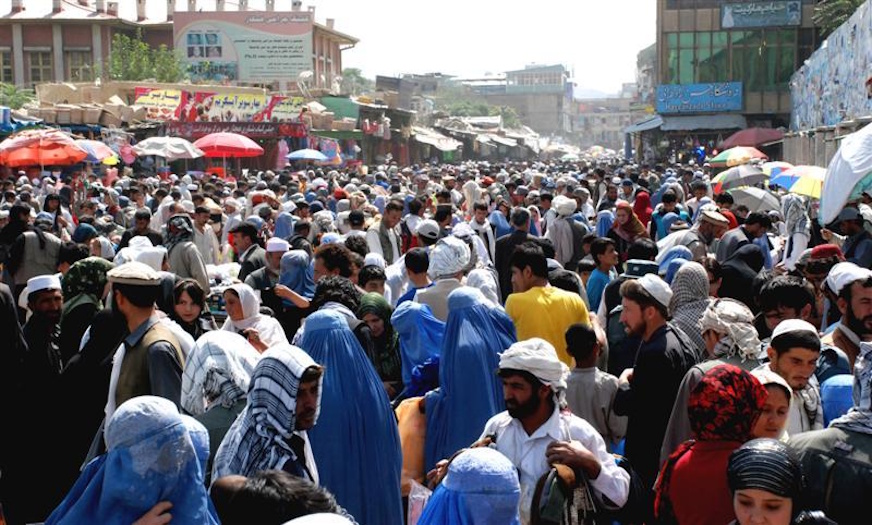
As Afghanistan marks World Population Day, the country finds itself at a critical demographic crossroads not only because of rapid population growth, but also due to a widening gulf between official statistics and international projections. The United Nations estimates that Afghanistan’s population will reach 48.6 million by 2026, while the Taliban-controlled National Statistics and Information Authority (NSIA) puts the current figure at just 37.2 million for the solar year 1405. This staggering gap of more than 11 million people underscores deep-rooted challenges in data collection, governance, and resource planning that could have life-or-death consequences for millions of Afghans.
Divergent Numbers, Divergent Realities
On Saturday, July 11, both UNAMA and Afghanistan’s NSIA released separate estimates to commemorate World Population Day. UNAMA emphasized in its statement that accurate, disaggregated demographic data is not merely a bureaucratic exercise but a fundamental pillar for informed policymaking, improved healthcare delivery, gender equality, community resilience, and sustainable development. Without reliable numbers, the UN warned, international aid agencies and domestic authorities alike are left to navigate in the dark when allocating scarce resources.
In contrast, the Taliban-run statistics agency offered a much more conservative snapshot: 37.2 million people, with men comprising 51 percent and women 49 percent of the population. The NSIA further broke down the settlement patterns, estimating that roughly 70 percent of Afghans nearly 26 million people live in rural areas, while 26 percent (about 9.8 million) reside in urban centers. Nomadic communities, an often-overlooked segment of society, make up the remaining 4 percent, or approximately 1.5 million people.
Regionally, Kabul remains the most populous province by a wide margin, with an estimated 6.4 million residents 3.3 million men and 3.1 million women. Herat follows as the second-most populous province, home to roughly 2.4 million people, split nearly evenly between men (1.23 million) and women (1.2 million). According to the NSIA, Afghanistan’s population has grown from 36.4 million last year to 37.2 million this year, representing an annual growth rate of about 2.2 percent equivalent to nearly 800,000 additional people each year. At this pace, the country’s infrastructure, food systems, and social services will face mounting strain in the coming decade.
A Legacy of Incomplete Counts
The stark discrepancy between UN and Taliban figures is not new, but it has grown more pronounced in the absence of a comprehensive national census. Afghanistan has not conducted a full, internationally recognized population count in decades, owing to protracted conflict, massive internal and external displacement, and limited statistical capacity. The last significant enumeration efforts were fragmented and regionally incomplete, leaving demographers to rely on modeling, satellite imagery, and partial surveys. This statistical vacuum has real-world implications: without a credible baseline, it becomes nearly impossible to accurately project food aid requirements, vaccine distribution, school enrollment, or housing needs.
Experts warn that the gap also complicates humanitarian coordination. With more than two-thirds of Afghanistan’s population dependent on some form of international assistance, even a 10 percent miscalculation can translate into millions of people being undercounted or overlooked. Women and children, who are often more difficult to reach in conservative rural settings, are particularly vulnerable to such data blind spots.
Climate Change Adds Urgency
Beyond the numbers debate, the UN has raised an even more urgent alarm: Afghanistan is on the front lines of climate change, facing intensifying droughts, catastrophic flash floods, rising temperatures, and chronic water shortages. Approximately 75 percent of Afghans depend on agriculture and livestock for their livelihoods, making them exceptionally susceptible to environmental shocks. In recent years, successive droughts have devastated wheat yields and decimated cattle herds, pushing already impoverished communities to the brink of famine. When combined with rapid population growth, these climate pressures create a vicious cycle more people competing for dwindling water and arable land, leading to greater food insecurity, internal migration, and social instability.
The Road Ahead
As Afghanistan navigates its demographic future, the divide between the UN and Taliban estimates is more than an academic dispute; it is a governance crisis in waiting. Reliable, granular population data is the bedrock of any functional state, guiding everything from vaccine cold-chain logistics to teacher recruitment and dam construction. For now, international organizations continue to use their own models, while the Taliban authorities rely on their internal counts often with little cross-verification or shared methodology.
Moving forward, experts urge both sides to find common ground on data collection standards, perhaps through joint technical working groups or third-party mediation. Without such cooperation, Afghanistan risks building policies on quicksand: investing too little in overcrowded cities, overlooking remote rural communities, or failing to anticipate the demographic tidal wave that is already reshaping the nation. For a country that has endured four decades of war and upheaval, the challenge of counting its own people and planning for their future may prove as formidable as any conflict it has faced.
Our Pashto-Dari Website

Support Dawat Media Center
If there were ever a time to join us, it is now. Every contribution, however big or small, powers our journalism and sustains our future. Support the Dawat Media Center from as little as $/€10 – it only takes a minute. If you can, please consider supporting us with a regular amount each month. Thank you
DNB Bank AC # 0530 2294668
Account for international payments: NO15 0530 2294 668
Vipps: #557320

Comments are closed.