
Afghanistan Commemorates 107th Anniversary of Independence Amid Deepening Crises

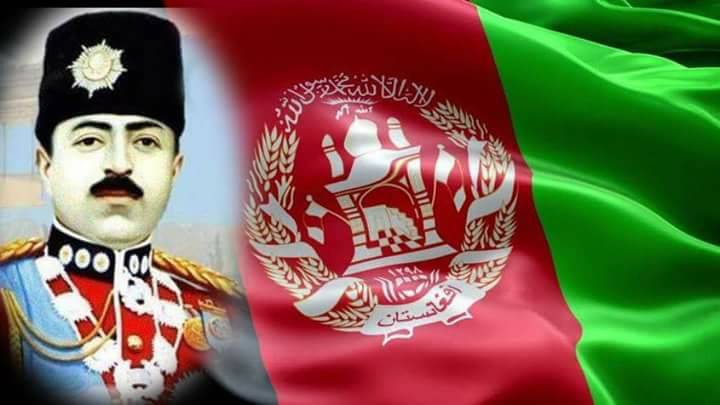
KABUL — Afghanistan on Wednesday, August 19, marked the 107th anniversary of its independence, a date that commemorates the formal end of British control over the country’s foreign policy following the Third Anglo-Afghan War in 1919. The day, long celebrated as a symbol of national sovereignty, was observed this year against a backdrop of acute humanitarian distress, political isolation, and unresolved questions about the nature of governance and rights under the current Taliban administration.
The Third Anglo-Afghan War erupted in May 1919, just months after King Amanullah Khan ascended to the throne in February of that year. Driven by a fervent commitment to full sovereignty, Amanullah Khan ordered military strikes into British India, triggering a brief but consequential conflict. The war lasted several weeks, ending with a ceasefire that paved the way for the Rawalpindi Agreement, signed in August 1919. That treaty formally restored Afghanistan’s control over its own external affairs a decisive rupture from the previous decades when Britain had dictated Kabul’s diplomatic engagements.
Amanullah Khan, often hailed as a modernist reformer, viewed independence not merely as a geopolitical achievement but as a catalyst for internal transformation. In the war’s aftermath, his government rapidly expanded diplomatic relations with emerging powers, including the Soviet Union, Turkey, and Persia, while simultaneously launching ambitious domestic reforms. Among these were the drafting of Afghanistan’s first constitution in 1923, which enshrined secular legal principles, expanded education, and sought to curtail the influence of traditional tribal and clerical authorities. Though Amanullah’s reforms ultimately provoked conservative backlash and his eventual ouster in 1929, his legacy as the architect of modern Afghan statehood endures.
The 1919 conflict was the third and final Anglo-Afghan war, following the First (1839–1842), which ended in a disastrous British retreat from Kabul, and the Second (1878–1880), which resulted in Britain assuming effective control over Afghanistan’s foreign relations while leaving internal governance nominally independent. That arrangement a British-supervised foreign policy remained a festering wound in Afghan national consciousness until Amanullah’s decisive break.
August 19 has since remained a fixed point in Afghanistan’s national calendar, outlasting every political regime the country has witnessed. Over the past century, the date has been observed under monarchs, a republic, Soviet-backed communists, mujahideen factions, the first Taliban emirate, the US-backed Islamic Republic, and now the Taliban’s renewed rule since August 2021. Each iteration has imbued the anniversary with its own ideological coloring, yet the core narrative—defiance of foreign domination has proved remarkably resilient.
This year, the Taliban administration declared August 19 a public holiday, with official statements framing the day as a “day of victory” and a reminder of Afghanistan’s historical resistance to occupation. In state-affiliated media, officials called on citizens to unite against what they termed “any form of foreign interference,” subtly reinforcing their own legitimacy as guardians of national independence while dismissing international criticism of their governance as neo-colonial meddling.
The United Nations Assistance Mission in Afghanistan (UNAMA) also acknowledged the occasion, issuing a measured statement that expressed hope for “peace, prosperity, dignity, and equal opportunities for all Afghans.” The wording, while diplomatic, carried an implicit contrast with the current reality one in which many of those aspirations remain distant for large segments of the population.
That contrast could hardly be starker. Five years after the Taliban’s return to power, Afghanistan is mired in one of the world’s most severe humanitarian crises. More than two-thirds of the population require some form of aid, with poverty rates exceeding 90% in some regions. Unemployment is rampant, particularly among youth, while the collapse of the banking system and the freezing of international assets have strangled the formal economy. Compounding these pressures, mass deportations and voluntary returns from Pakistan and Iran have swelled the population of internally displaced and returnees, straining already fragile local resources.
Women and girls, meanwhile, continue to bear the heaviest burden of the Taliban’s restrictive policies. Banned from secondary and higher education, excluded from most forms of employment, and barred from public spaces without male guardianship, they have been systematically erased from public life. International bodies, including the UN, have repeatedly condemned these measures as gender apartheid, yet diplomatic engagement has failed to yield significant concessions. The anniversary arrives as many Afghan women mark the occasion not with celebration, but with quiet protest and mourning for lost opportunities.
Economically, the country remains heavily dependent on international humanitarian aid, which has partially cushioned the collapse but has not reversed the underlying structural decay. The Taliban’s inability to secure formal recognition from any foreign government has frozen development assistance and kept Afghanistan isolated from global financial systems, leaving it unable to service debt, attract investment, or rebuild critical infrastructure.
In this sense, the 107th anniversary of independence is a moment of profound dissonance. It commemorates a historic victory over external control, yet Afghanistan today is arguably more vulnerable to external pressures economic, political, and environmental than at any point in its modern history. The sovereignty won in 1919 was legal and diplomatic; the sovereignty that Afghans now seek is practical and existential the ability to feed families, educate children, and participate in a global community that has largely turned away.
As dusk fell over Kabul on August 19, there were no grand parades or official receptions, but in homes and neighborhoods, the date was still remembered not always with fanfare, but with the quiet persistence of a people who have endured foreign invasions, civil wars, and internal strife, and who continue to hold onto the idea that independence, in its fullest sense, is still worth striving for. Whether that aspiration can be reconciled with the realities of Taliban governance, international sanctions, and deepening poverty remains the open question of Afghanistan’s next chapter.
Our Pashto-Dari Website

Support Dawat Media Center
If there were ever a time to join us, it is now. Every contribution, however big or small, powers our journalism and sustains our future. Support the Dawat Media Center from as little as $/€10 – it only takes a minute. If you can, please consider supporting us with a regular amount each month. Thank you
DNB Bank AC # 0530 2294668
Account for international payments: NO15 0530 2294 668
Vipps: #557320

Comments are closed.