
EU-Funded IOM Program Aids Over 393,000 Vulnerable Afghan Returnees Amid Escalating Crisis

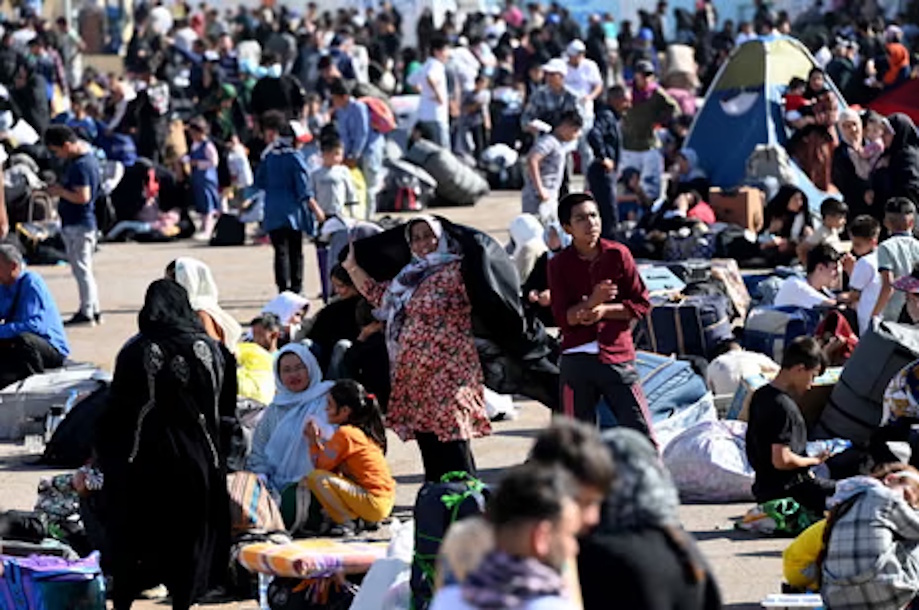
KABUL / GENEVA – The International Organization for Migration (IOM) announced on Tuesday that more than 393,000 vulnerable Afghan returnees received critical humanitarian assistance between March 2025 and May 2026 through a European Union-funded initiative. The program, delivered against a backdrop of mass deportations, intensifying natural disasters, and a collapsing domestic economy, underscores the deepening fragility of Afghanistan’s displacement landscape.
The assistance was channeled through major border crossings and host communities in the provinces of Herat, Nimroz, Kandahar, Helmand, and Nangarhar—the primary entry points for Afghans returning from Pakistan and Iran. The aid package comprised a multi-sectoral emergency response, including temporary accommodation, primary healthcare, transportation, multipurpose cash transfers, and dedicated protection services for individuals with specific vulnerabilities.
A Population in Motion: The Scale of Returns
The program was launched in response to a dramatic surge in returns, triggered by intensified immigration enforcement in neighboring countries. IOM noted that many of the returnees had spent years in some cases, decades in exile and returned to Afghanistan with minimal assets, severed social networks, and grim prospects for sustainable reintegration. The influx has placed an unbearable strain on already fragile host communities, many of which are grappling with chronic poverty, water scarcity, and crumbling infrastructure.
According to UN data, nearly 2.7 million Afghans are projected to return to the country in 2026 alone. Since September 2023, over 5.9 million returns have been recorded a figure that dwarfs most post-conflict repatriation movements globally. This unprecedented population shift has overwhelmed basic services and fueled a rise in secondary displacement, as returnees struggle to find affordable housing and livelihood opportunities.
Protection and Health at the Forefront
Among the most vulnerable groups receiving targeted support were women-headed households, elderly individuals, people with disabilities, and families separated during perilous migration routes. IOM emphasized that nearly 49,700 people with acute vulnerabilities received individualized protection and case management assistance, of whom more than 24,700 were women a cohort often facing heightened risks of gender-based violence, exploitation, and social marginalization.
A critical component of the response was the expansion of health and psychosocial services. IOM teams delivered 72,694 health, mental health, and psychosocial support consultations to 68,454 patients, including 22,510 women. These services have proven indispensable for returnees who endured trauma, forced displacement, and prolonged uncertainty during their time abroad.
Dual Crises: Man-Made and Natural
The humanitarian response has been further complicated by Afghanistan’s susceptibility to climate-induced disasters. During the program period, IOM provided emergency relief to 47,757 individuals affected by floods, earthquakes, and severe winter conditions. To expedite disaster response, the organization pre-positioned shelter kits, thermal blankets, and other essential non-food items in strategic locations across the country, allowing for rapid deployment during emergencies.
Izora Maskun, IOM’s Deputy Chief of Mission in Afghanistan, warned that the “compounding shocks” of mass returns and recurrent disasters are pushing communities to the brink. “The immense pressure on humanitarian services cannot be overstated,” Maskun said. “The international community must recognize that emergency aid is the lifeline today, but without investment in long-term reintegration, we risk creating a cycle of dependency and instability.”
The EU Perspective and the Funding Gap
Thomas Dehermann-Roy, Head of the EU Humanitarian Aid office in Kabul, reiterated the bloc’s commitment to addressing urgent needs but cautioned that the scale of the crisis demands far greater international solidarity. “Many returnees arrive with little more than the clothes on their backs,” Dehermann-Roy stated. “Immediate access to healthcare, protection, shelter, and cash is non-negotiable. However, we also need to pivot toward sustainable solutions; otherwise, towns and villages will buckle under the demographic weight.”
The EU-funded initiative has been pivotal in filling critical gaps left by underfunded UN appeals. Yet humanitarian organizations warn that donor fatigue, combined with other global crises including conflicts in Ukraine and the Middle East has led to a significant shortfall in Afghanistan’s 2026 Humanitarian Response Plan, which remains less than 40% funded.
Broader Implications: A Region at a Crossroads
The mass movement of Afghans also carries significant regional and political implications. Pakistan and Iran, which have hosted millions of Afghan refugees for decades, have increasingly adopted restrictive policies, citing economic pressures and security concerns. The resulting expulsion orders have been criticized by human rights groups, who argue that forced returns violate international law, especially when individuals face persecution or life-threatening conditions in their home country.
Afghanistan’s de facto authorities, while not directly engaged in the IOM-EU initiative, have signaled their inability to absorb returnees without external support. The country’s economy already shattered by years of conflict and international sanctions offers few formal employment opportunities, leaving millions reliant on remittances and informal labor.
The Road Ahead: From Emergency to Resilience
IOM has called for a paradigm shift from purely emergency aid to a resilience-building approach that incorporates shelter reconstruction, vocational training, and community-based integration programs. The organization cautioned that without sustained humanitarian funding and multi-year development investments, the combination of mass returns, entrenched poverty, and recurring disasters could trigger a humanitarian catastrophe of even greater magnitude.
“We are at a pivotal moment,” Maskun concluded. “We have managed to keep people alive. Now we must give them a reason to stay and build a future. That requires patience, political will, and resources that far exceed current commitments.”
As the summer of 2026 approaches, with predictions of above-average temperatures and potential drought conditions, the pressure on both returnees and host communities is expected to intensify. The EU-IOM initiative, while a significant achievement, represents only a fraction of the aid required to stabilize a country on the precipice.
Our Pashto-Dari Website
Support Dawat Media Center
If there were ever a time to join us, it is now. Every contribution, however big or small, powers our journalism and sustains our future. Support the Dawat Media Center from as little as $/€10 – it only takes a minute. If you can, please consider supporting us with a regular amount each month. Thank you
DNB Bank AC # 0530 2294668
Account for international payments: NO15 0530 2294 668
Vipps: #557320

Comments are closed.