
Death of Former Afghan Commando in U.S. Immigration Custody Ruled an Accident, but Family and Lawmakers Demand Answers

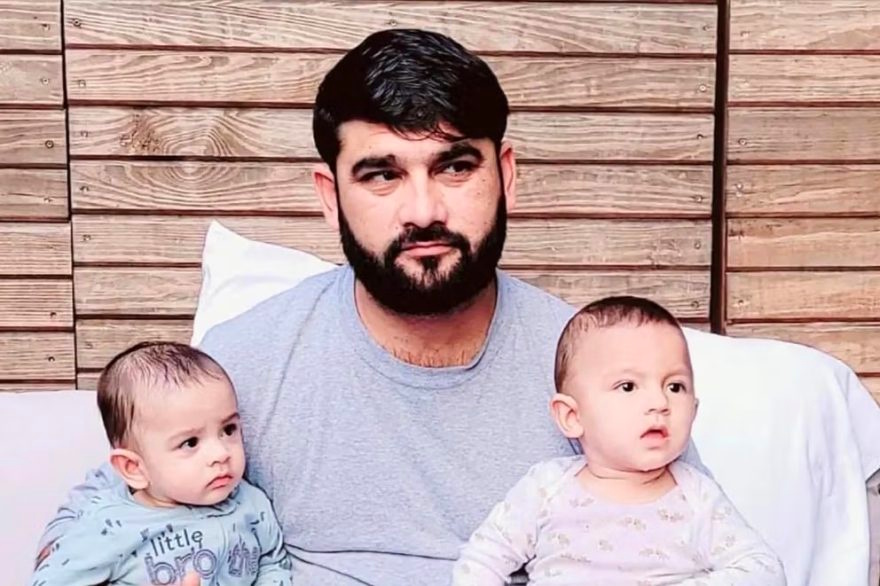
The death of a former Afghan commando who fought alongside U.S. Special Forces has been officially ruled an accident by Texas medical examiners, who attributed the fatality to a severe allergic reaction complicated by an acute asthma attack. However, the determination has done little to quell growing scrutiny from the man’s family, legal representatives, and bipartisan members of Congress, who are pressing for the release of a full autopsy report amid lingering questions about the timeline and circumstances of his detention.
Mohammad Nazir Paktiawal, 41, died on March 14 at a Dallas hospital just one day after officers from U.S. Immigration and Customs Enforcement (ICE) arrested him at his Texas home during ongoing deportation proceedings. The father of several children, Paktiawal had been living in the United States legally under the humanitarian evacuation program that followed the Taliban’s swift return to power in Afghanistan in August 2021.
According to the official death certificate, reviewed by The Associated Press, the primary cause of death was anaphylactic shock with acute exacerbation of asthma. The medical examiner also listed methamphetamine toxicity, underlying cardiovascular disease, and cigarette smoking as contributing factors. The document noted that the date of injury occurred one day prior to Paktiawal’s arrest by ICE a discrepancy that has fueled suspicion among advocates.
Paktiawal’s military service spanned nearly a decade, during which he worked closely with U.S. Army Green Berets and Marine Corps special operations units as an interpreter and tactical guide. After the U.S. withdrawal and the fall of Kabul, he was evacuated alongside his family and processed through the U.S. Refugee Admissions Program. Though he entered the country legally, his asylum application remained pending at the time of his arrest, leaving him in a precarious legal status that ultimately subjected him to removal proceedings.
ICE has defended its handling of the case, stating that Paktiawal was initially arrested on allegations of food assistance fraud and theft charges that were never prosecuted and resulted in no conviction. The agency also asserted that during intake at the detention facility, Paktiawal reported no pre-existing medical conditions or known drug allergies.
However, family members have offered a starkly different account. His wife has stated that she attempted to hand over his prescribed asthma inhaler to arresting officers, but they refused to accept it. According to ICE’s timeline, Paktiawal later developed breathing difficulties and chest pain while in custody and was transferred to Parkland Memorial Hospital in Dallas. The following morning, while eating breakfast, hospital staff observed severe swelling of his tongue. Despite the rapid administration of emergency measures, including epinephrine, he died approximately 40 minutes later.
The findings have failed to ease concerns among Paktiawal’s family, his legal team, and veterans’ advocacy organizations, who continue to demand greater transparency. On Monday, Shawn VanDiver, president of AfghanEvac a nonprofit that assists Afghan allies joined two members of the U.S. Congress in formally calling on Texas authorities to release the full autopsy report. That document remains confidential, with officials citing an ongoing criminal investigation as the reason for withholding it.
VanDiver raised pointed questions about the case, asking what specific substance triggered the fatal allergic reaction, how it entered Paktiawal’s body, and why the death certificate lists the date of injury as March 13 the day before his ICE arrest. He also noted that without access to the complete autopsy, it is impossible to determine whether the reaction stemmed from an environmental allergen, a consumed substance, or a medication administered in custody.
U.S. Senator Richard Blumenthal (D-Conn.) has also weighed in, urging the Department of Homeland Security to make the autopsy findings public. “Mr. Paktiawal served our country with honor and bravery,” Blumenthal said in a statement. “His family deserves a full and transparent explanation of how he died while in federal custody, and the public deserves to know that our detention system provides adequate medical care for those it holds.”
Paktiawal’s legal counsel has further contested the medical examiner’s conclusion that methamphetamine contributed to his death. His lawyer confirmed that an independent autopsy commissioned by the family could neither confirm nor rule out the official finding because no blood sample was available for additional toxicological testing—a gap that advocates say raises serious concerns about the chain of custody and medical oversight during his final hours.
The case has reignited broader scrutiny of medical care and accountability within U.S. immigration detention facilities, particularly for Afghan nationals evacuated during the chaotic withdrawal from Afghanistan. Since 2021, thousands of Afghan allies have been resettled in the United States under Special Immigrant Visas or humanitarian parole, yet many remain in legal limbo as their cases wind through a backlogged immigration system.
For Paktiawal’s family, the fight is now twofold: seeking justice for his death and securing clarity on a system that they say failed him at his most vulnerable moment. “He trusted this country, and this country let him down,” his wife told local media. “We just want the truth.”
Our Pashto-Dari Website

Support Dawat Media Center
If there were ever a time to join us, it is now. Every contribution, however big or small, powers our journalism and sustains our future. Support the Dawat Media Center from as little as $/€10 – it only takes a minute. If you can, please consider supporting us with a regular amount each month. Thank you
DNB Bank AC # 0530 2294668
Account for international payments: NO15 0530 2294 668
Vipps: #557320

Comments are closed.