
EU Commits €15 Million to WFP to Bolster Climate Resilience and Food Systems in Afghanistan

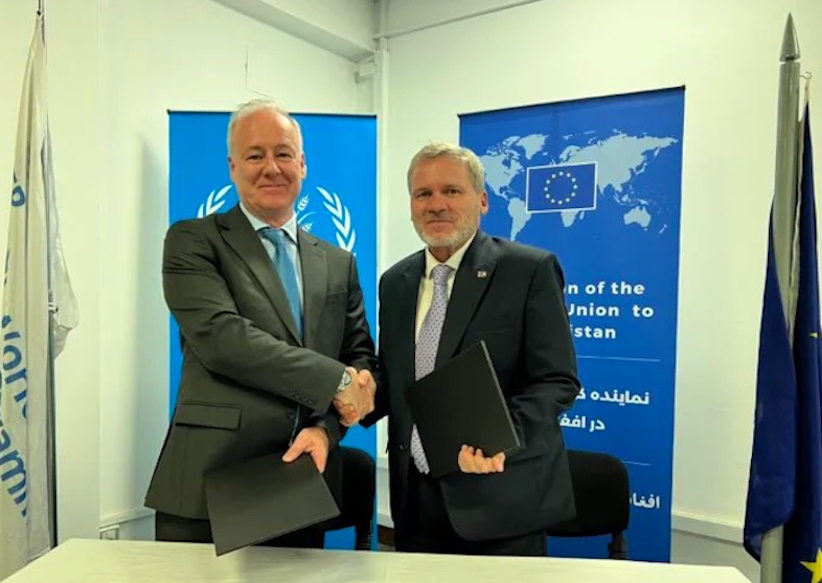
The European Union has pledged €15 million to the United Nations World Food Programme (WFP) to reinforce climate resilience and revitalize local food systems across Afghanistan, the UN agency confirmed on Friday. The funding arrives at a critical juncture, as the country grapples with one of the world’s most severe and protracted humanitarian emergencies.
In a statement shared on social media platform X, WFP welcomed the new contribution, emphasizing that it would directly benefit communities disproportionately affected by the accelerating impacts of climate change. The agency noted that the investment would not only address immediate food insecurity but also foster long-term stability by bolstering local agricultural supply chains, creating livelihood opportunities for women and youth, and expanding its nationwide school feeding initiative a program that serves as both a nutritional safety net and an incentive for children to remain in education.
According to WFP officials, the EU-backed initiative is designed to shift the paradigm from reactive emergency aid to proactive resilience-building. The funding will be channeled into community-based projects that mitigate the effects of drought, flash floods, and erratic weather patterns, while simultaneously supporting income-generating activities and sustainable agricultural practices. The overarching goal, the agency stated, is to equip vulnerable populations with the tools and resources needed to withstand climate-related shocks, thereby reducing dependency on cyclical humanitarian assistance over time.
The announcement, however, comes against a backdrop of deepening financial strain for UN operations in Afghanistan. Just this week, the UN Office for the Coordination of Humanitarian Affairs (OCHA) highlighted significant funding shortfalls that are hampering the delivery of essential shelter, protection, and emergency relief to internally displaced persons, returnees from neighboring countries, and communities ravaged by natural disasters. With winter approaching and temperatures plummeting, these gaps threaten to leave millions without adequate housing or heating.
Afghanistan remains entrenched in one of the largest humanitarian crises globally, according to UN data. Years of armed conflict, economic collapse, and a succession of climate-induced calamities have left more than two-thirds of the population in need of food, water, healthcare, and other basic services. Rural families, who rely almost entirely on rain-fed agriculture and livestock, have been disproportionately hit by consecutive seasons of severe drought and destructive flooding events that scientists attribute to the intensifying effects of the climate crisis.
The WFP has repeatedly sounded the alarm over the cascading consequences of extreme weather on food production. In recent assessments, the agency warned that rising temperatures and unpredictable rainfall are eroding traditional farming cycles, depleting grazing lands, and driving up food prices beyond the reach of ordinary Afghans. The new EU funding, the WFP said, will allow it to pair emergency food distributions with resilience programs in some of the hardest-hit districts, creating a dual approach that addresses both urgent caloric needs and the underlying vulnerabilities that perpetuate hunger.
Beyond the immediate humanitarian impact, the EU’s contribution is seen as a strategic investment in Afghanistan’s fragile social fabric. By prioritizing women’s economic participation and youth engagement, the program aims to counterbalance the systemic exclusion of these groups from formal employment and decision-making processes. The school feeding component, in particular, carries added significance: it not only improves childhood nutrition but also serves as a community anchor, encouraging families to keep their children especially girls in school amid widespread educational restrictions and economic pressures.
As international donors reassess their commitments in Afghanistan amid competing global crises, the EU’s timely support offers a lifeline for resilience programming. However, aid agencies caution that far more funding is required to avert a deeper catastrophe. The WFP has stated that without additional contributions, it may be forced to scale back critical operations in the coming months, leaving millions of Afghans to face an unforgiving climate and an uncertain future with dwindling international support.
Our Pashto-Dari Website

Support Dawat Media Center
If there were ever a time to join us, it is now. Every contribution, however big or small, powers our journalism and sustains our future. Support the Dawat Media Center from as little as $/€10 – it only takes a minute. If you can, please consider supporting us with a regular amount each month. Thank you
DNB Bank AC # 0530 2294668
Account for international payments: NO15 0530 2294 668
Vipps: #557320

Comments are closed.