

OCHA: Civilians Should Never Bear the Cost of Conflict – Escalating Cross-Border Strikes Exact Heavy Toll on Afghan Families
KABUL, AFGHANISTAN – The United Nations Office for the Coordination of Humanitarian Affairs (OCHA) has reiterated its firm stance that civilians must never be made to pay the price of armed conflict, following a fresh wave of deadly cross-border airstrikes by Pakistan into eastern Afghanistan. The appeal comes as civilian casualties mount and regional tensions show no sign of abating.
In a message posted on X today (Sunday, July 5), OCHA underscored the profound and lasting human toll of hostilities, stressing that the damage extends far beyond physical destruction. “Hostilities destroy more than homes and infrastructure. They disrupt lives, fuel fear and take a heavy toll on mental well-being, especially for children,” the agency’s Afghanistan office wrote. OCHA further emphasized that “civilians must never pay the price of conflict. They must always be protected, in line with international humanitarian law.”
The statement follows Pakistan’s latest aerial bombardments, conducted on Sunday night in Afghanistan’s eastern provinces of Paktia, Paktika, and Kunar. Islamabad described the operations as targeted strikes against hideouts belonging to the Tehrik-i-Taliban Pakistan (TTP) and the allied Jamaat-ul-Ahrar group, claiming that 25 militants were killed. Pakistan has also repeatedly alleged that these groups receive support from India a charge New Delhi has consistently denied.
However, according to the United Nations Assistance Mission in Afghanistan (UNAMA), the reality on the ground tells a different story. UNAMA has confirmed that in the most recent Pakistani attacks alone, at least 28 civilians were killed and another 49 injured all of them non-combatants, including women and children. The strikes have drawn sharp condemnation from human rights advocates, who warn that such operations risk violating the fundamental principles of distinction and proportionality enshrined in international humanitarian law.
The human cost is painfully evident in communities along the volatile border. One resident of Spera district in Khost province an area repeatedly hit by Pakistani shelling and airstrikes recently described the enduring trauma to OCHA field monitors: “Ever since the airstrikes, we haven’t been able to sleep peacefully. Every loud noise makes us fear it will happen again. Our children become frightened whenever they hear an aircraft overhead.” His testimony echoes the silent suffering of countless families trapped in a cycle of violence with no clear end in sight.
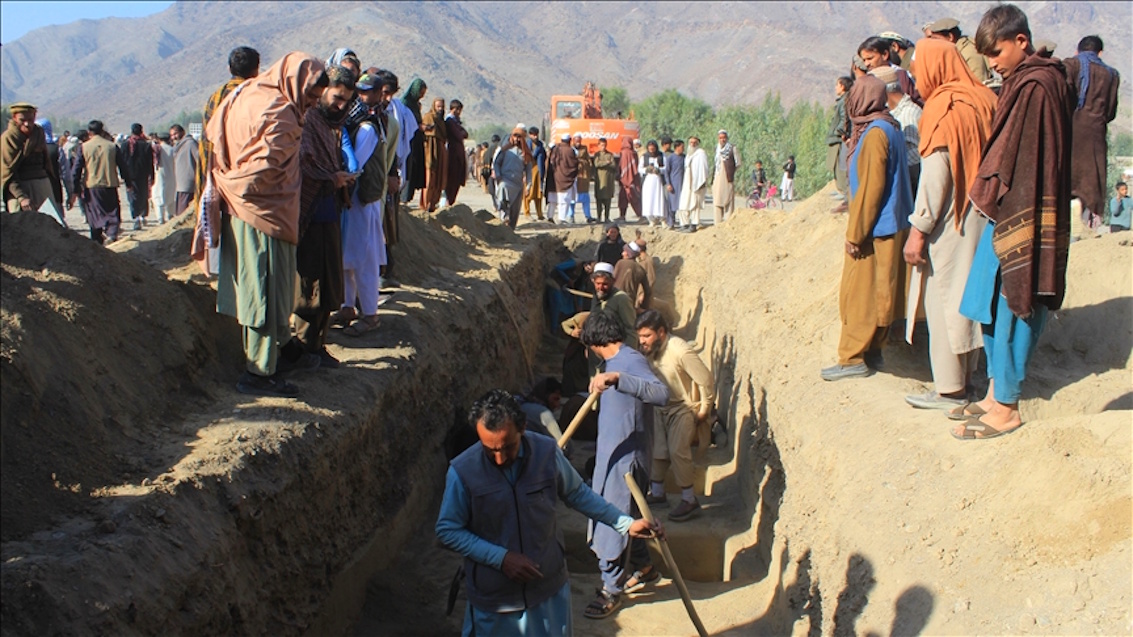
A particularly devastating incident occurred about one month ago, on June 9, at 12:20 a.m., when Pakistani warplanes bombed the home of a civilian identified as “Babri” in Mena village, Spera district. That attack killed nine people and wounded ten others. Mustaghfar Garbaz, spokesperson for the Taliban-appointed governor in Khost, later clarified that the deceased included one woman, one man, and eight children between the ages of seven and ten a grim reminder that children disproportionately bear the brunt of such escalations.
Earlier this year, from January to March 2026, UNAMA documented at least 372 civilian deaths and 397 injuries resulting from Pakistani airstrikes and border clashes—a staggering figure that underscores the accelerating humanitarian crisis along the Durand Line. Additional verified strikes on June 9 and 10 across Khost, Kunar, and Paktika resulted in 13 more civilian deaths and 10 injuries, further inflaming public anger and complicating already fragile diplomatic efforts.
The deteriorating security situation has its roots in long-standing mutual recriminations. Pakistan accuses the Afghan Taliban authorities of allowing TTP fighters to use Afghan soil as a staging ground for cross-border attacks. The Taliban, however, deny these allegations, insisting they will not permit any group to use Afghan territory against other nations. They have also urged Pakistan to address its own internal security deficiencies rather than scapegoating Afghanistan. Despite these assurances, cross-border violence has intensified since late last year, with both sides exchanging artillery fire and conducting military operations along the frontier, frequently spilling into civilian-populated areas.
Multiple regional and international actors including China, Russia, Turkey, and Saudi Arabia have engaged in mediation efforts aimed at de-escalation. Yet, as of today, no ceasefire agreement has been reached, and the border remains a flashpoint. Diplomatic sources suggest that deep-seated mistrust, competing national security interests, and the porous nature of the mountainous frontier continue to hinder meaningful progress.
For now, Afghan civilians remain caught in the crossfire their homes destroyed, their children traumatized, and their futures uncertain. As OCHA and other humanitarian agencies continue to call for restraint and adherence to international law, the repeated failure to protect non-combatants raises urgent questions about accountability and the efficacy of existing conflict-resolution mechanisms. Without sustained diplomatic pressure and a genuine commitment from all parties to prioritize civilian safety, the cycle of violence and the suffering it brings is likely to persist.
Our Pashto-Dari Website

Support Dawat Media Center
If there were ever a time to join us, it is now. Every contribution, however big or small, powers our journalism and sustains our future. Support the Dawat Media Center from as little as $/€10 – it only takes a minute. If you can, please consider supporting us with a regular amount each month. Thank you
DNB Bank AC # 0530 2294668
Account for international payments: NO15 0530 2294 668
Vipps: #557320

Comments are closed.