

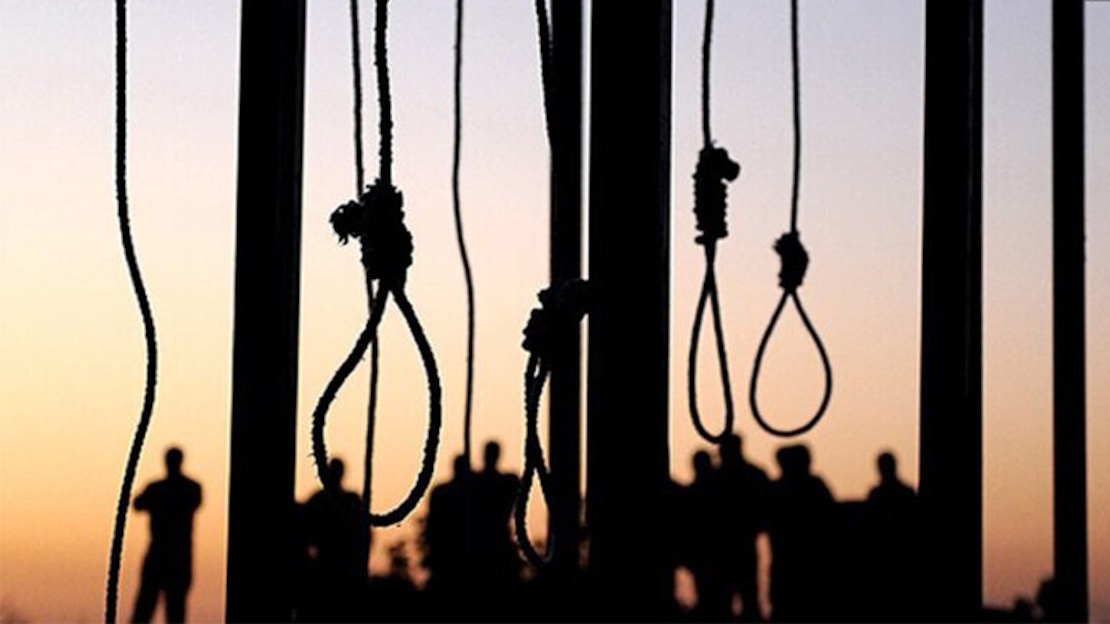
Three Afghan nationals have been sentenced to death in Iran’s Isfahan province for their alleged involvement in protests that swept the country last winter, according to the Kurdish human rights organization Hengaw. The group reported Thursday that the men were accused of participating in the burning of a local police station an offense that falls under Iran’s stringent national security laws, which carry the death penalty for acts deemed “moharebeh” (enmity against God) or “corruption on earth.”
Hengaw identified the condemned men as Afshar Shah-Ahmadi, Iman Shafaei, and Sadruddin Ahmadzadeh, all of whom were residing in Isfahan at the time of their arrests. Shah-Ahmadi and Shafaei had been living in Iran with their families, while Ahmadzadeh had traveled to the country as a labor migrant, seeking work to support relatives back in Afghanistan, according to the rights group.
The organization alleged that the three were held for 40 days at a detention facility operated by Iran’s Ministry of Intelligence and Security. During this period, Hengaw claimed they were held incommunicado, denied access to their families, legal counsel, or any contact with the outside world a practice that rights advocates say violates both Iranian law and international due process standards.
Hengaw did not specify which court issued the death sentences, nor did it provide the dates of the verdicts. The group also offered no details regarding the men’s trials, the specific evidence presented against them, whether they were allowed to mount a defense, or if they had been provided with court-appointed attorneys. These omissions raise further questions about the fairness and transparency of the judicial proceedings.
The claims could not be independently verified, and Iranian authorities had not publicly acknowledged or commented on the reported sentences as of Thursday evening. Iran’s judiciary has previously dismissed similar reports from foreign-based rights groups as “baseless” or “politically motivated,” though it rarely provides counter-evidence in such cases.
This latest development comes just six days after Hengaw reported that another Afghan national, Gol Mohammad Mohammadi, had been secretly executed in Isfahan—also over alleged involvement in the same wave of winter protests. Mohammadi’s execution was carried out without prior public notice, a practice that human rights organizations have frequently condemned as a violation of international legal norms.
The reported cases add to mounting international concern over Iran’s use of the death penalty, particularly in connection with protest-related offenses. Since the nationwide demonstrations that erupted in September 2022 following the death of Mahsa Amini in police custody, Iranian courts have handed down numerous death sentences and executions linked to protest activity. Critics, including Amnesty International and Human Rights Watch, have accused Iranian authorities of using capital punishment as a tool of political suppression, often in proceedings that fall short of fair trial standards.
The three Afghan nationals are among a growing number of foreign nationals particularly Afghan refugees and migrant workers who have been caught up in Iran’s judicial crackdown. With Afghanistan’s own legal and consular systems in disarray since the Taliban takeover, Afghan nationals in Iran often lack access to diplomatic protection or legal aid, leaving them especially vulnerable in the country’s criminal justice system.
The specific circumstances of the three reported death sentences including the trial process, the evidence relied upon, and the possibility of appeal remain unclear. Under Iranian law, death sentences can be appealed to the Supreme Court, but rights groups have documented numerous cases where appeals are either delayed, inadequately reviewed, or summarily dismissed. It is also unknown whether the three men have been informed of their right to seek clemency from Iran’s Supreme Leader, who holds the constitutional authority to commute or pardon death sentences.
As international observers await further clarification from Iranian judicial authorities, the case highlights the precarious situation faced by Afghan migrants in Iran, who number in the millions and are often subjected to discriminatory treatment, arbitrary detention, and limited legal recourse. The United Nations has repeatedly called on Iran to impose a moratorium on executions and to ensure that all defendants receive fair trials, but such appeals have so far yielded little tangible change.
Our Pashto-Dari Website
Support Dawat Media Center
If there were ever a time to join us, it is now. Every contribution, however big or small, powers our journalism and sustains our future. Support the Dawat Media Center from as little as $/€10 – it only takes a minute. If you can, please consider supporting us with a regular amount each month. Thank you
DNB Bank AC # 0530 2294668
Account for international payments: NO15 0530 2294 668
Vipps: #557320

Comments are closed.