

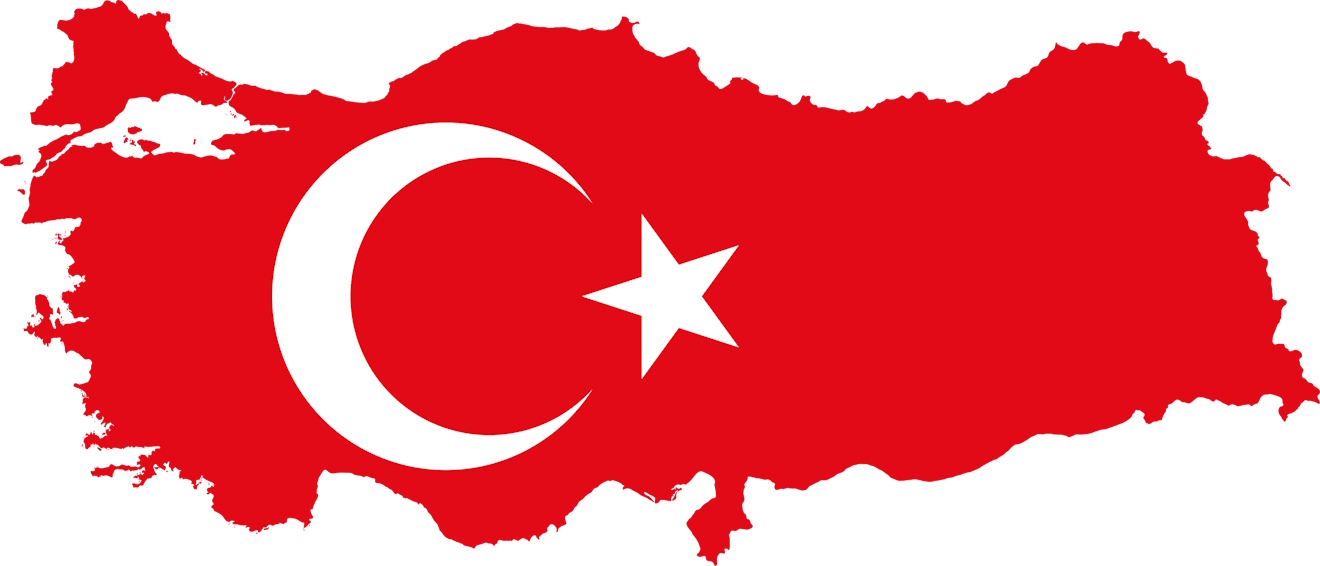
Throughout the 106-year history of the Republic of Turkey, no president has ever articulated the state’s security vision in such terms. On June 10, President Erdoğan delivered a speech during the parliamentary group meeting of the Justice and Development Party (AK Party) that resonated across the entire world. He stated:
“Syria and Lebanon are countries located within the geography of love and brotherhood to which Turkey belongs. Damascus and Beirut are sister cities to Istanbul. Turkey’s security does not begin only at Hatay it begins in Aleppo and Damascus, and it begins in Beirut. We will not allow any fait accompli to be imposed on the lands of our brothers, nor will we overlook any aggression targeting our brothers. Now, these people and their paid followers are coming out to issue alleged threats against Turkey here and there.
There is no need for you to utter such words we know your intentions and goals very well, and we are fully aware of what you are seeking. We are also completely conscious of the ultimate purpose behind the ‘Promised Land’ delirium. God willing, we will never allow it… I say it clearly: no one should get dragged into this adventure, nor line up behind the Zionist murder network. If Turkey’s rights or those of the Turkish Cypriots are violated in the Eastern Mediterranean, let everyone know that our response will be very clear and very firm.”
The impact of this statement was so significant that, just an hour or two after the speech, Netanyahu was compelled to issue a very sharp response to Erdoğan via his social media account. On the same day, when asked about the statement, U.S. President Trump said: “I was not aware of that,” after which he noted the strength of his relationship with Erdoğan and avoided answering the question directly.
Beyond Rhetoric: A Shift in Turkey’s Threat Perception
In reality, Erdoğan’s statement was not merely rhetorical. Turkey had been signaling for some time that it had changed its concept of threats and its security model. Alongside Erdoğan’s remarks, two other important statements went relatively unnoticed:
On June 9, one day before Erdoğan’s speech, Devlet Bahçeli, leader of the Nationalist Movement Party (MHP) the AK Party’s political partner and a key actor shaping Turkey’s political balance made important parliamentary remarks on the same issue, saying:
“This issue represents a broad security equation stretching from the Strait of Hormuz to the Eastern Mediterranean, from Lebanon to Syria, from northern Iraq to the Red Sea, and from the Gulf to Cyprus. It also extends from maritime trade routes to oil and natural gas fields, from water security basins to energy transport corridors, without hesitating to inflame historical, cultural, ethnic, and sectarian sensitivities in the region… Reading this equation only through current military maneuvers and crisis headlines will remain incomplete… This is not the first time our region has been subjected to calculations drawn up on tables, maps drawn with rulers, externally imposed conditions, and imperialist intentions.
Yesterday, the arteries of our geography were sought to be severed by the Sykes-Picot Agreement. Yesterday, a poisonous seed was planted in the heart of Palestine with the Balfour Declaration, and a shroud was sewn for the Turkish nation with the Treaty of Sèvres. Calculations were also made regarding many parts of the homeland, from Mosul to Kirkuk, from Aleppo to Jerusalem, from Cyprus to Western Thrace. But those behind these calculations forgot one thing: the Turkish nation is not a nation that can be cornered, nor can it be erased from the stage of history even if the entire world lines up against it…”
Following Bahçeli’s remarks, and while the echoes of Erdoğan’s words were still reverberating, the spokesperson for Turkey’s Ministry of National Defense, Rear Admiral Zeki Aktürk, held a press conference aboard a warship and stated:
“We are closely monitoring provocations aimed at destabilizing the region and raising tensions in the Eastern Mediterranean. The agreement signed between the Greek Cypriot administration and France which holds no guarantor status in Cyprus aims to unilaterally alter the delicate balance on the island, ignores the will of Turkish Cypriots and their equal sovereign rights, and contradicts the 1960 Cyprus Treaties and international law… As a guarantor state, we will continue today, as we did yesterday, to protect the rights and interests of the Turkish Republic of Northern Cyprus and ensure its security. The Turkish Armed Forces possess the necessary capability and determination to deliver the harshest response to any hostile actions threatening the security of Turkish Cypriots.”
Despite the sharp criticism directed at France, the agreements signed by the Greek Cypriot side, Greece, and France do not appear deep enough to shift the balance in the Eastern Mediterranean. France’s military and economic capabilities are no longer of a scale that can alter regional dynamics; the issue is largely confined to Macron’s usual posturing. However, the agreements and cooperation that Israel is building with the Greek Cypriot side and Greece represent a genuine source of threat for Turkey.
Turkey’s Security Concept Has Changed
For many years, Turkish foreign policy was shaped around Atatürk’s famous principle: “Peace at home, peace in the world.” For this reason, Turkey avoided intervening in developments in surrounding regions, including its neighbors. However, changing circumstances showed that Turkey paid a heavy price and experienced major crises as a result of events occurring within its vital sphere. With the AK Party’s rise to power, Turkey began to closely monitor and engage more deeply in developments in the Middle East, the Balkans, and the Caucasus and this approach later extended to Africa in both foreign and security policy.
Over the last five years, Ankara has strengthened its presence and influence in regional balances and has pursued active policies in areas with which it shares historical, geographical, religious, and cultural ties driven by a transformed view of security and threats. Through military, economic, and diplomatic moves in Syria and Iraq, Turkey succeeded in eliminating terrorism from within its own borders.
Through its agreement with Libya, Turkey demonstrated that it is an influential player in the Eastern Mediterranean. Its indirect intervention in the Nagorno-Karabakh war helped change the course of the conflict and the regional balance. Turkey has also continued to take effective steps in the Balkans and Africa within the limits of its capabilities.
Taken together, these moves reflect a fundamental transformation in Turkey’s security and cooperation paradigm. However, the geopolitical shifts in the Middle East since the start of the Israeli aggression on Gaza have made the construction of a new security system an urgent necessity for Turkey.
Israel Is Now Viewed as a Threat
As the region turned into a sea of fire due to unchecked Israeli aggression, everyone in Turkey began talking about Israel attacking Turkey one day. A conviction has taken hold: if Israel attacks a peaceful and neutral country like Qatar, it could target anyone.
But this belief is not based merely on intuition. Israel’s occupation of Syrian territory and its bombardment of Syria, the effective occupation of Lebanon, and most recently, agreements with Greece and the Greek Cypriot administration all are seen as moves to encircle Turkey by land and sea.
Throughout history, Damascus, Beirut, and Jerusalem have been interconnected. The occupation of Lebanon is seen as also bringing Damascus into the danger zone. Turkey now treats Syria as part of its internal security perimeter. Therefore, deepening instability in Lebanon and the expansion of Israeli occupation constitute a dangerous situation that will directly affect Syria and, in turn, Turkey.
For this reason, Turkey is making intensive efforts to halt Israeli expansion at this point. It is seeking to prevent Israeli expansion by activating diplomatic channels with the United States and exerting field dominance through regional countries. Turkey may soon respond to Israel, Greece, the Greek Cypriot side, and France by taking a decision that alters the status of regional waters in the Mediterranean.
Turkey’s Security Borders Have Changed
Based on all the above, it can be said that Turkey’s concept of security and its threat boundaries have indeed changed. The Lebanese front in the Middle East, the island of Cyprus in the Mediterranean, Libya in the Maghreb, the hills of Karabakh in the Caucasus, Bosnia and Kosovo in the Balkans, the waters of the Black Sea in the north, and the coasts of Somalia in Africa now constitute the boundaries of Turkey’s threat perception.
Therefore, any move in these regions that would shift the balance of power or affect existing equilibria will be treated by Turkey as a step threatening its security and interests. Ankara appears determined to use the full extent of its power to respond accordingly.
Our Pashto-Dari Website
Support Dawat Media Center
If there were ever a time to join us, it is now. Every contribution, however big or small, powers our journalism and sustains our future. Support the Dawat Media Center from as little as $/€10 – it only takes a minute. If you can, please consider supporting us with a regular amount each month. Thank you
DNB Bank AC # 0530 2294668
Account for international payments: NO15 0530 2294 668
Vipps: #557320

Comments are closed.