
From Terror Provocation to Nuclear Panic: What Pakistan’s Trump Gratitude Really Confesses
Ahmad Fawad Arsala

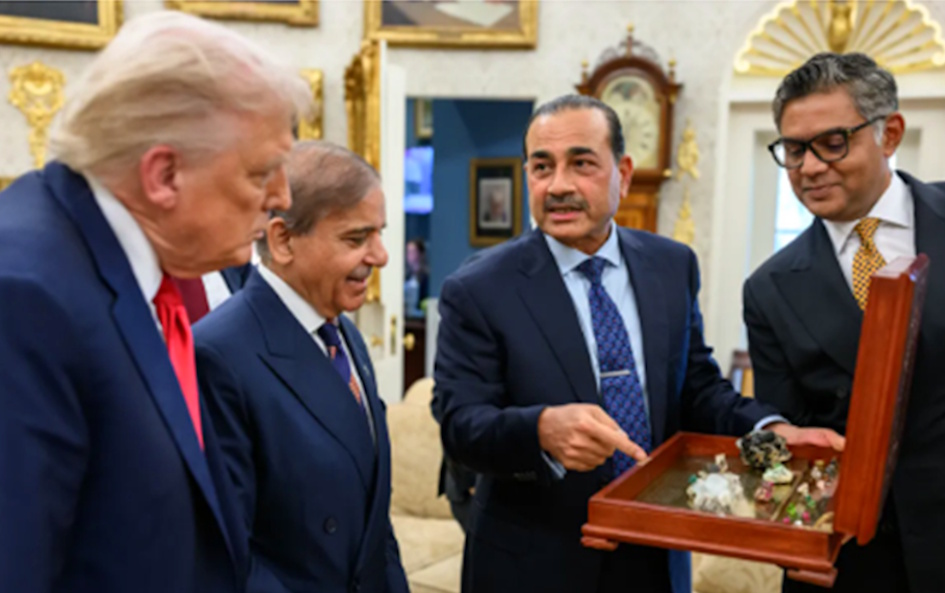
Pakistan’s Prime Minister Shehbaz Sharif’s repeated, almost theatrical gratitude toward Donald Trump for “resolving” the recent India–Pakistan conflict is not diplomacy, it is an inadvertent confession. When read carefully, Pakistan’s own narrative exposes a far more uncomfortable truth: Islamabad initiated the crisis through terrorism, lost control of the conventional escalation, and then retreated behind nuclear fear-mongering to mask strategic failure.
The sequence of events matters, and Pakistan’s leadership would prefer the world forget it.
The War Did Not Start in a Vacuum, It Began With Terror
The latest India–Pakistan clash did not erupt spontaneously, nor was it the product of misunderstanding or accidental escalation. It followed a Pakistan-sponsored terrorist attack on Indian soil, consistent with a long-standing pattern in which militant proxies are used to provoke India while maintaining plausible deniability.
This is the critical starting point:
Pakistan chose escalation through terrorism, expecting, as it often has in the past, that India would be constrained diplomatically, strategically, or psychologically. Instead, India responded militarily, directly, and conventionally.
That miscalculation is the root of everything that followed.
From Proxy War to Conventional Defeat
Once the conflict shifted from proxy violence to state-to-state conventional engagement, Pakistan’s strategic comfort zone collapsed. Proxy warfare allows Islamabad to control escalation; conventional war does not.
Pakistan’s leadership now claims battlefield success, downed jets, strong responses, deterrence restored, yet it has produced no independently verifiable evidence of decisive gains. What it has produced, repeatedly and loudly, is gratitude toward an external actor for stopping the fighting.
That alone is revealing.
States that believe they are winning do not beg for diplomatic off-ramps.
They do not nominate outsiders for peace prizes.
And they certainly do not describe themselves as having been rescued from catastrophe.
“World War III” Rhetoric: The Language of a Cornered State
The most damning element of Pakistan’s post-conflict narrative is its insistence that Trump prevented “World War III” , a phrase Pakistani leaders have echoed approvingly and repeatedly.
This is not a casual exaggeration. It is a strategic admission.
Invoking global nuclear annihilation only makes sense if Pakistan’s leadership believed:
- It was losing control of the conventional war, and
- Escalation dominance was slipping out of its hands.
In South Asia, nuclear weapons are meant to deter war, not to be openly waved as panic buttons. When Pakistan’s leaders publicly suggest that the conflict was on the brink of nuclear catastrophe, they are effectively saying the quiet part out loud:
they felt cornered enough to start thinking in nuclear terms.
That is not strength. That is strategic vulnerability.
Externalizing Failure: Why Pakistan Needed Trump
Pakistan’s fixation on Trump serves a purpose. By crediting an external savior, Islamabad avoids answering harder questions:
- Why did a terrorist attack it sponsored spiral into a conventional confrontation it could not control?
- Why did it need outside intervention at all?
- Why does India categorically deny any third-party mediation while Pakistan insists on it?
The answer is simple: Pakistan needed a face-saving narrative.
Trump becomes the convenient symbol of rescue — someone to blame-credit for stopping a war Pakistan itself initiated but could not finish on favorable terms.
Nuclear Blackmail as Post-Conflict Damage Control
Pakistan has long relied on nuclear deterrence as a shield behind which it conducts sub-conventional warfare. What makes this episode different is how openly Pakistan’s leadership leaned on nuclear catastrophe rhetoric after the fact.
That shift signals something profound:
Pakistan’s conventional deterrence failed, and its leaders knew it.
Unable to convincingly claim victory on the battlefield, Islamabad reframed the outcome as a moral victory for humanity — “millions of lives saved,” “World War III prevented.” This is not the language of triumph; it is the language of strategic retreat disguised as global responsibility.
Conclusion: The Gratitude That Gives the Game Away
Put plainly:
- Pakistan started the crisis through terrorism.
- It lost escalation control when India responded conventionally.
- It felt sufficiently cornered to invoke nuclear disaster.
- And it now credits an external actor for stopping what it could not manage.
Countries that believe they prevailed do not behave this way.
Pakistan’s excessive gratitude to Trump, its fixation on “World War III,” and its insistence on external mediation all point to the same conclusion: Islamabad was strategically beaten, or at least badly outmatched — and is now engaged in narrative repair.
In the end, Pakistan’s own words betray it.
A state confident in its strength does not thank others for saving it from annihilation.
It does not reframe a war it provoked as a humanitarian near-miss.
What Pakistan calls diplomacy today looks far more like damage control after a failed gamble.
Diplomatic Gains and Strategic Signaling: Afghanistan’s Evolving Approach to Pakistan
Our Pashto-Dari Website

Support Dawat Media Center
If there were ever a time to join us, it is now. Every contribution, however big or small, powers our journalism and sustains our future. Support the Dawat Media Center from as little as $/€10 – it only takes a minute. If you can, please consider supporting us with a regular amount each month. Thank you
DNB Bank AC # 0530 2294668
Account for international payments: NO15 0530 2294 668
Vipps: #557320

Comments are closed.