

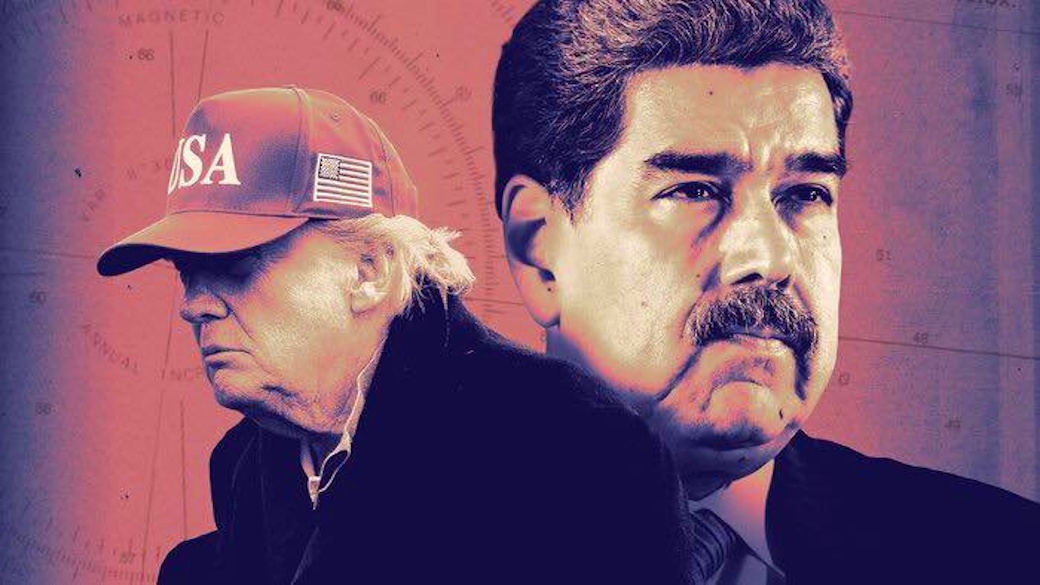
In a seismic event for the international order, the United States announced on the dawn of January 3rd, 2026, that it had executed a large-scale military operation against Venezuela, culminating in the arrest of its President, Nicolás Maduro, and his wife. They were subsequently transported to American territory to face trial. This unprecedented development has sent shockwaves through the global community, representing a blatant breach of foundational principles of the international system, particularly the principle of state sovereignty enshrined in the United Nations Charter. A comprehensive understanding of this event necessitates a rigorous analysis from the dual perspectives of international law and human rights.
This article examines the incident through the following legal and rights-based lenses: the violation of state sovereignty, the legitimacy of using force, the extra-territorial transfer and trial of a sitting president, historical parallels, the role of the UN and international institutions, the responses of major and regional powers, and the incident’s profound implications for the future of international law and human rights.
1. Breach of the Principle of State Sovereignty Under the UN Charter
The principle of state sovereignty is a cornerstone of international law. Article 2 of the UN Charter explicitly affirms “the sovereign equality of all its Members” and prohibits “the threat or use of force against the territorial integrity or political independence of any state.” In essence, no state may employ military force to change the government of another or intervene in its internal affairs.
The American military action constitutes a flagrant violation of this principle. U.S. forces—whether by sea or air—entered the territory of a sovereign state and apprehended its head of state without the consent or authorization of Venezuela’s legitimate government. This act directly contravenes the Charter’s prohibition against the use of force against a state’s territorial integrity or political independence.
Furthermore, the principle of non-intervention in the domestic affairs of states, derived from Chapter VI of the Charter and other sources, provides an additional layer of protection for state sovereignty. From a legal standpoint, the U.S. military assault and the abduction of President Maduro represent a direct assault on Venezuela’s sovereignty and political independence, constituting a clear breach of international law and the UN Charter.
No international provision or UN resolution authorizes such an act. Had there been disputes or criminal allegations against a figure like Maduro, the proper course would have been to seek judicial settlement through established mechanisms of extradition or international tribunals, not unilateral military force. Consequently, this action is a stark violation of international legality with no legal foundation. Democratic states are bound by international law to respect the sovereignty of other nations.
The gravity of this act is magnified by the prevalent American tendency to prioritize national law over international law, as evidenced by Washington’s rejection of the International Criminal Court’s jurisdiction in Afghanistan-related cases. This reflects one of three competing legal theories: the primacy of international law, the supremacy of national law, or a flexible balancing act based on political circumstances. In the American case, national sovereignty appears to be used as a perennial pretext to circumvent international obligations, fundamentally undermining the entire system of international legitimacy.
2. Legitimacy of Using Military Force Against a Sovereign State
The use of force in international relations is prohibited under the UN Charter, specifically Article 2(4), which bans the threat or use of force against a state’s territorial integrity or political independence. Only two exceptions exist: self-defense under Article 51, or explicit authorization from the Security Council. Article 51 restricts the right of self-defense to instances of an “armed attack,” while preemptive use of force is conditional upon an imminent and unavoidable threat.
The U.S. strike against Venezuela fits neither exception: Venezuela launched no armed attack, and there was no UN mandate. Justifications related to counter-narcotics efforts or labeling Venezuela a “narco-state” do not constitute legal grounds for the use of force under established international legal doctrine.
In a statement dated December 24, 2025, UN human rights experts had already deemed the U.S. naval blockade of Venezuela a “prohibited use of force” under Article 2(4) of the Charter and an “unlawful armed aggression” as defined by the 1974 General Assembly resolution. They emphasized that the blockade severely harmed population rights, including the rights to life, development, and health.
Therefore, this American action represents a clear violation of the UN Charter and lacks any international legal cover. International legal analysis has concluded that the operation “clearly fails to meet any of the conditions permitted by international law for the use of force,” rendering it an act of aggression without legitimacy and undermining the international prohibition on the use of armed force.
3. Transfer and Trial of a Head of State Without International Extradition: A Dangerous Precedent
The arrest and transfer of a sitting head of state—who enjoys official immunity—to another country without legal extradition procedures constitutes a dual violation: an infringement on the sovereignty of the state where the arrest occurred, and a breach of international rules concerning the immunity of senior officials.
Under customary international law, as affirmed by the International Court of Justice in the Arrest Warrant case (Democratic Republic of the Congo v. Belgium, 2002), heads of state possess absolute immunity from foreign jurisdiction while in office, shielding them from prosecution in other nations’ courts. Consequently, the arrest of Maduro and his transfer for trial in the United States, while he still held the office of president, is a fundamental violation of the principle of sovereign immunity.
The UN Human Rights Commission has clarified that this immunity remains intact for leaders during their tenure. Moreover, the operation was conducted outside any framework of judicial cooperation or formal extradition, imposed instead by military force to create a fait accompli—a method legally proscribed for its direct assault on state sovereignty and the rule of law.
From a human rights perspective, this forcible transfer raises serious questions about the legitimacy of the trial and its fundamental guarantees, such as the right to defense, legal representation, and a fair trial. This renders the entire process vulnerable to challenge under international human rights law. It is also crucial to note that Maduro is not subject to an ICC arrest warrant, nor are there any international warrants for his arrest, meaning the action was not based on a recognized international jurisdiction but on the unilateral will of a foreign power.
Historically, this event is exceptional. Partial comparisons can be drawn to the 1989 U.S. invasion of Panama and the arrest of General Manuel Noriega, who was later tried in Florida on drug charges. However, even that incident did not involve a democratically elected president and did not garner the same level of condemnation. The Venezuelan case can only be loosely compared to other exceptional instances, such as Israel’s abduction of Adolf Eichmann in 1960—examples that did not involve a sitting head of state. Thus, the action against Maduro sets an unprecedented legal precedent, signaling a potential re-drawing of international rules where military force is used not merely to apprehend criminals but to topple entire political systems.
4. Positions of Major/Regional Powers and International Institutions
The operation prompted sharp yet varied reactions in international forums. Regionally, several Latin American nations condemned the U.S. attack. Cuba described it as “state terrorism,” while Colombia and Mexico expressed concern over military escalation without taking concrete steps. Venezuela declared the event a “full-fledged military aggression.” However, most Latin American governments issued cautious, equivocal statements, reflecting political hesitation in confronting Washington.
Internationally, the European Union stressed the need to respect international law without explicit condemnation, while Britain and Germany limited themselves to general warnings. Italy alone used clearer language, labeling the intervention a “clear violation of international law.” Russia, despite its alliance with Caracas, did not go beyond verbal condemnation. China called for “restraint” without naming the aggressor, reinforcing a perception that major international stances are characterized by caution, and perhaps retreat, in the face of American hegemony.
At the UN institutional level, the organization had previously expressed “grave concern.” The panel of human rights experts, in their December 24 statement, labeled the U.S. blockade a “prohibited use of force and unlawful armed aggression,” urging states to respond through diplomatic and peaceful means and to activate international accountability mechanisms. Nonetheless, despite calls for a meeting, the Security Council has yet to take any concrete action, highlighting the limited effectiveness of the world body in restraining the United States.
Thus, the impression is reinforced that the United States, aware of the anticipated yet limited nature of the international response, proceeded unilaterally, confident that “hand-wringing” within the international community would prevent any meaningful deterrence, at least for now.
5. Repercussions of the Incident on the Future of International Law and Human Rights
This incident raises fundamental questions about the future of international law and human rights principles in a world moving beyond the “post-1945 system.” The UN Charter was founded in the aftermath of World War II during the 1945 San Francisco Conference as a collective attempt to curtail the use of force in international relations and ensure humanity would not revert to the logic of occupation and expansion by might.
It is paradoxical that the United States, which led the drafting of this Charter and remains its largest financial contributor, has since played contradictory roles in respecting it, particularly under President Donald Trump, who openly expressed disdain for the organization, sought to diminish its role, and withdrew from key bodies like the Human Rights Council and the World Health Organization.
In this context, the recent military intervention in Venezuela and the subsequent abduction and extra-territorial trial of a sitting head of state breaches the golden rule upon which the international organization was founded: that no state shall conquer another by force. If this incident is met with acquiescence, it could mark the beginning of a gradual erosion of the principle of state sovereignty and respect for political boundaries. Overlooking this precedent could lay the groundwork for a new international system—or rather, a new global disorder.
Furthermore, the incident raises serious questions about the “Responsibility to Protect” (R2P) principle, intended for activation only in cases of genocide or major crimes against humanity. In this intervention, the United States bypassed this framework, using security justifications and criminal allegations to justify military action. This threatens to hollow out the R2P principle, transforming it into a selective tool for justifying strategic interventions.
Regarding human rights, the arrest of a head of state without a clear legal process and his forcible transfer to another country for trial undermines the very essence of a fair trial. It opens the door to potential violations such as coercion, denial of unimpeded access to legal counsel, and restriction of the right to defense. This model undermines what remains of the rule of law.
In summary, this precedent reshapes the map of legal concepts between states and erodes confidence in the international legal system based on the Charter and international legitimacy. If not countered with firm legal and institutional positions, it could become a model for other states seeking to eliminate foreign adversaries by force.
Consequently, the central question posed today is not merely about the legality of what occurred, but about the future of legality itself: Does it still stand? Or have we entered a post-law phase where major powers begin to impose their own rules outside international consensus?
If the United States has been complicit in the crimes in Gaza by providing weapons and political support, it is only natural for it to escalate its breaches of international law, as seen in Venezuela. Those who turn a blind eye to genocide will not hesitate to abduct a head of state by force. The stark paradox is glaring: Trump arrests a head of state on allegations of crimes, while simultaneously imposing sanctions on International Criminal Court judges for pursuing war criminals among his allies!
Our Pashto-Dari Website

Support Dawat Media Center
If there were ever a time to join us, it is now. Every contribution, however big or small, powers our journalism and sustains our future. Support the Dawat Media Center from as little as $/€10 – it only takes a minute. If you can, please consider supporting us with a regular amount each month. Thank you
DNB Bank AC # 0530 2294668
Account for international payments: NO15 0530 2294 668
Vipps: #557320

Comments are closed.