
Germany Flies 141 Afghan Refugees From Pakistan as Deportation Deadline Looms

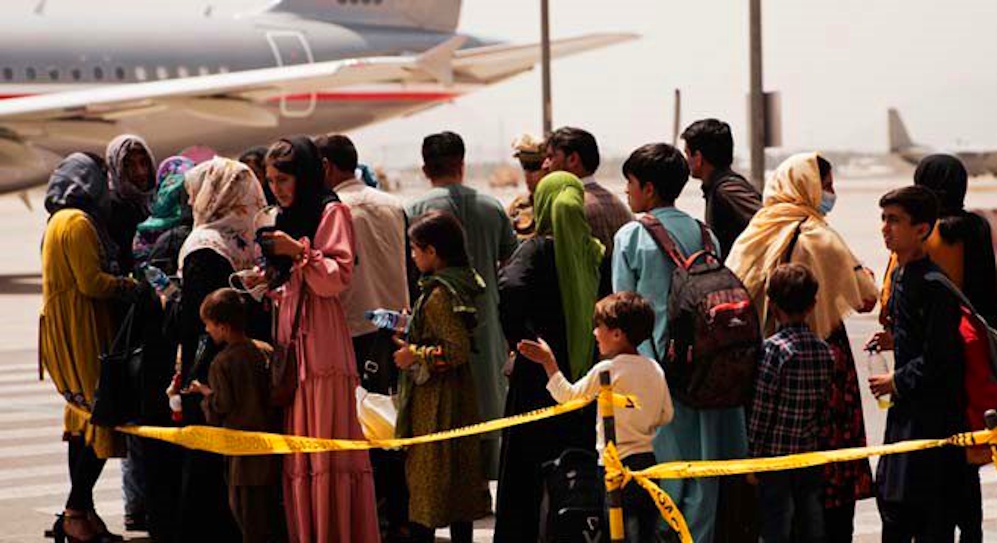
Germany airlifted 141 Afghan refugees from Pakistan to Hanover on Monday, accelerating a long-delayed resettlement program. This urgent move comes as Islamabad has issued an eight-day ultimatum for Western nations to complete the transfer of all eligible Afghan nationals, warning that failure to do so will result in their deportation back to Afghanistan.
The charter flight, announced by Germany’s Interior Ministry, carried individuals deemed at acute risk. According to German media reports, the group consisted of 123 people from the so-called “Human Rights List”—activists, lawyers, and other vulnerable persons—alongside 18 former local staff or family members of German institutions. Upon arrival in Hanover, the refugees will be dispersed for resettlement across Germany’s federal states.
This operation is part of special admission programs launched after the Taliban’s takeover of Kabul in August 2021. These programs were designed to evacuate Afghans who faced retaliation due to their work with German organizations, including local embassy staff, interpreters, journalists, and human rights defenders. The initiative represents a core international obligation to protect those endangered by their association with Western missions.
However, the resettlement process has been persistently hampered by political opposition within Germany. The government of Chancellor Friedrich Merz, which took office on a platform pledging to reduce overall migrant intake, has faced sharp criticism from advocacy groups for bureaucratic delays in fulfilling evacuation promises made by the previous administration. This tension highlights a central conflict in German and European migration policy: balancing domestic political pressures with humanitarian commitments.
With the Pakistani deadline now imminent, German officials acknowledge a race against time. An Interior Ministry spokesperson confirmed that while the majority of the 291 individuals still awaiting transfer—comprising 45 former local staff and 246 from human rights and media sectors—are expected to be evacuated within the eight-day window, some complex cases may require extended review. Flights for these individuals could extend into next year.
Human rights organizations have issued urgent appeals for Germany to expedite all remaining transfers. They warn that delays not only leave refugees in legal limbo in Pakistan but also expose them to potential threats from Taliban intelligence and the precarious security situation facing undocumented Afghans in Pakistan. Amnesty International and other groups stress that deportation to Afghanistan would constitute a severe violation of the principle of non-refoulement, given the well-documented risks of persecution, torture, and death under Taliban rule.
The German government has publicly reaffirmed its commitment to honor the pledges made to at-risk Afghans. Nonetheless, it faces mounting pressure from the United Nations, international NGOs, and domestic civil society to establish a more transparent and sustainable framework for processing and relocating the remaining cases. Observers note that Germany’s struggle with this resettlement effort mirrors broader European challenges, where systemic bureaucracy and political fragmentation often undermine timely humanitarian action.
As the deadline approaches, the situation remains fluid. The coming days will test both the efficiency of Germany’s evacuation machinery and the international community’s resolve to uphold its promises to the most vulnerable Afghans.
Our Pashto-Dari Website


Support Dawat Media Center
If there were ever a time to join us, it is now. Every contribution, however big or small, powers our journalism and sustains our future. Support the Dawat Media Center from as little as $/€10 – it only takes a minute. If you can, please consider supporting us with a regular amount each month. Thank you
DNB Bank AC # 0530 2294668
Account for international payments: NO15 0530 2294 668
Vipps: #557320

Comments are closed.