

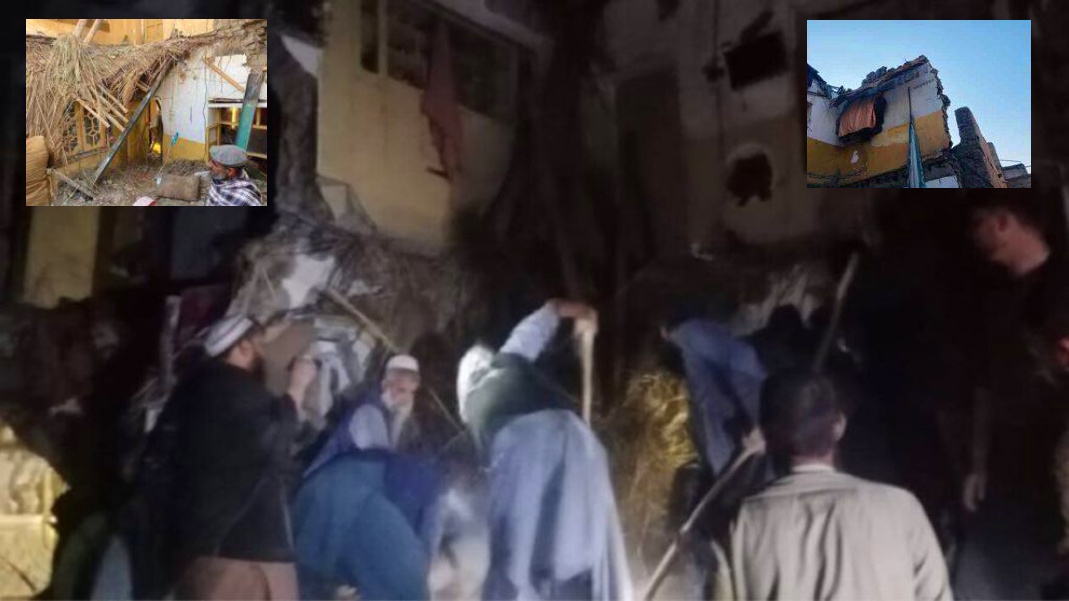
JALALABAD, Nangarhar Province — A mother and her six children were killed early Thursday when their two-story home collapsed in central Jalalabad, local Taliban authorities confirmed. The family’s father was injured and rescued from the rubble.
The provincial police command stated the collapse occurred around midnight in the Qochko area of Jalalabad’s seventh security district. The house, located along a canal, had previously sustained structural damage from water erosion before completely giving way, trapping all eight occupants inside.
A Broader Crisis of Infrastructure and Climate
The tragedy highlights Afghanistan’s severe infrastructure crisis, exacerbated by decades of conflict, chronic lack of maintenance, and the absence of enforced building codes. Many structures, especially those near riverbanks and in erosion-prone zones, are built without proper engineering standards and become acutely vulnerable during seasonal rains and flooding.
Poverty compounds the risk, forcing countless families to remain in known unstable dwellings. “The house was located near a river and had previously been damaged by water flow,” a Taliban police statement noted, describing the conditions that led to the fatal collapse.
Severe Weather Wreaks Nationwide Havoc
This incident coincides with a period of severe weather across Afghanistan, which has strained the country’s limited disaster response capabilities. The Taliban’s National Disaster Management Authority (ANDMA) reported this week that at least 61 people have been killed and 110 injured from recent heavy snowfall and rainfall across 15 provinces, including Kabul and Herat.
Officials stated these natural disasters have completely or partially destroyed 458 homes, affected 360 families, and killed hundreds of livestock. In recent days, heavy snow has triggered avalanches and building collapses, contributing to a rising toll of weather-related casualties nationwide.
A Perfect Storm of Vulnerabilities
Afghanistan faces a convergence of humanitarian challenges: economic collapse, widespread food insecurity, and critically inadequate emergency services. The country’s disaster preparedness infrastructure is minimal, and resources for rescue operations are severely insufficient. This often turns natural events into human catastrophes with preventable deaths.
Harsh winter conditions disproportionately threaten the most vulnerable—including the poor, internally displaced persons, and returnees living in flimsy, makeshift shelters. The recent fatalities underscore a systemic failure in risk mitigation and emergency response, leaving families exposed to the elements in unsafe housing.
Local communities and under-resourced municipal teams conducted the rescue operation in Jalalabad. The injured father is receiving medical treatment, while the bodies of the deceased have been handed over to relatives for burial.
Our Pashto-Dari Website


Support Dawat Media Center
If there were ever a time to join us, it is now. Every contribution, however big or small, powers our journalism and sustains our future. Support the Dawat Media Center from as little as $/€10 – it only takes a minute. If you can, please consider supporting us with a regular amount each month. Thank you
DNB Bank AC # 0530 2294668
Account for international payments: NO15 0530 2294 668
Vipps: #557320

Comments are closed.