

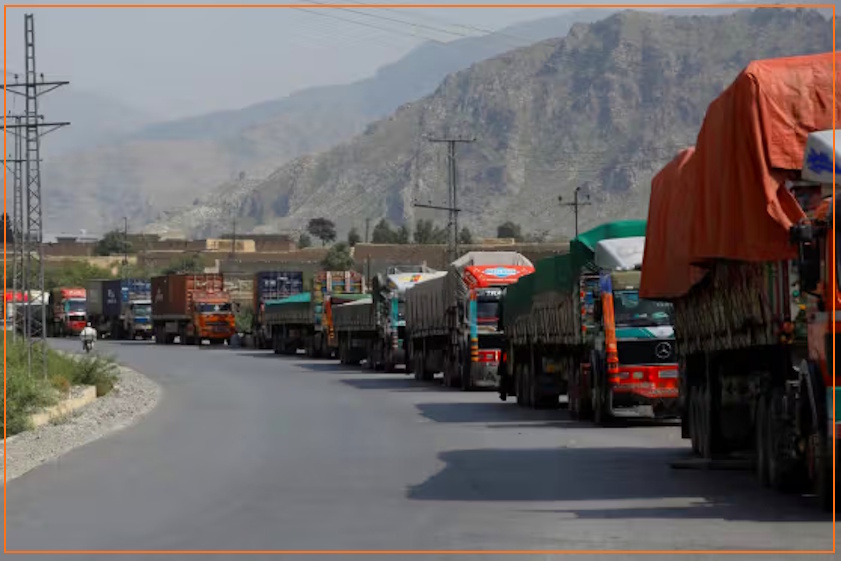
ISLAMABAD/LAHORE – Pakistan’s industrial and export sectors are sounding alarms over severe and escalating economic losses stemming from the prolonged closure of key border crossings with Afghanistan, with nearly $200 million in pharmaceutical exports now at immediate risk and broader regional trade corridors paralyzed.
The crisis began approximately two months ago when Pakistan unilaterally shut down the major transit routes at Torkham (in Khyber Pakhtunkhwa) and Chaman (in Balochistan) along the contentious Durand Line. In a retaliatory move on November 12, the Islamic Emirate of Afghanistan (IEA) suspended all trade with Pakistan. The situation deteriorated further when, on November 13, Afghanistan’s Ministry of Finance announced it would cease customs processing for Pakistani medicine imports entirely within three months, following a directive from the Office of the Deputy Prime Minister for Economic Affairs.
Industry representatives warn that the deadlock is creating a perfect storm of commercial damage. “The ongoing closure is crippling essential pharmaceutical supplies to Afghanistan, spoiling temperature-sensitive drugs, and exposing Pakistan to massive commercial losses at a time when our exporters cannot afford another shock,” a representative stated in a report by Dawn.
The stakes extend far beyond bilateral trade. Afghanistan is Pakistan’s largest overland trading partner and serves as the critical gateway to the resource-rich markets of Central Asia, including Uzbekistan, Tajikistan, Turkmenistan, and Kazakhstan. Each day the crossings remain shut severs Pakistan’s link to these landlocked economies, disrupts critical regional connectivity projects, and undermines confidence in multilateral investments—notably the ambitious Pakistan–Uzbekistan–Afghanistan railway and other corridor initiatives pivotal to regional integration.
The human and financial toll is mounting rapidly within Pakistan’s export sector. “Almost all exports to Afghanistan have ground to a halt,” explained Tauqeer ul Haq of the Pakistan Pharmaceutical Manufacturers Association (PPMA). “Containers carrying lifesaving cargo—antibiotics, insulin, vaccines, cardiovascular drugs, and other essential medicines—are stranded at crossings, dry ports, and warehouses. These delays are pushing local manufacturers toward irreversible financial losses.”
Haq cited a stark example: one single pharmaceutical firm has products worth Rs850 million (approximately $3.05 million) stuck at Torkham and Chaman, with more than fifty companies facing similar catastrophic setbacks. For temperature-controlled pharmaceuticals, the delays are not just a financial loss but also a public health concern, as many vaccines and biologics become ineffective without proper refrigeration.
Broader Economic Impact:
-
Supply Chain Disruption: The textile, perishable food, and cement industries are also reporting major disruptions, with cargo destined for Afghanistan and Central Asia piling up at ports.
-
Logistical Gridlock: Thousands of trucks and containers are immobilized, causing massive demurrage charges and crippling the logistics sector.
-
Regional Credibility: Analysts note that the closures damage Pakistan’s credibility as a reliable trade and transit partner under the Central Asia Regional Economic Cooperation (CAREC) program and other frameworks.
Calls for Resolution:
Business chambers and trade bodies across Pakistan are urgently calling for high-level diplomatic intervention to de-escalate tensions and resume trade. They emphasize that while political and security concerns exist, they must be addressed through dialogue without resorting to measures that inflict disproportionate economic harm on both nations and derail long-term regional development goals.
The Pakistani government has yet to announce a timeline for reopening the borders, leaving exporters in a state of limbo as losses continue to accumulate daily. The situation underscores the deep economic interdependence between the two neighbors and the high cost of political deadlock on regional stability and prosperity.
Our Pashto-Dari Website


Support Dawat Media Center
If there were ever a time to join us, it is now. Every contribution, however big or small, powers our journalism and sustains our future. Support the Dawat Media Center from as little as $/€10 – it only takes a minute. If you can, please consider supporting us with a regular amount each month. Thank you
DNB Bank AC # 0530 2294668
Account for international payments: NO15 0530 2294 668
Vipps: #557320

Comments are closed.