
Pakistan Arrests 517 Afghan Migrants in One Week, UN Agencies Report

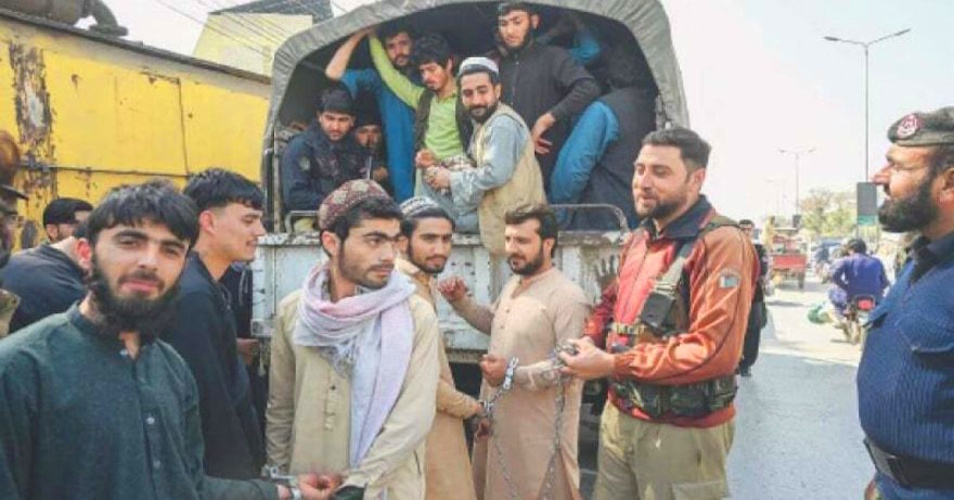
A total of 517 Afghan nationals were arrested in Pakistan during the week of October 11–17, according to a joint report by the International Organization for Migration (IOM) and the UN refugee agency (UNHCR). The report also found that fear of arrest remained the primary reason many Afghans returned to their home country during the same period.
The two agencies estimated that 2,744,068 Afghan nationals had returned to Afghanistan from Pakistan between September 15, 2023, and October 17, 2026, a figure that includes both voluntary and forced returns.
During the reporting week, an estimated 3,883 Afghans returned through the Torkham, Chaman and Bahramcha border crossings. Of those who returned, 83 percent were undocumented, while 9 percent held Afghan Citizen Cards (ACC) and 8 percent held Proof of Registration (PoR) cards.
Fear of arrest was cited as the main reason for returning by 95 percent of undocumented Afghans and ACC holders. Among PoR cardholders, the figure stood at 68 percent, underlining the extent to which detention concerns are shaping cross-border movements.
The report also recorded 499 deportations during the week. Compared with the previous reporting period of October 4–10, overall returns declined by 10 percent, while deportations fell by 48 percent.
The figures reflect the continued return of Afghan nationals from Pakistan amid enforcement measures affecting undocumented Afghans as well as people holding different forms of registration or identity documentation.
Afghanistan is facing a severe humanitarian crisis, with millions of people struggling to access adequate food, healthcare and other essential services. The return of Afghan nationals from Pakistan adds further pressure on communities already affected by poverty, unemployment, displacement and limited public services.
For families arriving without secure housing, livelihoods or adequate support, forced returns can deepen their vulnerability and make reintegration particularly difficult. Many returnees arrive in areas where shelter, employment opportunities and basic services are already stretched thin, leaving them dependent on humanitarian assistance that is itself under strain.
Human rights organisations and international agencies have also raised concerns about the risks faced by Afghans returning to a country where restrictions on women and girls, limitations on freedom of expression and other rights violations remain serious concerns. Deportations may expose some returnees particularly people at risk because of their work, public profile or personal circumstances—to further danger.
The joint reporting by IOM and UNHCR highlights the complex interplay between enforcement measures in Pakistan and the humanitarian and protection challenges facing Afghanistan, where the absorption capacity for large numbers of returnees remains limited.
Our Pashto-Dari Website

Support Dawat Media Center
If there were ever a time to join us, it is now. Every contribution, however big or small, powers our journalism and sustains our future. Support the Dawat Media Center from as little as $/€10 – it only takes a minute. If you can, please consider supporting us with a regular amount each month. Thank you
DNB Bank AC # 0530 2294668
Account for international payments: NO15 0530 2294 668
Vipps: #557320

Comments are closed.