

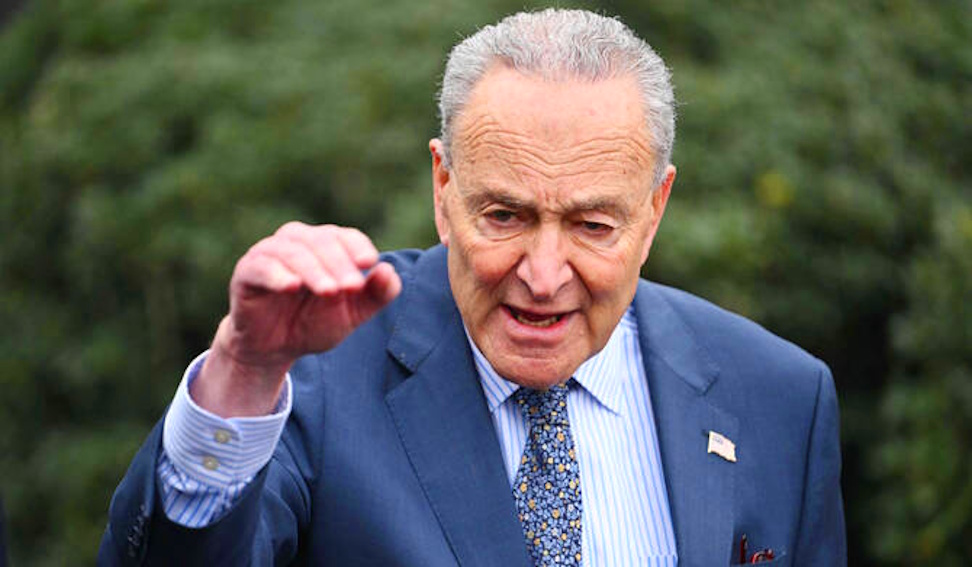
WASHINGTON — Senior Democratic lawmakers charged on Saturday that Trump administration officials deliberately misled them in recent classified briefings about U.S. plans for Venezuela, insisting they were not pursuing regime change just days before launching a military operation that deposed President Nicolás Maduro overnight.
The intervention marks Washington’s most direct military action in Latin America since the 1989 invasion of Panama, escalating long-standing tensions with the socialist government in Caracas into open confrontation.
“Clearly They’re Not Being Straight”
Senate Democratic Leader Chuck Schumer (D-NY) revealed he had received three classified briefings where administration officials explicitly denied plans for regime change or military action in Venezuela.
“They assured me they were not pursuing those things,” Schumer told reporters. “Clearly they’re not being straight with the American people.”
Schumer, who had not been briefed about the impending operation as of Saturday afternoon, demanded the administration provide comprehensive briefings to all members of Congress—not just leadership and intelligence committee heads—by early next week.
“They’ve kept everyone in the total dark,” he said.
Concerns Over Lack of Strategy
The operation follows President Trump’s recent comments suggesting he would place Venezuela under U.S. control temporarily, raising alarm among lawmakers about the administration’s long-term objectives.
“No serious plan has been presented for how such an extraordinary undertaking would work or what it will cost the American people,” said Senator Jack Reed (D-RI), ranking member of the Senate Armed Services Committee. “History offers no shortage of warnings about the costs—human, strategic, and moral—of assuming we can govern another nation by force.”
The Senate is scheduled to vote next week on a measure that would block further military action against Venezuela without congressional authorization—a move that reflects growing unease about executive overreach.
Ground Troop Speculation Creates Division
President Trump’s openness to deploying U.S. ground troops to Venezuela has created concerns even within his own party. Republican Representative Mariannette Miller-Meeks of Iowa, facing a challenging reelection campaign, acknowledged the national security implications but noted, “Iowans do not want troops on the ground in Venezuela.”
Lawmakers from both parties reported that in November and December briefings featuring officials including Secretary of State Marco Rubio and Secretary of Defense Pete Hegseth, they were repeatedly told there were no plans for invasion or regime change.
“Instead, the Administration consistently misled the American people and their elected representatives,” said Senator Jeanne Shaheen (D-NH), the top Democrat on the Senate Foreign Relations Committee.
Accusations of Deliberate Deception
Several legislators stated unequivocally that they had been deceived. “The Administration lied to Congress and launched an illegal war for regime change and oil,” declared Democratic Representative Don Beyer of Virginia, whose district includes the Pentagon.
At a Saturday news conference, President Trump defended the limited notification to Congress, citing concerns about leaks. “Congress does have a tendency to leak,” he told reporters.
The secrecy surrounding Venezuela policy has frustrated lawmakers since September, when the administration began a military buildup in the Caribbean and conducted strikes on vessels allegedly carrying drugs.
“When we had briefings on Venezuela, we asked, ‘Are you going to invade the country?’ We were told no,” said Democratic Representative Seth Moulton (MA) on CNN. “So in a sense, we have been briefed, we’ve just been completely lied to.”
Partisan Divide in Response
While most Republicans praised the operation, they declined to discuss classified briefing contents. Senate Republican Leader John Thune (SD) called Trump’s action “decisive” and “an important first step” in bringing Maduro to justice for alleged drug crimes.
Republican Representative Mario Diaz-Balart (FL) suggested the operation could have regional implications, stating that with Maduro removed, the “tyrannies” in Cuba and Nicaragua were also threatened.
The operation has reignited longstanding constitutional debates about war powers. Multiple members of Congress from both parties have accused successive administrations of sidestepping the Constitution’s requirement that Congress—not the president—authorize sustained military engagements.
Lawmakers were not briefed before the overnight operation, though Secretary Rubio contacted some members afterward. Congressional leaders hope to arrange additional briefings when lawmakers return from recess on January 5.
The Pentagon, State Department, and White House did not immediately respond to requests for comment.
Our Pashto-Dari Website


Support Dawat Media Center
If there were ever a time to join us, it is now. Every contribution, however big or small, powers our journalism and sustains our future. Support the Dawat Media Center from as little as $/€10 – it only takes a minute. If you can, please consider supporting us with a regular amount each month. Thank you
DNB Bank AC # 0530 2294668
Account for international payments: NO15 0530 2294 668
Vipps: #557320

Comments are closed.