
Iran Executed at Least 109 Prisoners in June, Including Five Afghan Nationals, Rights Group Says

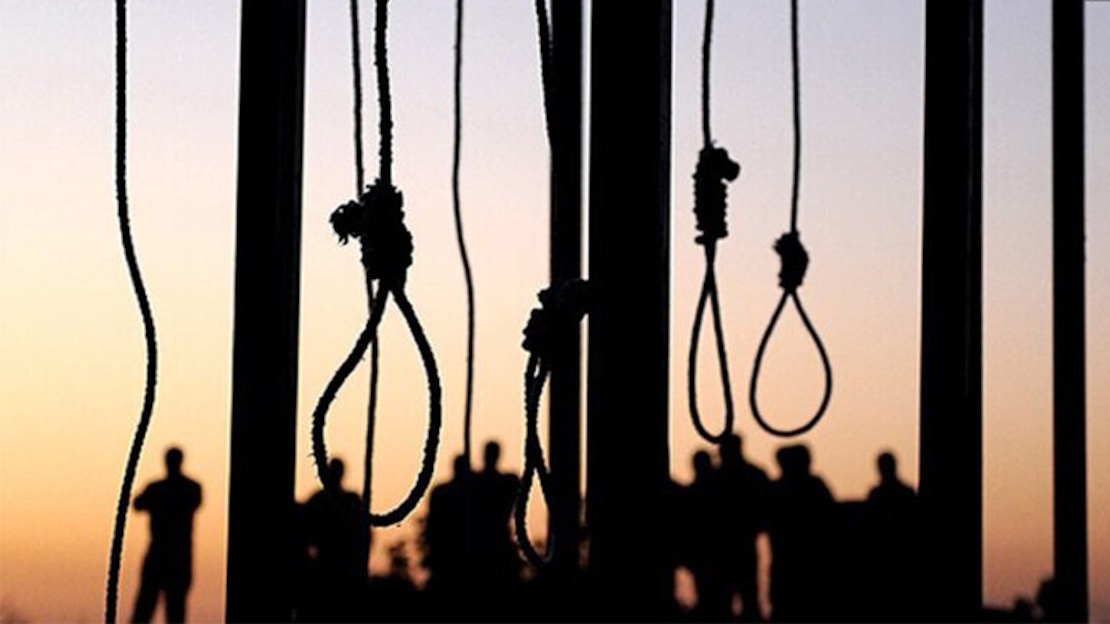
Iran carried out at least 109 executions in June, including those of five Afghan citizens, according to the Norwegian-based Iranian Kurdish human rights organization Hengaw. The group reported that the June total marked a significant increase compared with the same month last year, reflecting what activists describe as an accelerating pace of state-sanctioned executions amid ongoing domestic unrest and international criticism.
In a report published on Saturday, Hengaw said it had documented and verified the identities of 109 people executed in prisons across Iran during June 2026. The organization stated that the figure represented an increase of at least 10% compared with the 99 executions it recorded in June 2025. The actual number may be higher, Hengaw added, as Iranian authorities routinely withhold execution data and many cases go unreported.
According to the report, five political prisoners were among those put to death, though Hengaw did not specify their affiliations or the charges against them. The organization also confirmed that five Afghan nationals were executed during the month but declined to disclose their identities, the locations of their trials, or the offenses for which they were convicted, citing security concerns and the sensitivity of the information.
Hengaw further noted that Iranian state media and judicial authorities officially announced only seven of the 109 executions less than 7% of the total continuing a pattern of secrecy that human rights advocates say undermines public accountability. In 12 of the cases, prisoners were executed without their families being notified in advance or granted a final visit, practices that international human rights bodies have repeatedly condemned as violations of due process and fundamental standards of humane treatment.
The organization broke down the executions by offense: prisoners convicted of premeditated murder accounted for the largest share, with 54 cases, followed by 44 executions for drug-related offenses mostly involving large-scale trafficking or repeat offenses. The remaining 11 prisoners were executed after convictions on other charges, including alleged national security crimes, “enmity against God” (moharebeh), and unspecified offenses under Iran’s Islamic penal code.
The June figures came one day after another Norway-based rights monitor, Iran Human Rights (IHR), reported that three Afghan prisoners had been executed in prisons in Yazd and Shiraz. IHR identified them as Noor Jalal Mujahid, Mirwais Khalilzada, and Ibrahim Ahmadshahi. According to IHR, at least two of the three were convicted on drug-related charges, though the organization expressed concern over the lack of accessible legal representation and translation services during their trials.
Iran remains among the world’s top practitioners of capital punishment, alongside China, Saudi Arabia, and Egypt, according to annual reports by Amnesty International and other global watchdog groups. In 2025, IHR documented over 900 executions in Iran, making it the country’s highest annual tally in nearly a decade. Groups including Hengaw, IHR, and Amnesty have repeatedly criticized Iran’s use of the death penalty, particularly in cases involving drug offenses which are not considered “most serious crimes” under international law as well as political prisoners and national security-related charges. Iranian authorities have consistently defended the practice, maintaining that all executions are carried out in strict accordance with the country’s Islamic legal framework and judicial procedures, and that the death penalty serves as a necessary deterrent.
Human rights organizations have also raised alarm over the growing number of Afghan nationals executed in Iran. According to IHR, at least 84 Afghan citizens were put to death in the country during 2025 the highest annual figure since the organization began tracking such data. That number marks a sharp rise from previous years and has prompted calls for Iran to review its treatment of foreign nationals in the justice system. Rights advocates say Afghan defendants frequently face systemic legal challenges, including limited access to qualified legal counsel, language barriers, cultural misunderstandings, and a lack of transparency in judicial proceedings. Many are tried in Persian-language courts without adequate interpretation, and some are reportedly coerced into confessions they do not fully understand.
The issue is particularly acute given that millions of Afghan refugees and migrants continue to reside in Iran, many without formal legal status. Following the Taliban’s takeover of Afghanistan in 2021, Iran has hosted one of the world’s largest refugee populations, with estimates ranging from 3 to 5 million Afghans. In recent months, Iranian authorities have accelerated the deportation of undocumented Afghans, conducting mass roundups and forcible removals. At the same time, Tehran has continued prisoner transfer arrangements with the Taliban-controlled government in Kabul. According to joint announcements by Iranian and Taliban officials, at least 735 Afghan prisoners have been transferred from Iran to Afghanistan in three separate exchanges so far this year, under bilateral agreements that primarily cover non-political offenders. However, rights groups warn that such transfers do not guarantee fair treatment upon return, given Afghanistan’s own deteriorating human rights record.
The reported June executions are part of a broader surge in the use of capital punishment in Iran that has drawn repeated condemnation from the United Nations, the European Union, and international human rights organizations. UN experts have expressed particular concern over the rise in executions of foreign nationals, political dissidents, and individuals convicted in mass trials that lack due process. In recent statements, the UN Office of the High Commissioner for Human Rights has urged Tehran to impose an immediate moratorium on executions, improve judicial transparency, and ensure that all defendants receive fair trial guarantees, including access to lawyers, interpreters, and the right to appeal.
Iranian judicial authorities, however, have shown no signs of slowing the pace of executions. In response to international pressure, Iranian officials have accused foreign governments and rights groups of interfering in the country’s internal affairs and have stressed that capital punishment remains a sovereign legal instrument. They have also pointed to public support for the death penalty in cases of murder and drug trafficking, particularly as Iran continues to grapple with domestic security challenges and what it describes as a “war on narcotics” along its eastern borders.
As the international community watches closely, human rights advocates are calling for coordinated diplomatic action, including targeted sanctions against Iranian judicial officials and increased support for legal aid programs for foreign nationals. For now, however, the gallows remain a grim constant in Iran’s justice system and for Afghan prisoners, the path to clemency appears to be narrowing further.
Our Pashto-Dari Website

Support Dawat Media Center
If there were ever a time to join us, it is now. Every contribution, however big or small, powers our journalism and sustains our future. Support the Dawat Media Center from as little as $/€10 – it only takes a minute. If you can, please consider supporting us with a regular amount each month. Thank you
DNB Bank AC # 0530 2294668
Account for international payments: NO15 0530 2294 668
Vipps: #557320

Comments are closed.