
Iran’s Supreme Leader Warns of ‘Regional War’ if US Attacks, Accuses Washington of Coveting Resources

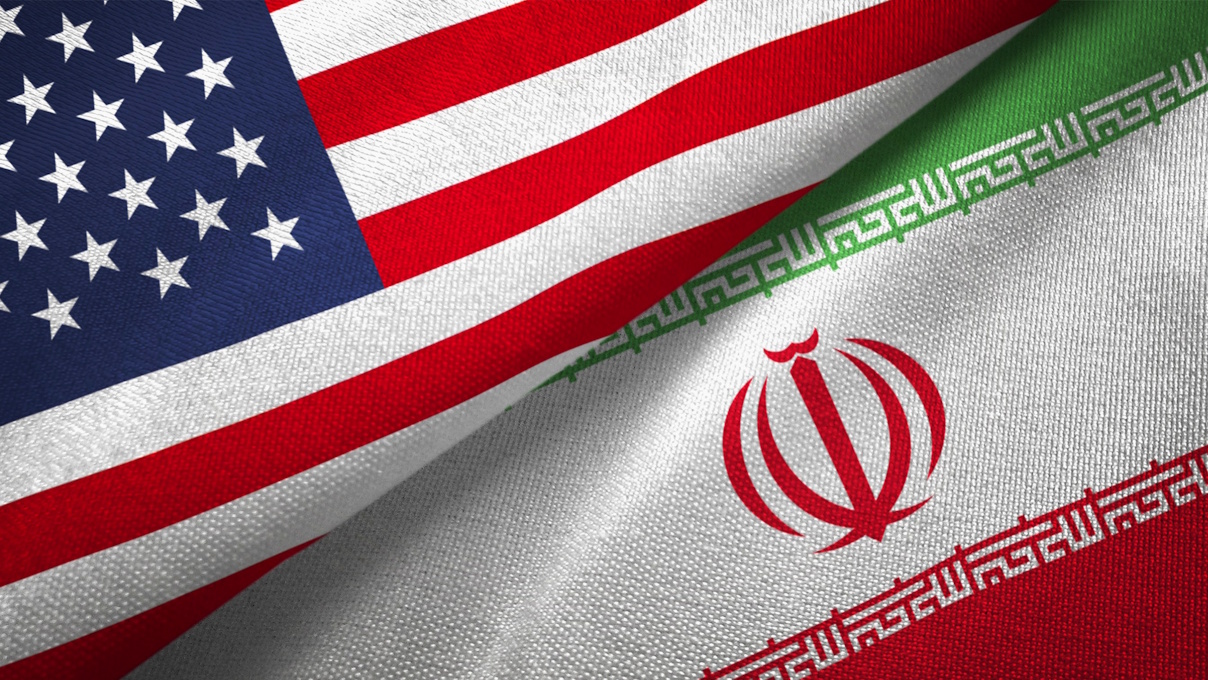
Iran’s Supreme Leader Ayatollah Ali Khamenei issued a stark warning to the United States on Sunday, declaring that any American military action against the Islamic Republic would escalate into a broader “regional war.” The 86-year-old leader, who has held ultimate authority in Iran for nearly four decades, accused the U.S. of fundamentally seeking to seize Iran’s vast oil and natural gas reserves.
“The Americans should know that if they start a war this time, it will not be a limited confrontation,” Khamenei stated during a televised address in Tehran commemorating the 44th anniversary of the Islamic Revolution. “It will be a regional war. The logic of our defensive strategy is that if any hostile power attacks Iran, it will have to face responses from across the region.”
Khamenei’s bellicose rhetoric comes amidst a period of heightened tension and complex, contradictory signals between the long-standing adversaries. His speech marked the anniversary of Ayatollah Ruhollah Khomeini’s 1979 return from exile, which precipitated the revolution that overthrew the Western-backed Shah.
Context of Rising Tensions
The Supreme Leader’s warning is set against a backdrop of recent internal unrest and external military posturing. In January, nationwide anti-government protests, triggered by economic collapse and political repression, were violently suppressed. Iranian authorities claimed 3,117 deaths, including security personnel, while international human rights groups estimate the toll exceeded 6,000, figures that cannot be independently verified.
In the aftermath, U.S. President Donald Trump deployed the USS Abraham Lincoln carrier strike group and additional bomber aircraft to the Middle East, a move Tehran perceived as overt intimidation. Khamenei framed the domestic protests as a foreign-instigated “coup” attempt, now defeated, aimed at destabilizing the state.
“The recent sedition was similar to a coup, aimed at destroying the country’s sensitive nerve centers,” he asserted, claiming protesters attacked police, government buildings, and even religious sites.
Accusations of Economic Motives
Striking at what he presented as the core of U.S. policy, Khamenei dismissed American advocacy for human rights and democracy as pretext. “The main reason for their hostility is their desire to lay hands on Iran’s enormous resources, especially its oil and natural gas,” he said. “All other talk is empty and a cover for this primary goal.”
Paradox of Parallel Diplomacy
Despite the incendiary rhetoric, both nations have simultaneously confirmed the existence of back-channel communications aimed at averting open conflict. Just a day before Khamenei’s speech, President Trump noted that Iranian officials were “seriously talking” to Washington. This followed comments from Ali Larijani, head of Iran’s Supreme National Security Council, expressing Tehran’s readiness for negotiations.
The apparent diplomatic outreach, however, is mired in conflicting objectives. Trump, speaking aboard Air Force One, emphasized that any deal must ensure Iran foregoes nuclear weapons, though he expressed uncertainty about Tehran’s willingness to commit. “But they are talking to us,” he reiterated.
This dialogue occurs in the shadow of recent military actions. In June, indirect talks between Iranian and American officials in Oman were followed shortly by a 12-day conflict between Israel and Iran, which saw the U.S. join Israel in strikes against Iranian nuclear facilities—a significant escalation that continues to shape the current crisis.
Regional Stakes and Broader Conflict
Analysts suggest Khamenei’s “regional war” warning is a reference to Iran’s network of allied militias and proxies across the Middle East, collectively known as the “Axis of Resistance.” This includes groups like Hezbollah in Lebanon, various factions in Iraq and Syria, and the Houthis in Yemen, all capable of launching attacks on U.S. interests and allied nations in response to any strike on Iran.
The situation presents a volatile standoff: while open lines of communication suggest a mutual desire to step back from the brink, the underlying grievances—Iran’s regional ambitions and nuclear program versus U.S. sanctions and maximum pressure campaign—remain profoundly unresolved. The world now watches to see whether diplomacy can withstand the weight of decades of hostility and recent bloodshed, or if the region is indeed one miscalculation away from a wider war.
Our Pashto-Dari Website

Support Dawat Media Center
If there were ever a time to join us, it is now. Every contribution, however big or small, powers our journalism and sustains our future. Support the Dawat Media Center from as little as $/€10 – it only takes a minute. If you can, please consider supporting us with a regular amount each month. Thank you
DNB Bank AC # 0530 2294668
Account for international payments: NO15 0530 2294 668
Vipps: #557320

Comments are closed.