
Putin Dismisses Russian Interest in Greenland, Suggests $1 Billion Price Tag Amid U.S.-Denmark Tensions

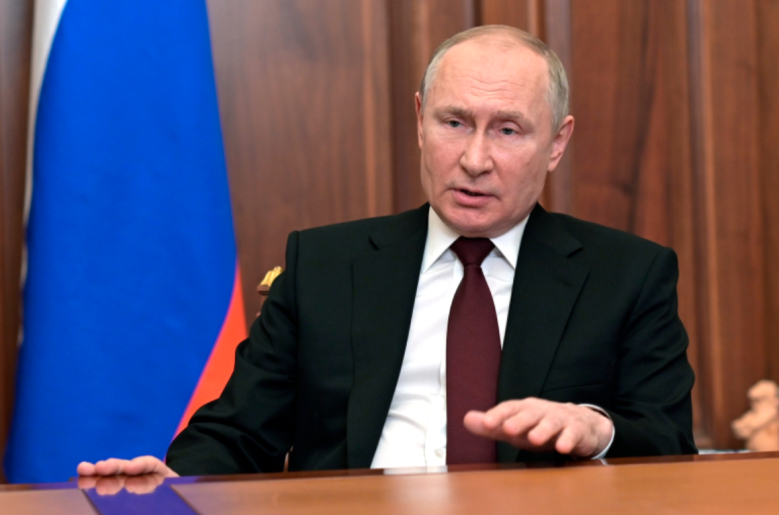
Russian President Vladimir Putin stated on Wednesday that the sovereignty of Greenland is not a matter for Moscow, asserting that the United States and Denmark should resolve the contentious issue bilaterally. His comments came amid heightened diplomatic friction sparked by U.S. President Donald Trump’s expressed interest in acquiring the vast Arctic island.
Speaking at a meeting of Russia’s Security Council, Putin sought to distance Russia from the dispute, while simultaneously critiquing Denmark’s colonial history in Greenland. “What happens in Greenland is of no concern to us whatsoever,” Putin declared. “Incidentally, Denmark has always treated Greenland as a colony and has been quite harsh, if not cruel, towards it. But that is a different matter altogether, and hardly anyone is interested in it now.”
Calculating a Cost: A Historical Precedent
In a pointed historical aside, Putin drew a parallel to past territorial sales, notably Russia’s 1867 sale of Alaska to the United States for $7.2 million. After adjusting that sum for inflation, accounting for Greenland’s larger size, and considering fluctuations in gold prices, Putin speculated that a modern transaction for the island could amount to approximately $1 billion—a sum, he noted, well within Washington’s means.
“I think they will sort it out between themselves,” Putin concluded, framing the potential purchase as a matter for Copenhagen and Washington alone.
Regional Rivalries and Diplomatic Calculations
Moscow has observed with notable amusement as Trump’s pursuit of Greenland has exacerbated existing strains in transatlantic relations, even though the outcome could alter the strategic balance in the Arctic—a region where Russia maintains a formidable military and economic presence. Putin’s remarks signal a pragmatic, if not opportunistic, stance: avoiding direct opposition to Trump’s ambitions while subtly underscoring colonial grievances that may complicate Denmark’s position.
The Russian president’s commentary follows a pattern of careful rhetoric regarding Trump, whom the Kremlin has avoided criticizing directly as the U.S. president attempts to broker a deal to end the war in Ukraine. However, underlying tensions persist. Denmark’s robust financial and military support for Ukraine has angered Moscow, which is engaged in a protracted conflict to solidify control over four regions it annexed in 2022.
Lavrov’s Lingering Doubts
Echoing Putin’s nuanced position, Russian Foreign Minister Sergei Lavrov commented earlier this week that resource-rich Greenland was not “a natural part” of Denmark. The statement, while stopping short of endorsing any U.S. claim, reinforces a narrative that questions Copenhagen’s enduring sovereignty over the semi-autonomous territory.
Meanwhile, at the World Economic Forum in Davos, President Trump appeared to dial back the most confrontational aspects of his proposal. He stepped away from earlier threats to use trade tariffs as leverage and explicitly ruled out military force, suggesting instead that progress was being made toward a negotiated solution to avert a major rift in U.S.-European relations.
The Bigger Picture: An Arctic Chessboard
The Greenland discourse unfolds against a backdrop of intensifying great-power competition in the Arctic. The region’s strategic importance is growing due to melting ice caps, which are opening new shipping routes and access to vast untapped natural resources. While Putin publicly feigns disinterest, Russia’s significant investments in Arctic military infrastructure and energy projects betray a deep-seated intention to dominate the area’s future.
By outwardly dismissing the Greenland issue as a bilateral U.S.-Danish affair, the Kremlin achieves multiple objectives: it needlessly antagonizes neither Washington nor Copenhagen, fans the flames of intra-NATO disagreement, and reserves Russia’s freedom to act in a rapidly changing geopolitical landscape where it considers its own interests paramount. The suggestion of a price tag, therefore, is less a serious appraisal than a rhetorical gambit—a reminder from Moscow that territories can be bought, sold, and contested, altering the map of global influence.
Our Pashto-Dari Website


Support Dawat Media Center
If there were ever a time to join us, it is now. Every contribution, however big or small, powers our journalism and sustains our future. Support the Dawat Media Center from as little as $/€10 – it only takes a minute. If you can, please consider supporting us with a regular amount each month. Thank you
DNB Bank AC # 0530 2294668
Account for international payments: NO15 0530 2294 668
Vipps: #557320

Comments are closed.