

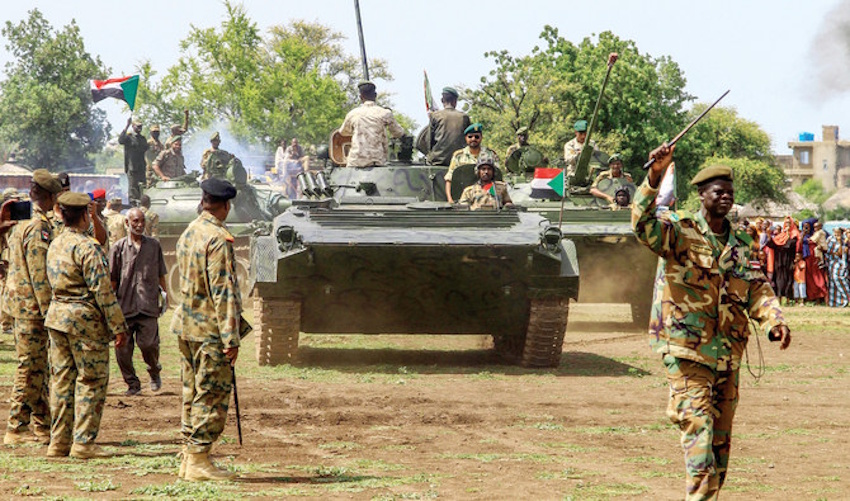
Port Sudan – The Sudanese army announced on Monday that it had recaptured Kulbus, a strategic town near the Chadian border, in what analysts are calling its most significant battlefield gain in western Darfur since the catastrophic fall of al-Fashir last year. The development marks a rare offensive success for the military, which has largely been on the defensive in the region since the outbreak of the civil war in April 2023.
The Rapid Support Forces (RSF), the paramilitary group locked in a devastating power struggle with the army, has consolidated control over most of Darfur over the past 18 months. That grip was solidified after the RSF seized al-Fashir, the capital of North Darfur and the military’s last major urban stronghold in the vast, arid western region. The capture of al-Fashir was a psychological and tactical blow to the army, severing its command structure in Darfur and allowing RSF fighters to pivot toward the borderlands.
Strategic Corridor and Cross-Border Tensions
Kulbus, a dusty market town, sits on a vital corridor that runs parallel to the frontier with Chad. Geographically, it lies roughly halfway between al-Tina a border town in North Darfur still held by the army and al-Geneina, the capital of West Darfur, which has remained firmly under RSF control since early 2024. Securing Kulbus gives the army and its allies a potential foothold to interdict RSF supply lines and disrupt the flow of foreign fighters and materiel that, according to multiple UN reports, have been funneled across the porous Chad-Sudan border.
In a statement released late Monday, the Joint Forces a coalition of armed groups that have allied themselves with the Sudanese military said their fighters had taken “full control” of Kulbus after what they termed “decisive and fierce battles.” The coalition claimed to have inflicted heavy casualties on RSF units, destroyed several armored vehicles, and seized a cache of weapons and ammunition. The statement was accompanied by grainy video footage circulated by local media, which appeared to show men in Sudanese army uniforms celebrating in front of a weather-beaten sign reading “West Darfur State Kulbus Locality.”
The claims could not be independently verified due to restricted access to the conflict zone, and the RSF had not issued an official response at the time of publication.
Accusations of External Support
In a separate communiqué, a pro-army popular resistance group one of the civilian militias that have mobilized to support the regular forces leveled fresh accusations against the RSF, alleging that the paramilitary group had been using Kulbus as a staging ground for “thousands of fighters crossing the border” from Chad. The group also described the town as a key logistics hub, with supply convoys regularly ferrying fuel, ammunition, and medical supplies from al-Geneina to RSF positions further north.
These allegations are likely to heighten tensions between Sudan and Chad, which the army has repeatedly accused of providing sanctuary and logistical support to the RSF. N’Djamena has consistently denied the claims, but the border region remains a flashpoint, with both sides trading accusations of cross-border incursions.
Shifting Frontlines and a Growing Humanitarian Catastrophe
Military analysts note that fighting has intensified in recent months along the frontier between North and West Darfur, as the army attempts to secure a strategic corridor that could serve as a lifeline for its dwindling forces. The town of al-Tina, already classified by the UN as being at “high risk” of famine, has come under repeated RSF attacks this year, with aid agencies warning that continued violence could tip the area into full-scale starvation.
Beyond Darfur, fears are mounting of a broader RSF offensive. In recent days, the UN, several Western governments, and a host of international aid organizations have issued stark warnings about a possible RSF assault on al-Obeid, a major city in the neighboring Kordofan region. Al-Obeid serves as a crucial transport hub, linking Darfur to the capital, Khartoum, and its fall would mirror the devastating campaign that led to the capture of al-Fashir, potentially opening a new front in the center of the country.
The Human Toll
Now grinding into its fourth year, the conflict between the army and the RSF has exacted a staggering human cost. While precise figures remain elusive, independent observers estimate that tens of thousands of people have been killed, with entire villages razed and communities ethnically cleansed in Darfur. More than 8 million people have been displaced internally or forced to flee across borders, making it one of the largest displacement crises in the world. The UN has declared the situation the world’s largest hunger crisis, with over 25 million people more than half the country’s population facing acute food insecurity.
For the residents of Kulbus and the surrounding hamlets, the army’s claim of victory offers little immediate respite. The town has changed hands multiple times since the war began, and local sources report that most of the civilian population had already fled weeks ago, leaving behind a ghost settlement of looted shops and shell-pocked buildings.
As the army celebrates a rare tactical win, the underlying dynamics of the conflict remain unchanged: a brutal, attritional war with no clear end in sight, fueled by foreign arms, ethnic grievances, and the personal ambitions of two rival generals. Whether the recapture of Kulbus signals a turning point or merely a temporary shift in the frontlines will depend on the army’s ability to hold the town and push further east a feat it has so far failed to accomplish in Darfur.
Our Pashto-Dari Website

Support Dawat Media Center
If there were ever a time to join us, it is now. Every contribution, however big or small, powers our journalism and sustains our future. Support the Dawat Media Center from as little as $/€10 – it only takes a minute. If you can, please consider supporting us with a regular amount each month. Thank you
DNB Bank AC # 0530 2294668
Account for international payments: NO15 0530 2294 668
Vipps: #557320

Comments are closed.