

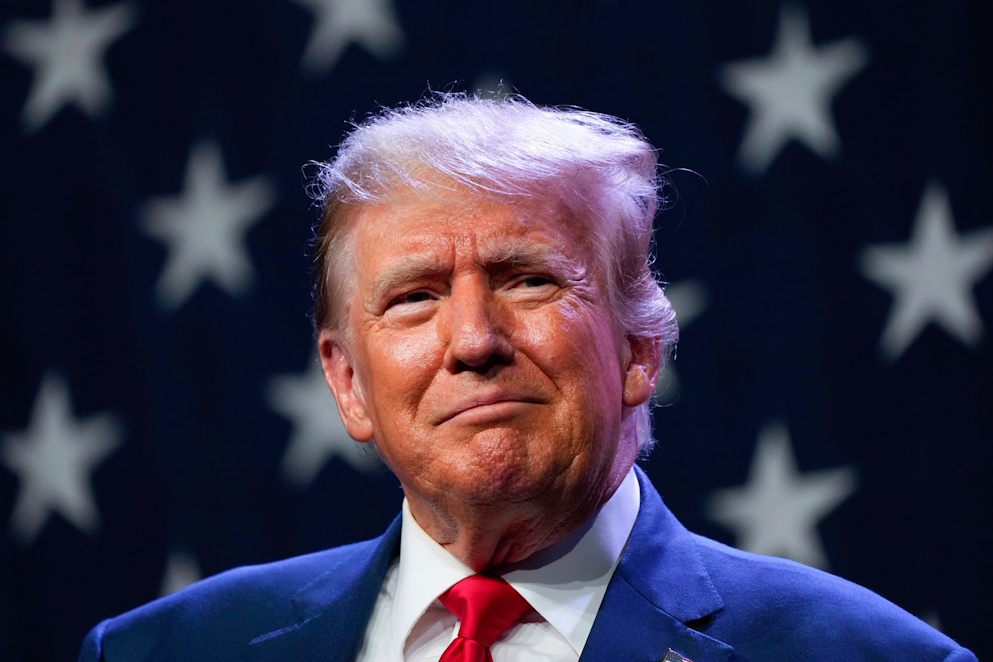
BIARRITZ, France – In a series of sharp-edged remarks from the G7 summit on Tuesday, U.S. President Donald Trump publicly rebuked Israeli Prime Minister Benjamin Netanyahu over the ongoing military campaign in southern Lebanon, urging Jerusalem to adopt a “more responsible” posture while simultaneously warning Tehran that any breach of a new interim U.S.-Iran accord would trigger catastrophic retaliation.
“Prime Minister Netanyahu has to be more responsible in Lebanon,” Trump told reporters, standing alongside Qatar’s Emir, Sheikh Tamim bin Hamad Al Thani. “I’m not happy with the way Israel is handling Hezbollah there, and I’ve made that clear.” The rare, on-the-record criticism marks a visible fracture in public messaging between two close allies, as Israeli forces continue a ground incursion into Lebanese territory that began last month.
Trump’s rebuke came hours after Iran’s Foreign Ministry issued a terse statement warning that any further Israeli attack on Lebanon or continued occupation of its land “will constitute a material violation” of the interim understanding signed with Washington just last week. Tehran’s declaration raises the stakes for the nascent 14-point memorandum of understanding, whose full text remains classified but which Trump vowed to release “in a formal setting” in the coming days.
VANCE: NO TOLLS IN THE STRAIT, BUT INSPECTORS RETURN
In a parallel diplomatic track, U.S. Vice President JD Vance confirmed that United Nations nuclear inspectors are expected to return to Iranian facilities within the 60-day negotiating window established by the interim deal. Vance also sought to ease maritime tensions, stating flatly that “there will be no tolls or disruptions” in the Strait of Hormuz during the talks a pledge aimed at stabilizing global oil markets rattled by weeks of naval posturing.
Yet even as the U.S. projects optimism, Netanyahu struck a defiant note from Jerusalem, declaring that Israeli troops “will continue to occupy southern Lebanon” until Hezbollah is dismantled, regardless of any U.S.-Iranian understanding. The prime minister’s insistence on maintaining a buffer zone risks direct confrontation with Tehran’s red lines, potentially unraveling the diplomatic breakthrough before formal negotiations even commence.
TRUMP: ‘MY DEAL IS A WALL. OBAMA’S WAS A ROAD.’
Trump, who withdrew the U.S. from the 2015 Joint Comprehensive Plan of Action (JCPOA) during his first term, took repeated aim at his predecessor’s legacy. “His deal was a road to a nuclear weapon. My deal they can’t have a nuclear weapon, or they get blown up. It says it loud and clear,” Trump said, pounding the podium. “The only thing that really matters to me is that Iran will never have a nuclear weapon.”
The president also moved to preempt criticism over financial exposure, clarifying that the U.S. has “no obligation” to invest in Iran’s economy and “is not investing any money” as part of the accord. “We are not writing any checks,” he added, seeking to defuse bipartisan concerns that the deal would flood Tehran with hard currency.
American and Iranian negotiators are set to convene in Switzerland on Friday for the first detailed technical talks, kicking off a compressed 60-day window to address the fate of Iran’s 60% enriched uranium stockpile, the scope of sanctions relief, and verification mechanisms. European allies, speaking on condition of anonymity, have privately voiced alarm that Washington’s rookie negotiating team depleted of seasoned nuclear diplomats may struggle to lock down enforceable safeguards, raising the specter of a prolonged standoff or a collapse into military confrontation.
SYRIA AS A SHIELD? TRUMP FLOATS NOVEL SOLUTION
In an unexpected geopolitical twist, Trump suggested that neighboring Syria still grappling with the aftershocks of a 13-year civil war under President Ahmed al-Sharaa could be better positioned than Israel to neutralize Hezbollah. “I suggested to Israel to let Syria take care of Hezbollah, because to be honest, I think they do a better job of doing it,” Trump said, without elaborating on how Damascus, itself a client of Tehran, might be enlisted against the Iranian-backed militia.
Later, in a bilateral meeting with UAE President Sheikh Mohamed bin Zayed Al Nahyan, Trump reiterated that the memorandum “states crystal-clear” that Iran will never acquire nuclear arms. He also embraced a surprise proposal from Republican lawmakers to submit the interim deal to Congress for review a gesture he said he “never thought about” but now “likes.” “I will send it to Congress. I like the idea,” he told reporters, though it remains unclear whether such a submission would be advisory or binding.
TIME, SKILL, AND SKEPTICISM
Diplomats and nonproliferation analysts warn that the 60-day timeline is dangerously ambitious. Iranian negotiators, they note, are among the world’s most experienced practitioners of nuclear brinkmanship, adept at exploiting loopholes and bureaucratic delays to run out the clock while advancing their enrichment capacity. “This is not a game of trust it’s a game of time,” said one European diplomat who worked on the original JCPOA. “And Tehran has always been better at chess than checkers.”
Trump, however, struck an uncharacteristically optimistic tone about the pace. “Iran wants to get it done. They have to get back to business, and the relationship is now normalized,” he said. “I think it’s going to go pretty quickly. Could go faster, could take longer too, but it could go fast.”
As the world watches, the coming weeks will test whether Trump’s high-stakes gamble a blend of maximum pressure, eleventh-hour diplomacy, and public arm-twisting of allies can produce a durable ceasefire in Lebanon and a verifiable cap on Iran’s nuclear ambitions, or whether it merely resets the clock on a confrontation that has simmered for decades.
Our Pashto-Dari Website

Support Dawat Media Center
If there were ever a time to join us, it is now. Every contribution, however big or small, powers our journalism and sustains our future. Support the Dawat Media Center from as little as $/€10 – it only takes a minute. If you can, please consider supporting us with a regular amount each month. Thank you
DNB Bank AC # 0530 2294668
Account for international payments: NO15 0530 2294 668
Vipps: #557320

Comments are closed.