

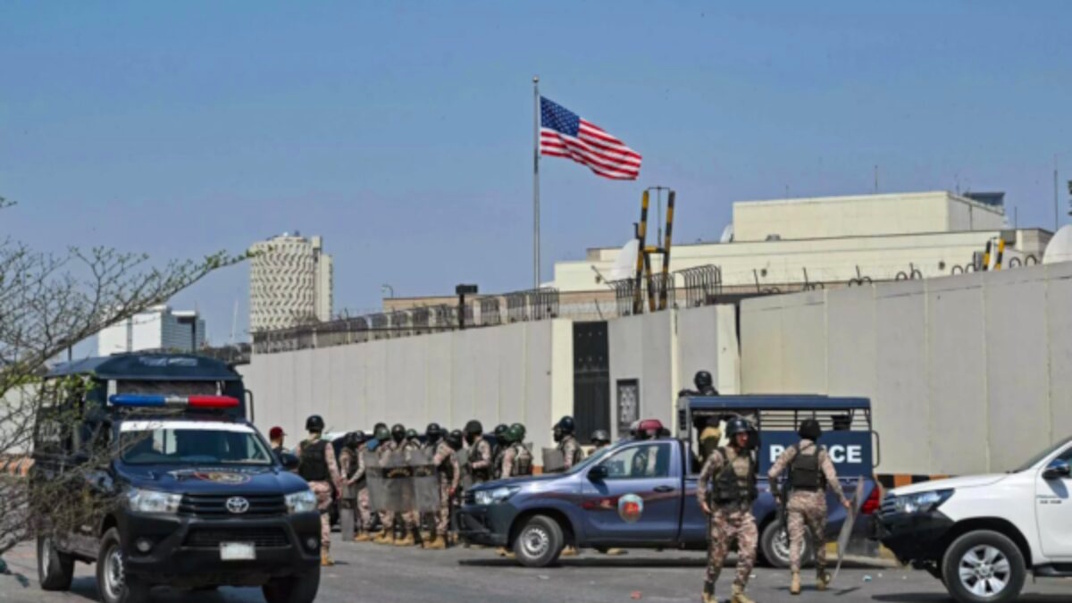
The United States has permanently closed its Consulate General in Peshawar, the historic gateway to Pakistan’s rugged northwestern frontier, transferring all diplomatic responsibilities for Khyber Pakhtunkhwa province to a dedicated unit based at the US Embassy in the capital, Islamabad. The move, confirmed via a statement on the consulate’s now-defunct X (formerly Twitter) account, marks the end of a diplomatic presence that had long served as a critical hub for US engagement with one of Pakistan’s most volatile and strategically significant regions.
According to the statement, the newly designated Khyber Pakhtunkhwa Unit (KPU) at the US Embassy will now handle all consular services, outreach programs, and political liaison with provincial authorities. Officials emphasized that ongoing diplomatic efforts including initiatives to promote bilateral trade and commercial ties, strengthen security cooperation, and build grassroots partnerships with communities across Khyber Pakhtunkhwa would continue to be coordinated from Islamabad. Information about these programs, the statement added, will remain accessible through the US Embassy’s official website.
While the State Department has framed the closure as an operational realignment, multiple reports indicate that the decision was driven in large part by the Trump administration’s broader push to reduce federal spending, consolidate overseas missions, and downsize diplomatic staffing worldwide. The Peshawar consulate, which had already suspended routine visa services in recent years amid heightened security concerns, was seen as a cost-intensive post with limited direct consular throughput relative to its operational overhead. Security alone had been a perennial challenge: the consulate had previously been targeted by militant attacks, most notably a devastating 2010 suicide bombing that killed dozens and forced a prolonged suspension of in-person services.
The closure, however, carries symbolic and practical weight beyond the balance sheet. Peshawar has long been a frontline city in the US-led war on terror, serving as a logistical and intelligence-gathering nerve center during the Afghanistan campaign. Its consulate was a visible symbol of American commitment to Pakistan’s stability and a conduit for coordinating cross-border counterterrorism efforts. With the US withdrawal from Afghanistan and the subsequent recalibration of its South Asia policy, the strategic imperative for a standalone consulate in Peshawar has diminished though critics argue that closing it now may cede influence in a province where China’s Belt and Road investments and growing regional militancy demand sustained Western engagement.
Locally, the decision has drawn mixed reactions. Some business leaders and civil society members in Khyber Pakhtunkhwa have expressed concern that reduced US diplomatic visibility could hamper trade facilitation, educational exchange programs, and development aid that previously flowed through the consulate. Others view the move as a pragmatic acknowledgment of evolving priorities, noting that the embassy’s KPU is well-positioned to maintain core functions without the vulnerabilities of a standalone mission in a high-risk city.
In a parallel development underscoring a broader trend of Western diplomatic retrenchment, France has separately announced the permanent closure of its consulate in Karachi, Pakistan’s largest city and commercial capital. Citing budgetary constraints and a wider policy to reduce its global diplomatic footprint, the French government confirmed that consular services previously offered in Karachi would be absorbed by its embassy in Islamabad. Karachi, a bustling port metropolis of over 20 million people, has historically been a hub for French trade, energy cooperation, and cultural diplomacy, making the closure a notable setback for bilateral economic ties.
Taken together, the simultaneous closures by two major Western powers signal a shifting calculus in diplomatic engagement with Pakistan. Both Washington and Paris appear to be prioritizing cost-efficiency and centralized service delivery over decentralized regional presence a trend accelerated by post-pandemic budget pressures, remote-work capabilities, and a strategic pivot toward Indo-Pacific priorities. For Pakistan, the downsizing raises uncomfortable questions about its standing in Western foreign policy agendas at a time when the country is grappling with economic fragility, political instability, and the persistent threat of militancy along its Afghan border.
Neither the US State Department nor the French Foreign Ministry has indicated any plans to reopen their respective consulates in the foreseeable future. For now, residents of Khyber Pakhtunkhwa and Karachi will have to look to Islamabad and, increasingly, to digital platforms for their diplomatic interactions with two of the world’s oldest allies. Whether this consolidation weakens or streamlines Western engagement with Pakistan remains an open question, but one thing is certain: the physical map of international diplomacy in the country has just become noticeably thinner.
Our Pashto-Dari Website

Support Dawat Media Center
If there were ever a time to join us, it is now. Every contribution, however big or small, powers our journalism and sustains our future. Support the Dawat Media Center from as little as $/€10 – it only takes a minute. If you can, please consider supporting us with a regular amount each month. Thank you
DNB Bank AC # 0530 2294668
Account for international payments: NO15 0530 2294 668
Vipps: #557320

Comments are closed.