

A Bid for National Healing
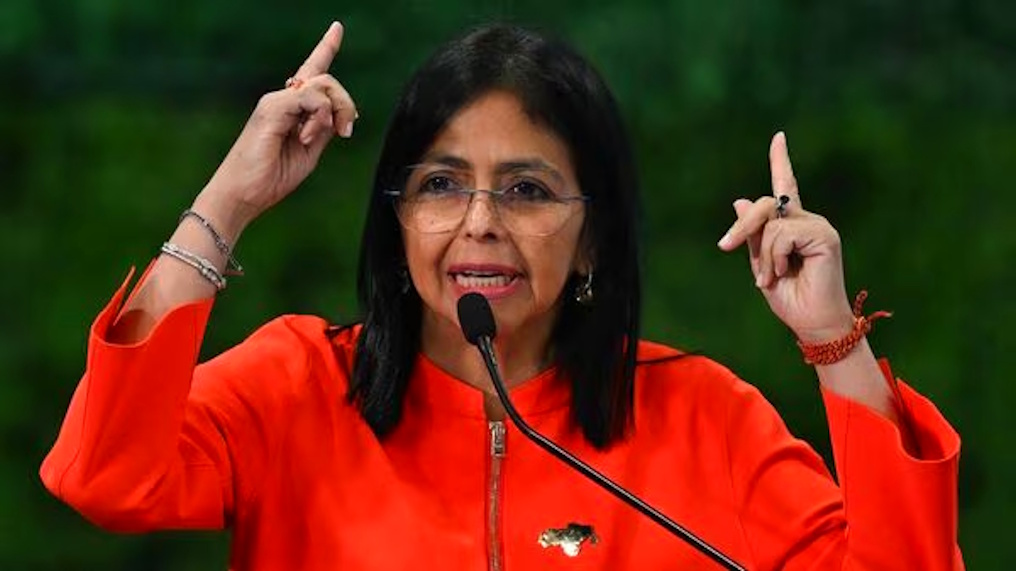
Rodríguez unveiled the measures during the opening ceremony of the 2026 judicial year at the Supreme Tribunal of Justice on Friday. Framing the move as a critical step toward national reconciliation, she called on the National Assembly to urgently debate the proposed “General Amnesty Law.”
“We have decided to push ahead with a general amnesty law that covers the whole period of political violence from 1999 to the present day,” Rodríguez stated, referencing the year Hugo Chávez took office, which initiated a quarter-century of profound political transformation and deep polarization.
“May this law serve to heal the wounds left by the political confrontation fueled by violence and extremism,” she said in the prerecorded event, attended by justices, magistrates, ministers, and military officials. “May it serve to redirect justice in our country, and may it serve to redirect coexistence among Venezuelans.”
Scope and Implementation
The interim president instructed the Judicial Reform Commission and the Democratic Coexistence and Peace Program to submit the bill to the legislature immediately. While details of the legislation are not yet public, it is expected to provide a legal framework for releasing individuals detained in connection with Venezuela’s recurring political unrest.
The announcement comes amid a turbulent period following the early January abduction of former President Nicolás Maduro and his wife by U.S. military forces. Since assuming executive authority, Rodríguez’s government has overseen the release of 302 prisoners, according to the Venezuelan prisoners’ rights group Foro Penal.
The organization estimates that 711 people remain detained nationwide for political reasons, with 183 having already been sentenced. Foro Penal President Alfredo Romero cautiously welcomed the amnesty plan but stressed it must be inclusive and transparent.
“A general amnesty is welcome as long as its elements and conditions include all of civil society, without discrimination, that it does not become a cloak of impunity, and that it contributes to dismantling the repressive apparatus of political persecution,” Romero wrote on social media.
Shuttering a Symbol of Repression
In a parallel move with significant symbolic weight, Rodríguez announced the permanent closure of El Helicoide, a feared intelligence service (SEBIN) prison in Caracas infamous for human rights abuses.
“El Helicoide will cease to function as a detention center,” Rodríguez declared, outlining plans to convert the facility into a sports, social, and cultural center for surrounding communities.
The prison has long been condemned by international human rights organizations, including the United Nations and Human Rights Watch, for documented cases of torture, inhumane conditions, and the holding of political detainees. Notably, Rodríguez delivered her announcement before officials whom former prisoners and watchdog groups have accused of overseeing abuses at El Helicoide and other detention sites.
Mixed Reactions and Historical Context
The government has historically denied holding political prisoners, maintaining that those jailed have been prosecuted for criminal acts. Officials report that over 600 people have been released from prison in recent years, though the timeline remains unclear and appears to include releases predating the current administration.
The announcement sparked immediate reactions from families of detainees. Foro Penal released a video purportedly showing the release of human rights worker Eduardo Torres on Friday night, following his detention since May 2025.
Venezuela has endured years of acute political division, marked by mass protests, crackdowns, and allegations of judicial politicization. The amnesty proposal represents the most substantial effort in years to address the legacy of political persecution, though it unfolds within a complex power vacuum and ongoing international scrutiny.
As the bill moves to the National Assembly, its final form—and its implementation—will be closely watched by both domestic stakeholders and the international community as a test of the interim government’s commitment to judicial reform and human rights.
Our Pashto-Dari Website


Support Dawat Media Center
If there were ever a time to join us, it is now. Every contribution, however big or small, powers our journalism and sustains our future. Support the Dawat Media Center from as little as $/€10 – it only takes a minute. If you can, please consider supporting us with a regular amount each month. Thank you
DNB Bank AC # 0530 2294668
Account for international payments: NO15 0530 2294 668
Vipps: #557320

Comments are closed.