
Afghanistan’s Polio Cases Climb to 19 in 2026 as Virus Persists in Endemic Hotspots, WHO Reports

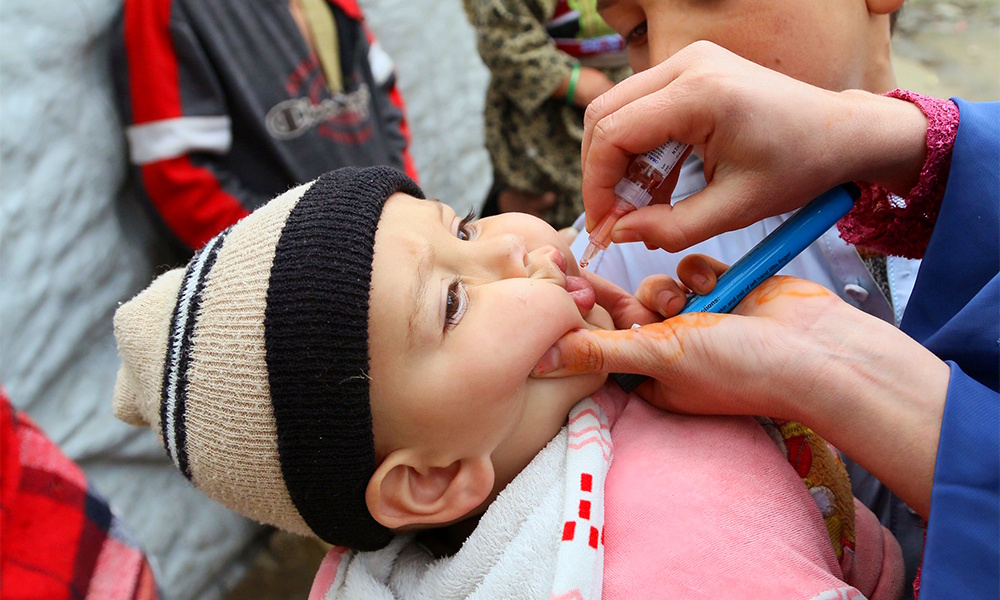
The World Health Organization (WHO) has confirmed four new cases of wild poliovirus type 1 (WPV1) in Afghanistan, raising the country’s total for 2026 to 19, according to the latest bulletin from the WHO Eastern Mediterranean Region. The newly reported infections emerged across three provinces Herat, Paktika, and Kandahar underscoring the virus’s continued foothold in both southern and western parts of the country.
Specifically, two cases were recorded in Herat’s Shindand and Adraskan districts, while Paktika’s Dila district and Kandahar’s Arghestan district each reported one case. These districts have historically been areas of concern due to population movement, limited healthcare access, and intermittent vaccination coverage.
The WHO bulletin, which covers the epidemiological week ending August 16 and was published on Sunday, August 23, places Afghanistan’s 19 cases within a regional total of 22 WPV1 cases confirmed so far in 2026. The remaining three cases have been reported in neighboring Pakistan, the only other country where wild poliovirus remains endemic.
This year’s figures follow a troubling 2025, when Afghanistan recorded 21 WPV1 cases and Pakistan logged 31, bringing the combined regional total for last year to 52 cases. While the 2026 numbers are currently lower year-on-year, health officials caution that transmission dynamics remain volatile, especially with the ongoing high season for poliovirus spread during warmer months and periods of increased cross-border movement.
Environmental surveillance a critical tool for detecting silent virus circulation continues to paint a stark picture. Across the Eastern Mediterranean region, a total of 176 positive environmental samples have been collected in 2026, with Afghanistan accounting for 58 and Pakistan for 118. Encouragingly, no new positive environmental samples were reported during the latest reporting week, but the cumulative data highlights persistent widespread transmission in sewage and water systems, particularly in high-risk urban and peri-urban areas.
The latest developments underscore the immense challenges facing the global polio eradication initiative in the Afghanistan-Pakistan epicenter. Insecurity, vaccine hesitancy, operational gaps in hard-to-reach communities, and seasonal population displacements continue to hamper repeated mass vaccination campaigns. Both countries have intensified door-to-door immunization drives and integrated health outreach, but the recurring case counts signal that interruption of transmission remains elusive without sustained political commitment, community engagement, and improved surveillance.
The WHO has reiterated its call for intensified cross-border coordination, particularly in shared corridors along the Durand Line, and for tailored strategies to reach persistently missed children, including mobile populations and communities in conflict-affected zones. With the 2026 transmission season still underway, health authorities are racing to close immunity gaps before winter, when virus circulation typically slows but does not cease entirely.
As Afghanistan and Pakistan remain the last bastions of wild poliovirus, the global health community watches closely. Each new case serves as a reminder that eradication, while technically feasible, hinges on resolving deep-rooted social, logistical, and security barriers a task that grows more urgent with every positive sample and every paralyzed child.
Our Pashto-Dari Website

Support Dawat Media Center
If there were ever a time to join us, it is now. Every contribution, however big or small, powers our journalism and sustains our future. Support the Dawat Media Center from as little as $/€10 – it only takes a minute. If you can, please consider supporting us with a regular amount each month. Thank you
DNB Bank AC # 0530 2294668
Account for international payments: NO15 0530 2294 668
Vipps: #557320

Comments are closed.