

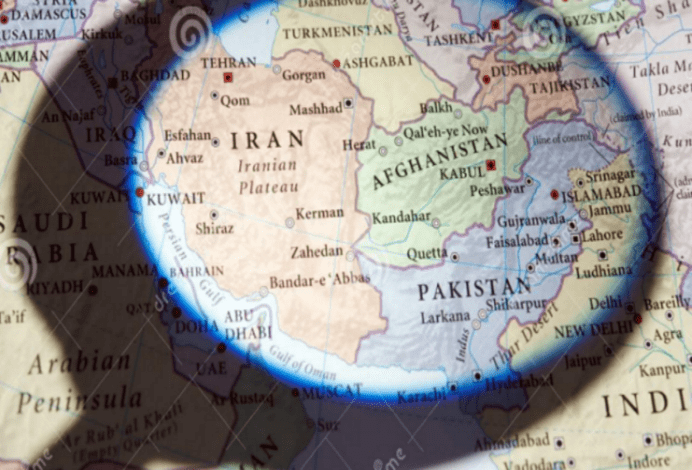
Baku signals support for deeper regional cooperation, citing Afghanistan’s strategic position between Central and South Asia
Azerbaijan’s Deputy Foreign Minister Yalchin Rafiyev said Afghanistan has the potential to become a regional hub for trade, transit, and energy if regional cooperation continues to expand, emphasizing the country’s strategic location between Central and South Asia.
Rafiyev made the remarks during a meeting of the Organisation of Islamic Cooperation (OIC) Contact Group on Afghanistan, held on the sidelines of the 81st United Nations General Assembly. According to Azerbaijan’s Foreign Ministry, he reaffirmed Baku’s support for the OIC Contact Group’s efforts to promote peace, stability, and economic development in Afghanistan.
The Azerbaijani official said Afghanistan’s geographic position gives it significant potential to connect regional markets through transport corridors, trade routes, and energy infrastructure. He stressed that stronger regional connectivity could benefit both Afghanistan and neighboring countries by improving economic integration and cross-border commerce.
A Platform for Engagement
The OIC Contact Group on Afghanistan was established to coordinate member states’ engagement with Afghanistan and discuss political, humanitarian, and development issues. The group has increasingly focused on regional economic cooperation as international efforts continue to seek ways to stabilize Afghanistan’s economy.
The meeting took place as world leaders gathered in New York for the UN General Assembly’s annual high-level debate, providing a diplomatic venue for discussions on Afghanistan’s future. The Contact Group has become one of the few multilateral forums where Afghanistan-related issues are regularly addressed, particularly as many Western capitals remain hesitant to engage directly with the Taliban administration.
Azerbaijan’s Broader Connectivity Agenda
Rafiyev also highlighted Azerbaijan’s broader commitment to regional connectivity projects linking Central Asia, the South Caucasus, and global markets. Baku has promoted transport initiatives through the Middle Corridor—a route stretching from China through Central Asia and the Caspian Sea to Europe—and has expanded cooperation with Central Asian countries on logistics, infrastructure, and energy.
Azerbaijan has positioned itself as a key transit hub in the region, investing in rail links, ports, and energy pipelines. The country’s strategic partnership with Turkey and its growing ties with Central Asian states have made it an increasingly important player in discussions about Eurasian connectivity.
Afghanistan’s Role in Regional Projects
International organizations have repeatedly said Afghanistan’s long-term economic recovery depends on improving regional connectivity. Several major infrastructure projects involving Afghanistan have been proposed or partially developed, including:
-
The CASA-1000 electricity transmission line, designed to export surplus hydropower from Kyrgyzstan and Tajikistan to Afghanistan and Pakistan.
-
The TAPI gas pipeline, intended to carry natural gas from Turkmenistan through Afghanistan and Pakistan to India.
-
Trans-Afghan railway proposals, which would link Uzbekistan and Pakistan through Afghan territory.
These initiatives have been presented as projects that could strengthen trade and energy links across the region if security and political conditions allow. However, persistent instability, financing challenges, and the lack of international recognition of the Taliban government have slowed progress.
OIC Engagement Since 2021
The OIC has continued to engage Afghanistan through humanitarian assistance and diplomatic dialogue since the Taliban returned to power in 2021. While member states have called for greater regional cooperation, they have also urged progress on governance, human rights, and inclusive development as part of broader international engagement with Afghanistan.
The OIC has also worked to mobilize humanitarian aid for Afghanistan, where millions of people remain dependent on assistance amid economic hardship and reduced international funding. The organization has stressed that economic isolation is not a viable path forward and that constructive engagement is necessary to address both humanitarian needs and long-term stability.
Regional Diplomacy and Ongoing Uncertainty
Rafiyev’s comments come as regional countries continue exploring economic and infrastructure partnerships involving Afghanistan, despite ongoing political uncertainty and limited international recognition of the Taliban administration. Neighboring states, including Uzbekistan, Turkmenistan, Pakistan, and Iran, have pursued trade and transit arrangements with Kabul, viewing economic engagement as a way to promote stability and advance their own commercial interests.
Azerbaijan’s emphasis on Afghanistan’s potential as a regional hub reflects a broader trend among regional powers to prioritize practical cooperation over political confrontation. However, significant obstacles remain, including security concerns, regulatory gaps, and the international community’s continued concerns over the Taliban’s governance record, particularly regarding women’s rights and political inclusion.
For now, Afghanistan’s emergence as a regional trade and energy hub remains a long-term aspiration rather than an imminent reality. But as regional cooperation gathers momentum, Baku’s message suggests that Afghanistan’s geographic advantages could yet be harnessed if the political and security conditions align.
Our Pashto-Dari Website

Support Dawat Media Center
If there were ever a time to join us, it is now. Every contribution, however big or small, powers our journalism and sustains our future. Support the Dawat Media Center from as little as $/€10 – it only takes a minute. If you can, please consider supporting us with a regular amount each month. Thank you
DNB Bank AC # 0530 2294668
Account for international payments: NO15 0530 2294 668
Vipps: #557320

Comments are closed.