

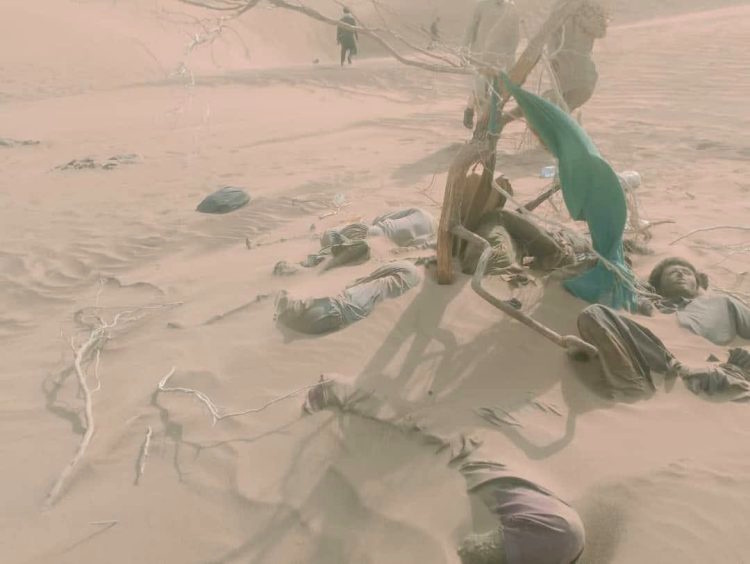
In a devastating reminder of the perils faced by irregular migrants, the bodies of 14 Afghan nationals have been discovered in southwestern Nimroz province, days after they went missing while attempting to cross into Iran illegally. The grim discovery brings the total death toll from a single group of young men to 19, according to local officials.
Abdulmutawakel Tohidi, spokesperson for the Taliban-appointed governor of Nimroz, confirmed to journalists, that the 14 victims were part of a larger cohort of 19 men who had embarked on the hazardous journey through desert smuggling routes. The group had reportedly lost their way in the vast, unforgiving terrain before succumbing to extreme heat and dehydration. The bodies of five others from the same party had been recovered earlier, raising the reported death toll to 19.
The latest remains were found in the Dast-e Gard-e Lalo desert area, approximately 63 kilometers (39 miles) from the Milak border crossing, a key transit point between Afghanistan and Iran. Local authorities had launched search operations after the initial reports of 14 missing individuals, but the search was complicated by harsh conditions and shifting sand dunes.
It remains unclear whether all the missing migrants have now been accounted for. Officials noted that dust and sand had partially buried the bodies, making it difficult to confirm whether the remains of all 14 previously reported missing were located at the same site. Recovery efforts are ongoing, but the remote location and extreme weather continue to hamper operations.
This tragedy follows a stark warning issued earlier by the UN Refugee Agency (UNHCR), which had reported the deaths of five Afghans along the same migration corridor and expressed grave concern for others still unaccounted for. In a statement following the discovery of the first five bodies, the UNHCR emphasized that these deaths underscore the “heavy human cost” of irregular journeys, urging greater protective measures and legal pathways for migration.
The route through Nimroz is one of the most perilous used by Afghans seeking entry into Iran, often relying on unscrupulous smugglers who prioritize profit over safety. Travelers frequently embark on these journeys with insufficient water, food, or medical supplies, and without reliable navigation. Temperatures in the region can soar above 45°C (113°F) during summer months, turning the desert into a lethal trap for those who become disoriented.
Such tragedies are not isolated. Afghanistan’s western border has long been a site of repeated deaths and disappearances, as thousands of Afghans driven by crushing poverty, rampant unemployment, and a collapse of basic services attempt to reach Iran in search of work and a semblance of stability. Since the Taliban takeover in August 2021, Afghanistan’s economy has contracted sharply, with the World Bank estimating that over 90% of the population now lives below the poverty line. International sanctions, frozen assets, and the suspension of development aid have further decimated livelihoods, leaving many with few options but to risk deadly journeys.
The latest deaths also cast a spotlight on the broader humanitarian crisis facing the region. Iran currently hosts over 3.5 million Afghan nationals, including both registered refugees and undocumented migrants, yet economic pressures and tightening border controls have made entry increasingly dangerous. Smugglers often charge exorbitant fees sometimes equivalent to a year’s wages for an Afghan laborer while providing minimal safety guarantees.
Local authorities in Nimroz have called for enhanced border monitoring and public awareness campaigns to deter would-be migrants. However, critics argue that without addressing the root causes economic despair, lack of employment, and the erosion of human rights such warnings will do little to stem the flow.
As families in Afghanistan await news of their loved ones, the desert graves in Nimroz stand as a somber testament to a crisis that continues to unfold far from the world’s attention. Each body recovered is not just a statistic, but a son, a brother, or a father who set out with hope and never returned.
Our Pashto-Dari Website
Support Dawat Media Center
If there were ever a time to join us, it is now. Every contribution, however big or small, powers our journalism and sustains our future. Support the Dawat Media Center from as little as $/€10 – it only takes a minute. If you can, please consider supporting us with a regular amount each month. Thank you
DNB Bank AC # 0530 2294668
Account for international payments: NO15 0530 2294 668
Vipps: #557320

Comments are closed.