
UN Deputy Special Representative Takes Office in Kabul as Afghanistan’s Humanitarian Crisis Deepens

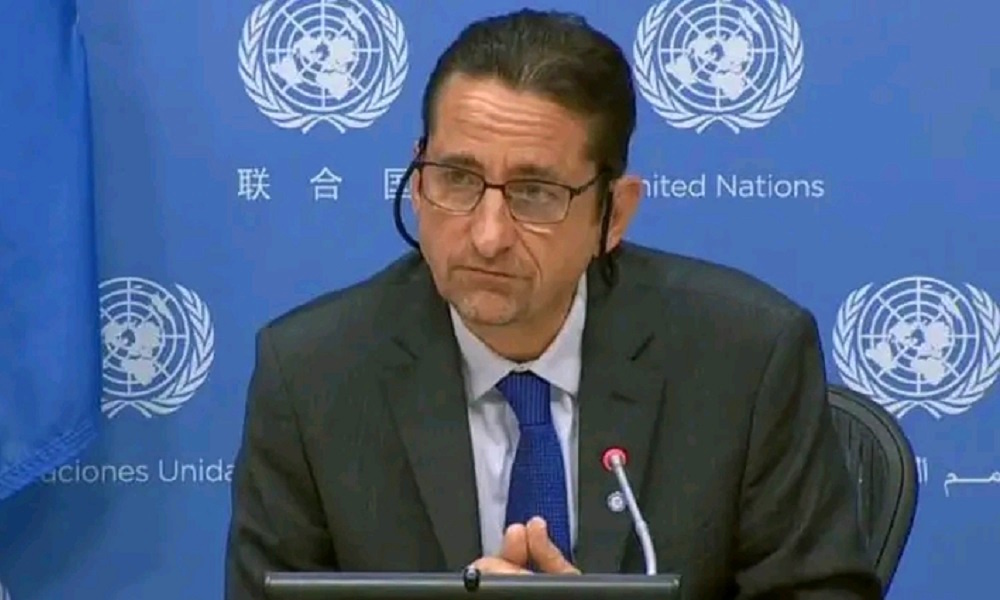
KABUL – Bruno Lemarquis officially assumed his duties on Tuesday as the United Nations’ Deputy Special Representative, Resident Coordinator, and Humanitarian Coordinator for Afghanistan, stepping into the role at a critical juncture for the crisis-wracked nation.
The French national, who was appointed by UN Secretary-General António Guterres, succeeds Indrika Ratwatte and will now helm the coordination of all UN agencies, funds, and programmes operating across the country. According to a statement from the UN Assistance Mission in Afghanistan (UNAMA), Lemarquis will also take the lead on the mission’s development portfolio, a pillar that has become increasingly vital as Afghanistan’s formal economy continues to contract.
Lemarquis arrives in Kabul with a formidable CV forged in some of the world’s most volatile theatres. Most recently, he served as Deputy Special Representative and Humanitarian Coordinator in the Democratic Republic of Congo, a sprawling nation plagued by armed conflict and endemic displacement. Prior to that, he held senior crisis-response posts in Haiti and within the UN Development Programme (UNDP), earning a reputation for navigating complex emergencies and shoring up recovery efforts in fragile states. He joined the UN system in 1992, following earlier work with an international NGO in Haiti and Ethiopia. He holds a degree in tropical agriculture engineering from France and is fluent in both French and English.
His tenure begins as Afghanistan remains locked in what the UN describes as one of the largest and most intractable humanitarian emergencies on the planet. More than two years after the Taliban takeover, an estimated two-thirds of the country’s population require some form of aid just to survive. Humanitarian agencies have repeatedly sounded the alarm over spiraling food insecurity, acute child malnutrition, and a crippling funding gap that has forced the closure of hundreds of health clinics and nutrition centres. The World Food Programme has warned that without sustained international support, millions of Afghans face the prospect of a starvation winter.
Beyond the immediate relief effort, Afghanistan is grappling with profound developmental stagnation. Unemployment is rampant, poverty is near-universal, and the banking system remains paralysed by sanctions and capital flight. The collapse of the agricultural and manufacturing sectors compounded by severe drought and the loss of international development aid has left the average family struggling to put food on the table, let alone invest in education or housing.
Yet it is the systematic restrictions on women and girls that continue to pose the most intractable challenge for the international community and a formidable obstacle to effective aid delivery. Since the Taliban’s return to power, girls have been barred from secondary and university education, women have been excluded from most forms of employment, and their participation in public life has been severely curtailed. These edicts not only erode human rights but also complicate humanitarian operations, as female aid workers are essential for reaching women and children in conservative communities. The UN has consistently maintained that access to education for girls and the meaningful inclusion of women in economic and political life are non-negotiable prerequisites for Afghanistan’s long-term stability, economic recovery, and sustainable development.
Lemarquis’s appointment comes amid a broader recalibration of UNAMA’s leadership and strategy. As donor fatigue sets in and geopolitical attention shifts elsewhere, the UN is under increasing pressure to demonstrate tangible outcomes with dwindling resources. His dual mandate overseeing both humanitarian coordination and development programming will require a delicate balancing act: addressing immediate life-saving needs while laying the groundwork for a more resilient future, all while navigating a political landscape that remains deeply hostile to international norms on gender equality.
In his first official remarks, Lemarquis is expected to reaffirm the UN’s commitment to the Afghan people and to underscore the necessity of sustained, principled humanitarian engagement. For the millions of Afghans bracing for yet another year of hardship, his arrival signals continuity in international support but whether that support will be enough to stave off catastrophe remains an open question.
Our Pashto-Dari Website

Support Dawat Media Center
If there were ever a time to join us, it is now. Every contribution, however big or small, powers our journalism and sustains our future. Support the Dawat Media Center from as little as $/€10 – it only takes a minute. If you can, please consider supporting us with a regular amount each month. Thank you
DNB Bank AC # 0530 2294668
Account for international payments: NO15 0530 2294 668
Vipps: #557320

Comments are closed.