

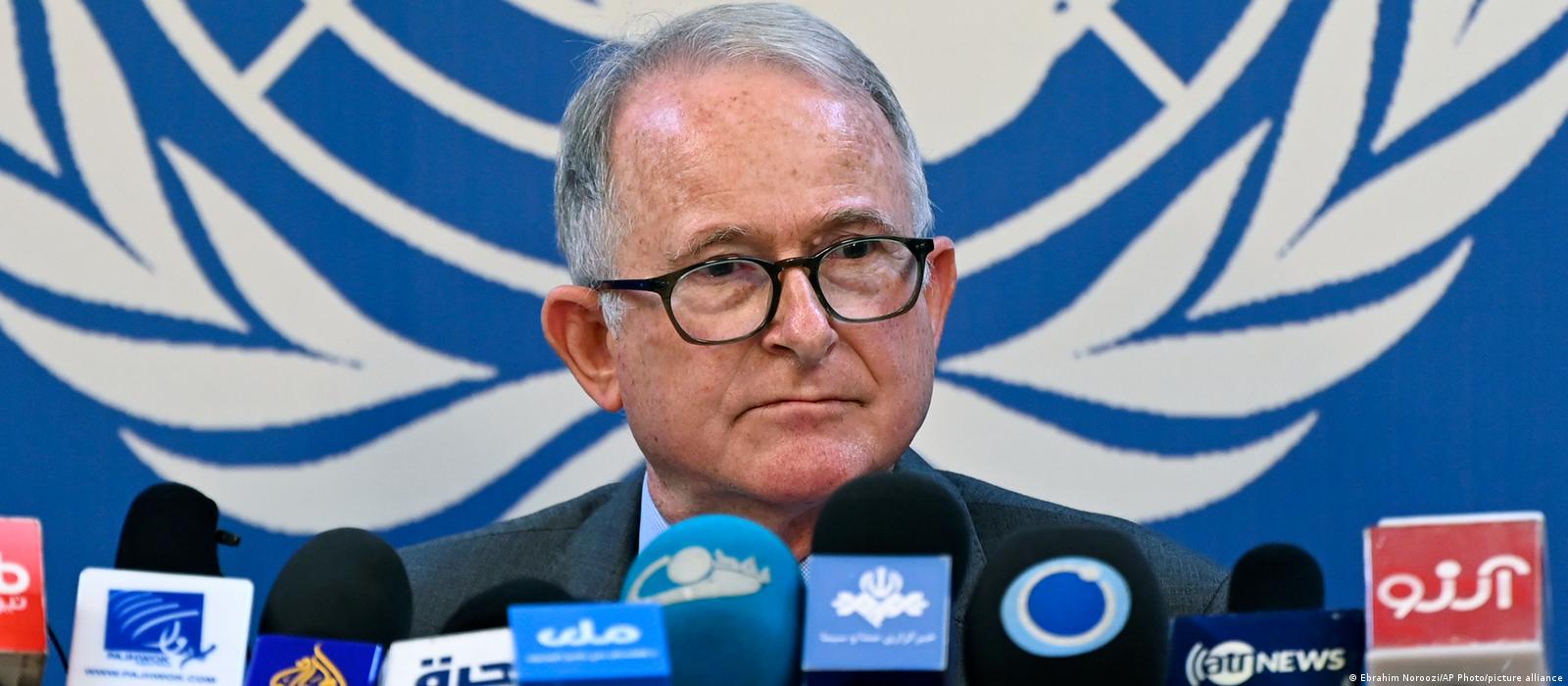
United Nations Special Rapporteur Richard Bennett has warned that Afghanistan’s media sector is confronting a dual crisis escalating political and security restrictions coupled with a sharp decline in international funding threatening the survival of independent outlets and severely limiting public access to reliable information.
In a statement marking World Press Freedom Day on May 3, Bennett highlighted that Afghan journalists, both inside the country and in exile, continue to work under extremely difficult conditions. He described them as being on the “front lines” of exposing human rights violations and ensuring public access to information, even as risks to their safety multiply.
Financial Collapse Compounds Repression
Bennett noted that media in Afghanistan are facing severe financial strain alongside political repression, weakening their ability to operate independently. He warned that declining international financial and technical support has significantly reduced media capacity, limiting safe operations, access to information, and the production of independent reporting.
“Without urgent international support, Afghanistan risks losing its remaining independent media, undermining transparency, accountability, and the protection of fundamental rights,” Bennett said.
The UN expert called on the international community to increase both funding and technical assistance to sustain independent journalism and support Afghan reporters—whether they remain in the country or work in exile.
A Deepening Crackdown on Press Freedom
Bennett renewed calls for the immediate and unconditional release of all detained journalists in Afghanistan, warning of a deepening media crackdown. He urged the de facto authorities to ensure that media workers can operate freely without fear of arrest, threats, or harassment.
He added that press freedom has significantly deteriorated since the Taliban’s return to power, with independent reporting increasingly restricted under a hostile environment. Even routine reporting can trigger reprisals, particularly on issues related to women’s rights and governance. Citizens who speak to the media also face intimidation, surveillance, and detention, further weakening the flow of reliable information.
Female Journalists Driven from the Profession
Bennett echoed concerns raised by UNICEF and other UN bodies, noting that broader restrictions on women’s rights in Afghanistan are having long-term social and professional impacts. Female journalists face compounded barriers, including mobility restrictions, dress codes, forced exclusion from public life, and shrinking employment opportunities pushing many out of the profession altogether.
He noted that while some female journalists have continued working in exile, those inside Afghanistan are often barred from newsrooms, unable to travel without a male guardian, or subjected to harassment, leaving women’s voices largely absent from public discourse.
Global Rankings Reflect a Media in Peril
According to Reporters Without Borders (RSF), Afghanistan remains among the most restrictive environments for media globally. Many independent outlets have shut down or are now operating under strict controls, while journalists increasingly face censorship, intimidation, and economic hardship. Widespread self-censorship has become the norm.
RSF further reports that female journalists have been disproportionately affected by bans and restrictions, significantly reducing women’s representation in Afghan media. The organization ranks Afghanistan near the very bottom of its World Press Freedom Index, with conditions worsening sharply each year.
The Broader Context: A Shrinking Civic Space
World Press Freedom Day, observed annually by the United Nations, highlights the essential role of independent journalism in protecting human rights. Globally, media face increasing pressure due to conflict, funding cuts, and political control. In Afghanistan, these pressures are amplified by a near-total collapse of civic freedoms.
UN officials have warned that limitations on education, employment, and public participation particularly for women have compounded challenges for journalists and civil society, further shrinking independent civic space. Media watchdogs report rising censorship, arrests, and surveillance, creating an environment where independent journalism and public access to information are severely constrained.
A Call to Action
Bennett emphasized that without immediate and sustained international engagement, Afghanistan’s remaining independent media will likely vanish entirely eliminating one of the last remaining channels for accountability, human rights documentation, and public information in the country.
“Journalists are not optional. Their work is essential to exposing abuses and ensuring that Afghans are not cut off from the truth,” he said.
The UN expert reiterated that the international community must act now not only with funding but also with diplomatic pressure to secure the release of detained journalists and reverse the collapse of press freedom in Afghanistan.
Our Pashto-Dari Website

Support Dawat Media Center
If there were ever a time to join us, it is now. Every contribution, however big or small, powers our journalism and sustains our future. Support the Dawat Media Center from as little as $/€10 – it only takes a minute. If you can, please consider supporting us with a regular amount each month. Thank you
DNB Bank AC # 0530 2294668
Account for international payments: NO15 0530 2294 668
Vipps: #557320

Comments are closed.