
UN Report: Nearly 400 Afghan Civilians Killed or Wounded in Three Months Amid Surging Border Hostilities

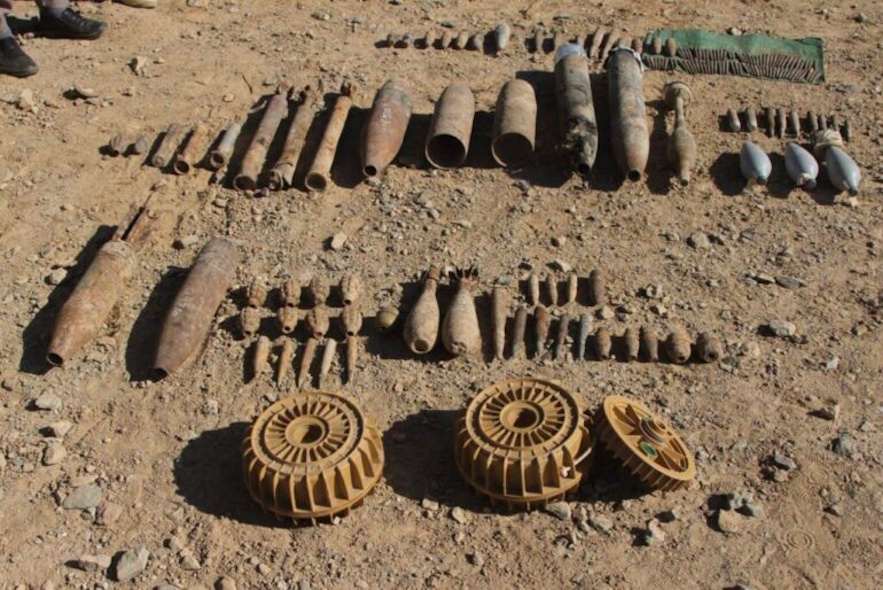
The United Nations Assistance Mission in Afghanistan (UNAMA) has issued a stark new report revealing that nearly 400 Afghan civilians were killed or injured between April and June 2026, with the vast majority of casualties attributed to intensifying cross-border military operations and the lingering threat of explosive remnants of war. The findings underscore a deepening humanitarian crisis along Afghanistan’s volatile eastern frontier with Pakistan, where years of mutual distrust have erupted into routine exchanges of fire and airstrikes.
According to UNAMA’s mid-year protection update, 399 civilians including dozens of women and children lost their lives or suffered severe injuries during the three-month reporting period. The leading causes of casualties were identified as cross-border shelling, Pakistani airstrikes targeting alleged militant sanctuaries, and the accidental detonation of unexploded ordnance left behind from previous clashes. The report highlights Paktika, Paktia, and Kunar provinces as the epicenters of the violence, regions that have long served as porous transit points for militants and where border demarcation remains fiercely contested.
The escalation follows a marked uptick in Pakistani military operations, which Islamabad claims are necessary to dismantle hideouts of the Tehreek-e-Taliban Pakistan (TTP)—a militant group that has waged a deadly insurgency against the Pakistani state for nearly two decades. Pakistan has consistently accused the Taliban-led administration in Kabul of providing safe haven and logistical support to TTP fighters, a charge repeatedly denied by Afghan officials. The Taliban, in turn, condemn the strikes as flagrant violations of Afghan sovereignty and argue that Pakistan is using counterterrorism as a pretext to exert military pressure on its neighbor.
UNAMA’s documentation includes several harrowing accounts of civilian suffering. In one particularly devastating incident, a Pakistani airstrike on June 28 in Kunar province struck a residential house, injuring a woman and two young children. The attack not only destroyed the family’s home but also killed their livestock, stripping them of their primary livelihood. In another case, an unexploded 120mm artillery shell in Paktika province left over from earlier border clashes detonated while being dismantled by local residents hoping to sell the scrap metal. That blast killed seven civilians on the spot and wounded six others, many of whom were children assisting their families in the dangerous trade.
The Taliban’s Ministry of Foreign Affairs has released its own casualty estimates, claiming that Pakistani airstrikes on June 28 and 29 alone resulted in at least 36 civilian deaths and 163 injuries. The ministry accused Pakistan of deliberately targeting residential neighborhoods and civilian infrastructure, calling the attacks “indiscriminate and inhumane.” Islamabad has pushed back forcefully, maintaining that its aerial and artillery strikes were precision operations directed at known TTP command-and-control nodes and training camps. Pakistani officials have further asserted that the Taliban are inflating casualty figures to garner international sympathy and deflect attention from their failure to police their own territory.
The UN report comes against a backdrop of deteriorating diplomatic relations and a near-total breakdown of bilateral security mechanisms. Despite occasional ceasefire announcements and Track-II dialogue initiatives, the border region remains highly militarized, with both sides reinforcing troop positions and exchanging artillery fire on an almost weekly basis. The Afghan-Pakistani border, known as the Durand Line, has never been formally recognized by Kabul, and the dispute over its legitimacy continues to fuel nationalist sentiments on both sides, complicating any lasting de-escalation.
In its concluding recommendations, the United Nations reiterated its call for all parties including state forces and non-state armed groups to strictly adhere to international humanitarian law, particularly the principles of distinction and proportionality. UNAMA stressed that civilians and civilian infrastructure, including homes, schools, and medical facilities, are not legitimate targets and must be protected from the effects of armed conflict. The mission also warned that unexploded ordnance and improvised explosive devices (IEDs) scattered across the borderlands pose a “persistent and deadly legacy” that will endanger communities for years to come, with children and impoverished scrap-metal collectors being the most vulnerable.
The latest figures add to a grim tally of civilian harm in Afghanistan, which has seen a resurgence in violence since the Taliban takeover in 2021, even as large-scale conventional warfare has subsided. Humanitarian agencies have warned that the ongoing border clashes are exacerbating an already dire situation, displacing thousands of families, disrupting access to healthcare and education, and threatening agricultural cycles in some of the country’s poorest provinces.
As the international community watches with growing concern, there appears to be little immediate prospect of a diplomatic breakthrough. While both Afghanistan and Pakistan have publicly expressed willingness to engage in dialogue, mutual recriminations and entrenched security narratives continue to overshadow any meaningful conflict-resolution efforts. The UN has urged both governments to establish a robust de-escalation mechanism and to allow independent observers access to affected areas, warning that without urgent intervention, the civilian toll will likely continue to rise as summer fighting seasons intensify.
زموږ انګلیسي ویبپاڼه:

Support Dawat Media Center
If there were ever a time to join us, it is now. Every contribution, however big or small, powers our journalism and sustains our future. Support the Dawat Media Center from as little as $/€10 – it only takes a minute. If you can, please consider supporting us with a regular amount each month. Thank you
DNB Bank AC # 0530 2294668
Account for international payments: NO15 0530 2294 668
Vipps: #557320

Comments are closed.