
UN Reports 57% Surge in Security Incidents Across Afghanistan, Warns of Deepening Crisis

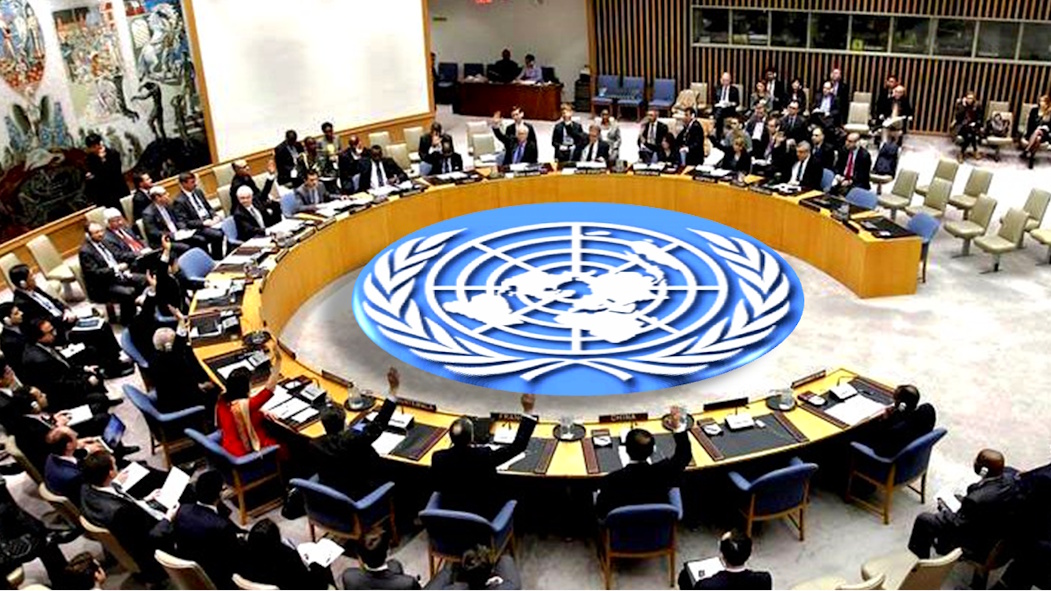
United Nations -The United Nations has reported a sharp increase in security incidents, human rights violations, and systemic restrictions on women and girls in Afghanistan, warning that the country remains in a profound crisis despite a veneer of political stability under the current Taliban administration.
In a new quarterly report to the UN Security Council covering February 1 to April 30, UN Secretary-General António Guterres revealed that 3,687 security-related incidents were recorded across the country a 57.7 percent increase compared to the same period last year. The figures underscore a deteriorating security landscape even as the Taliban consolidate governance.
Rising Insurgency and Persistent Terror Threats
The report, compiled by the United Nations Assistance Mission in Afghanistan (UNAMA), noted that anti-Taliban groups including the National Resistance Front, the National Mobilization Front, and the Green Trend Movement claimed responsibility for 18 attacks in ten provinces. Sixteen of these were independently verified and included rocket attacks, grenade assaults, and shootings targeting Taliban checkpoints and security convoys.
While these groups remain active, the UN assessed that they have not posed a significant challenge to the Taliban’s territorial control. However, the Islamic State Khorasan Province (ISIS-K) has retained its operational capabilities, even though it did not claim any major attacks during this reporting period. The UN cautioned that ISIS-K continues to pose a latent but serious threat, with potential for high-casualty attacks in urban centers.
The UN also documented 92 security incidents directly affecting UN personnel and operations a sharp rise from 62 incidents recorded during the same period in 2025. These included armed robberies, direct firefights, and intimidation tactics, raising concerns over the organization’s ability to deliver humanitarian aid safely.
Civilian Catastrophe from Cross-Border Violence
One of the report’s most alarming findings concerns civilian casualties linked to cross-border violence. According to the UN, Pakistani airstrikes and border shelling between January 26 and March 31 killed at least 372 civilians and wounded 392 others inside Afghan territory. The deadliest single incident was a March 16 strike on Kabul’s Omid drug rehabilitation hospital, which reportedly killed 269 people and injured 122 most of them patients, medical staff, and recovering addicts seeking treatment. The UN described the strike as a possible violation of international humanitarian law and called for an independent investigation.
Systematic Human Rights Violations and Public Floggings
The report further documented continued human rights abuses, including:
-
The killing of five former Afghan security personnel,
-
20 cases of arbitrary detention,
-
Eight cases of torture or mistreatment involving members of the former government’s security forces.
In a stark illustration of the Taliban’s judicial enforcement, UNAMA recorded 228 public floggings during the three-month period. Among those punished were 29 women, 196 men, and three boys, accused of offenses such as adultery, running away from home, gambling, alcohol consumption, and same-sex relations. The UN reiterated that such punishments constitute cruel and degrading treatment, violating international conventions against torture.
Escalating Restrictions on Women and Girls
The report highlighted growing international alarm over the plight of women and girls. Guterres stated that Taliban restrictions continue to affect education, employment, freedom of movement, religious participation, and public life. In provinces such as Herat and Kandahar, enforcement of dress codes has become stricter, with women subjected to public reprimands and verbal abuse for alleged violations.
These concerns were echoed by UN Special Rapporteur on Afghanistan Richard Bennett, who recently condemned the reported detention of dozens of women in Herat over dress-code violations. Bennett described the arrests as arbitrary and unacceptable, calling for the immediate release of the detained women and an end to all measures targeting women and girls.
UNAMA has repeatedly warned that these restrictions are having far-reaching consequences. In its recent Security Council briefing, the mission reported that approximately 3.8 million Afghan girls remain out of school, including more than 2.6 million adolescent girls. The UN warned that every year, roughly 250,000 more girls are permanently excluded from secondary education creating what officials describe as a “lost generation” of talent, opportunity, and economic potential.
Women also face increasing barriers in daily life, including:
-
Requirements to travel with a male guardian (mahram),
-
Restrictions on access to public spaces such as parks, gyms, and markets,
-
Limitations on religious activities including being prevented from attending Taraweeh prayers during Ramadan, despite designated spaces for women in mosques.
International Isolation and Humanitarian Fallout
UN officials have warned that the continued erosion of rights, combined with severe economic hardship and shrinking humanitarian space, risks deepening Afghanistan’s isolation from the international community. No country has officially recognized the Taliban administration, and sanctions and asset freezes remain in place.
The organization has repeatedly urged Taliban authorities to reverse restrictions on women and girls, end extrajudicial punishments, and uphold Afghanistan’s international human rights obligations. However, the report concluded that little meaningful progress has been made, and in many areas, conditions have worsened.
“Afghanistan is not merely backsliding it is accelerating into a humanitarian and rights crisis that will affect generations,” a senior UNAMA official said on condition of anonymity. “The world cannot look away.”
Our Pashto-Dari Website
Support Dawat Media Center
If there were ever a time to join us, it is now. Every contribution, however big or small, powers our journalism and sustains our future. Support the Dawat Media Center from as little as $/€10 – it only takes a minute. If you can, please consider supporting us with a regular amount each month. Thank you
DNB Bank AC # 0530 2294668
Account for international payments: NO15 0530 2294 668
Vipps: #557320

Comments are closed.