
US Budget Bill Seeks to Block Transfer of Afghan Allies From Qatar to High-Risk Countries

Overview of Proposed Legislation
A proposed US defense spending bill for fiscal year 2027 includes provisions that could prevent the transfer of former Afghan allies from Qatar to Afghanistan or other countries deemed unsafe from a security perspective. The draft National Defense Authorization Act (NDAA) being considered by both the US Senate and House of Representatives contains several measures aimed at protecting Afghan nationals who previously worked alongside American forces.
According to AfghanEvac President Shawn VanDiver, the preliminary versions of the legislation include provisions that would restrict the transfer of Afghans currently housed at a processing center in Qatar to high-risk countries. Additionally, the draft bill proposes the preservation and protection of records related to Afghans who assisted US military operations, along with an extension of the Afghanistan War Commission’s mandate to allow more time for completing its final report on America’s two-decade involvement in Afghanistan.
Congressional Opposition to Third-Country Transfers
The legislative push comes amid growing bipartisan concern over the Trump administration’s reported plans to relocate more than 1,000 Afghan nationals from Qatari processing facilities to third countries, including the Democratic Republic of Congo (DRC). In a letter to Secretary of State Marco Rubio, more than 80 House members—including at least three Republicans alongside Democrats—urged the administration to halt any plans to transfer Afghan allies to unsafe countries.
Representative Jason Crow, a former Army Ranger who led the letter, emphasized that protecting these allies is “both a moral and a national security imperative”. The lawmakers stressed that Afghan allies “served in essential roles in support of US operations, fighting alongside our servicemembers as interpreters, contractors, and security personnel” throughout the nearly 20-year mission in Afghanistan.
Similarly, Senators Raphael Warnock and Richard Blumenthal led a Senate effort opposing the administration’s reported plan, describing a potential transfer to the DRC as “one of the most cruel and imprudent betrayals in our Nation’s history”. They noted that approximately 400 children are among the Afghan evacuees in Qatar. The Senators also highlighted that the DRC is currently experiencing “one of the world’s most complex displacement crises,” making it an unsuitable destination for vulnerable Afghan families.
Status of Afghan Evacuees in Qatar
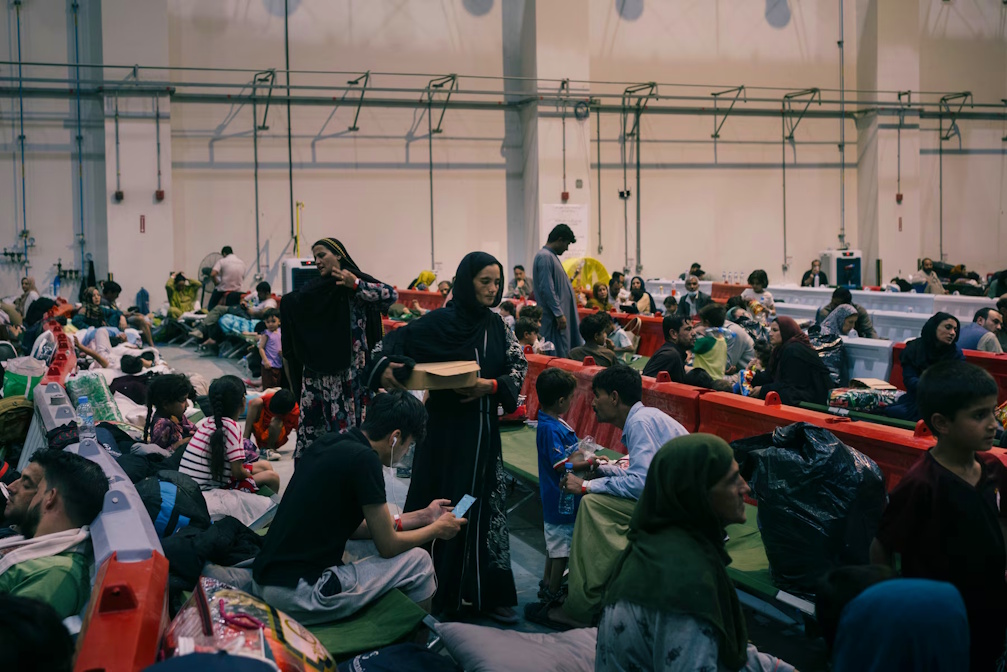
The Afghan nationals currently residing in Qatari processing facilities were evacuated from Afghanistan following the US withdrawal in 2021 due to their work on behalf of American forces and the danger they faced from the Taliban and Islamic State. However, they have remained stranded at these camps for over four years following the suspension of refugee resettlement for Afghans in January 2025.
The situation has become more complicated since an Afghan immigrant was accused of an attack in Washington that killed one National Guard member and wounded another in late 2025. Following this incident, the Trump administration pointed to vetting gaps and subsequently signed an executive order preventing Afghan refugees—including those who worked with the military—from entering the United States. Some Republicans in Congress have since stepped back from once-bipartisan support for programs like the Special Immigrant Visa program.
Urgent Timelines and Implementation Concerns
AfghanEvac has warned that significant uncertainty remains over implementation timelines, noting that the processing facility in Qatar which hosts more than 1,000 Afghans who previously worked alongside US forces is expected to close by September 2026. Secretary Rubio has confirmed that the administration is in discussions with “multiple countries” about potentially accepting these Afghan evacuees.
Congressional lawmakers have requested a briefing on the issue by June 24, seeking information including an update on negotiations for third-party relocations and the legal authority for compelling Afghan evacuees to move to a third country. They have also suggested that Afghans who have cleared enhanced vetting and are approved for travel should be considered for entry to the United States.
Humanitarian Context and Broader Implications
The debate over Afghan resettlement occurs against the backdrop of a worsening humanitarian situation inside Afghanistan. International aid agencies report that millions of Afghans remain dependent on humanitarian assistance amid economic hardship, restrictions affecting women and girls, food insecurity, and limited access to essential services.
Humanitarian organizations have expressed concern over the growing influx of Afghan returnees from neighboring Iran and Pakistan, noting that millions of Afghans have returned or been deported from these countries since late 2023. This influx has placed additional pressure on already strained communities, public services, and aid resources across Afghanistan.
Rights groups have urged Western governments to accelerate relocation programs, arguing that former Afghan allies face significant security risks if returned to Afghanistan before their cases are resolved.
If approved by Congress and signed by the president, the proposed NDAA provisions could provide additional safeguards for vulnerable Afghans still seeking permanent resettlement. However, the closing timeline for the Qatar facility and ongoing administrative barriers continue to create uncertainty for thousands of Afghan families caught in prolonged limbo.
Our Pashto-Dari Website

Support Dawat Media Center
If there were ever a time to join us, it is now. Every contribution, however big or small, powers our journalism and sustains our future. Support the Dawat Media Center from as little as $/€10 – it only takes a minute. If you can, please consider supporting us with a regular amount each month. Thank you
DNB Bank AC # 0530 2294668
Account for international payments: NO15 0530 2294 668
Vipps: #557320

Comments are closed.