
World Bank Warns of Falling Incomes and Water Crisis Despite Afghanistan’s Economic Growth

Afghanistan’s economy is projected to grow by 3 percent in 2026, largely driven by a strong harvest, but declining incomes, food insecurity and worsening water shortages continue to undermine living standards, the World Bank said.
In its latest Afghanistan Development Update, released on November 18, the World Bank said economic growth would remain insufficient to improve conditions for ordinary households. Output per person is projected to decline by 3.3 percent in 2026, marking the third consecutive annual fall, as population growth of 6.6 percent outpaces economic expansion. The mismatch between headline growth and per-capita output underscores a central paradox of Afghanistan’s recovery: the economy may be expanding, but the average Afghan is getting poorer.
The report highlights mounting pressure on household purchasing power despite improved agricultural production. In September, casual labourers found 14 percent fewer working days than a year earlier, while their weekly earnings could purchase 27 percent less wheat flour. This combination of reduced employment opportunities and eroding real wages has left many families unable to meet basic needs, forcing them to cut back on food and other essentials.
An estimated 15.9 million people faced acute food insecurity in Afghanistan during September and October 2026, according to the Integrated Food Security Phase Classification (IPC). This represents nearly one-third of the population. The IPC has also warned that the situation could deteriorate during the winter lean season, with 19.2 million people projected to face crisis-level or worse food insecurity between November 2026 and April 2027. The lean season, when food stocks from the harvest run low and prices typically rise, represents a particularly dangerous period for vulnerable households, and the projected increase of more than 3 million people facing crisis-level hunger highlights the fragility of the current recovery.
The World Bank also pointed to continued weaknesses in public investment and international trade. Domestic revenue increased by 10.2 percent in the first half of 2026, supported by higher tax and non-tax collections, but capital expenditure is projected to remain at just 1.3 percent of gross domestic product (GDP) during the fiscal year. This low level of public investment limits the government’s ability to build infrastructure, create jobs and stimulate broader economic activity, raising questions about the sustainability of growth driven primarily by agriculture.
Trade disruptions have compounded these challenges. With the border with Pakistan closed, approximately 97 percent of Afghanistan’s imports are now entering through Central Asia and Iran. This shift has increased transportation costs and delivery times, making imported goods more expensive for consumers and raising input costs for businesses. Meanwhile, exports declined by 15.1 percent between April and September compared with the same period in 2025, reflecting both the closure of traditional trade routes and weaker external demand.
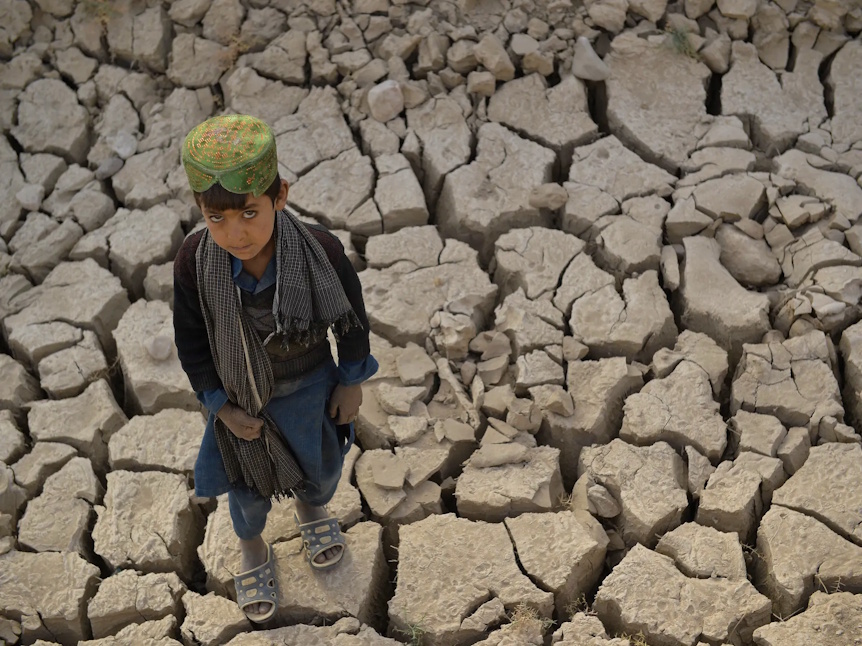
Water scarcity represents another major threat to Afghanistan’s economic and social stability. The World Bank estimates that the country has lost an average of 4.9 billion cubic metres of freshwater reserves annually since 2003. In Kabul, groundwater is being extracted at nearly four times the rate at which natural resources replenish it, a pace that is clearly unsustainable and poses long-term risks for the capital’s water supply. The depletion of aquifers also raises the cost of accessing water, as wells must be drilled deeper and pumping requires more energy.
The report said the problem threatens both urban water supplies and rural livelihoods. Agriculture accounts for 46 percent of employment in Afghanistan and consumes approximately 95 percent of the country’s water withdrawals. This heavy dependence on water for agricultural production means that water scarcity directly translates into threats to employment, food security and rural incomes. Improving irrigation efficiency and adopting water-saving technologies could help reduce pressure on scarce water resources, but such measures require investment and technical capacity that are currently in short supply.
The economic outlook projects growth of 3.3 percent in 2027 and 3.5 percent in 2028. However, even if these forecasts materialise, output per person is expected to remain around 7 percent below its 2024 level by 2028. This means that, on current trends, the average Afghan household will be significantly worse off at the end of the forecast period than it was at the beginning, despite positive headline growth figures.
The World Bank warned that poor harvests, further trade disruptions, additional large-scale returns of Afghans and deeper reductions in international aid could weaken the recovery. Each of these risks is interconnected: returns of refugees strain already limited resources, reductions in aid cut off lifelines for vulnerable populations, and trade disruptions raise prices and reduce incomes. A combination of these factors could push the economy into contraction and deepen the humanitarian crisis.
It recommended improving trade routes, expanding employment opportunities in areas receiving returnees and restoring access to education and employment for women and girls. It also called for repairing irrigation systems, restoring water and sanitation services and protecting groundwater reserves. These recommendations reflect a recognition that Afghanistan’s economic challenges cannot be addressed through macroeconomic policy alone but require targeted investments in infrastructure, human capital and environmental sustainability.
The findings underline the gap between Afghanistan’s modest economic growth and the living conditions of millions of people struggling with declining purchasing power, limited employment and growing environmental pressures. They also highlight the need for a comprehensive approach that addresses both immediate humanitarian needs and the longer-term structural challenges facing the Afghan economy. Without such an approach, the disconnect between growth and well-being is likely to persist, leaving millions of Afghans trapped in poverty and vulnerability even as the economy continues to expand.

Support Dawat Media Center
If there were ever a time to join us, it is now. Every contribution, however big or small, powers our journalism and sustains our future. Support the Dawat Media Center from as little as $/€10 – it only takes a minute. If you can, please consider supporting us with a regular amount each month. Thank you
DNB Bank AC # 0530 2294668
Account for international payments: NO15 0530 2294 668
Vipps: #557320
