

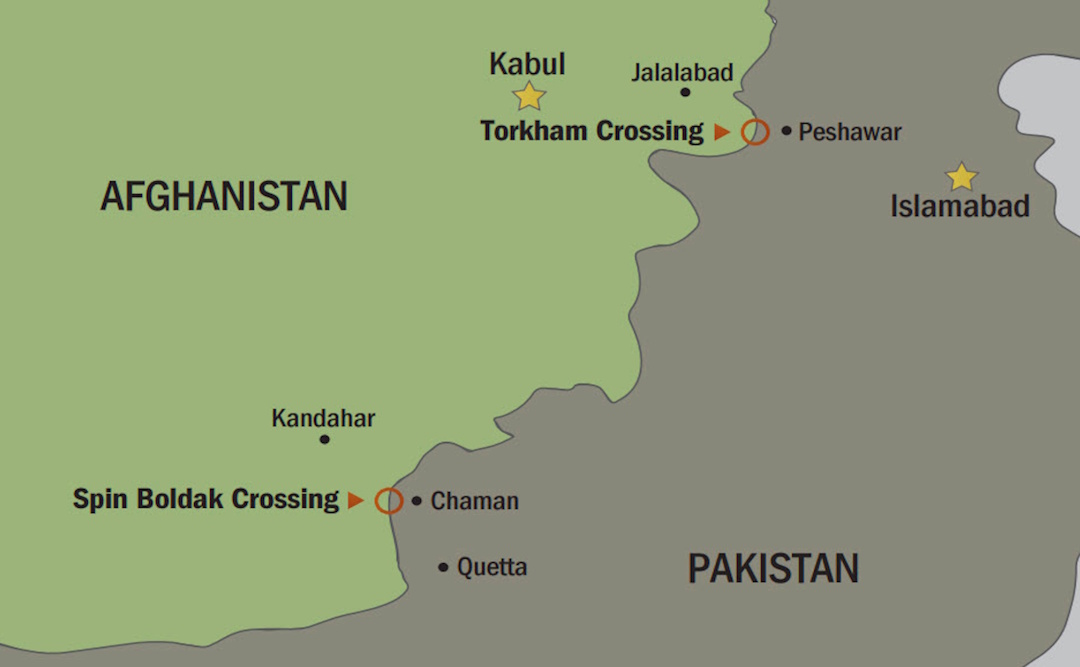
Islamabad/Peshawar – The prolonged shutdown of the Torkham border crossing, a critical artery for commerce between Pakistan and Afghanistan, has resulted in staggering losses exceeding $240 million for traders on both sides, according to Pakistani media reports.
Citing data from trade organizations, The Express Tribune reported on Monday, February 16, that the continued closure is costing cross-border businesses nearly $2 million per day. This financial hemorrhage is severely disrupting established supply chains, halting the flow of essential goods, and leaving hundreds of trucks stranded on both sides of the frontier.
The vital crossing was shuttered in October 2025 following an outbreak of military clashes between Afghan Taliban forces and Pakistani security personnel. The skirmishes, which marked a significant escalation in border tensions, brought all regular movement and trade activities to a grinding halt. While the fighting has subsided, the border remains sealed indefinitely.
Pakistani officials and customs authorities state that trade routes with landlocked Afghanistan have nearly collapsed. The disruption has not only halted the export of Pakistani fruits, vegetables, pharmaceuticals, and textiles but has also blocked the import of Afghan goods like coal, fresh and dried fruits, and talc, worsening the economic pressure on trading communities in both nations.
A Commercial Lifeline Severed
The severity of the impact is underscored by the sheer volume of traffic the Torkham crossing typically handles. Before the shutdown, it was one of the busiest commercial gateways between the two countries, facilitating the daily movement of an estimated 10,000 people and between 500 to 700 vehicles, a mix of commercial cargo trucks and passenger transport. Its closure has been particularly damaging for border communities on both sides, whose economies are almost entirely dependent on the trade and transit fees that the crossing generates.
Deepening Rift: New Restrictions on Pharmaceuticals
Compounding the economic damage from the border closure, Afghan authorities have recently imposed strict new restrictions on the import of Pakistani pharmaceutical products. The Taliban-led administration has issued warnings against what it describes as the illegal smuggling of medicines, insisting that all imports must adhere to new documentation and quality control protocols. Pakistani pharmaceutical exporters, who rely heavily on the Afghan market, view this as another major hurdle that could further intensify trade disruptions and lead to medicine shortages in Afghanistan.
A Precarious Future for Border Economies
The simultaneous closure of the physical border and the imposition of new trade barriers signal a deepening diplomatic and economic rift between Islamabad and Kabul. Analysts warn that prolonged border tensions could spiral into a larger humanitarian issue. Perishable goods continue to rot on both sides, small-scale traders are facing bankruptcy, and the cost of essential commodities in the remote border regions is skyrocketing.
Unless both sides engage in urgent dialogue to de-escalate military posturing and reach a mutual agreement to reopen the crossing, the economic losses will continue to mount, further impoverishing border communities and deepening the humanitarian difficulties faced by vulnerable populations in both countries.
Our Pashto-Dari Website


Support Dawat Media Center
If there were ever a time to join us, it is now. Every contribution, however big or small, powers our journalism and sustains our future. Support the Dawat Media Center from as little as $/€10 – it only takes a minute. If you can, please consider supporting us with a regular amount each month. Thank you
DNB Bank AC # 0530 2294668
Account for international payments: NO15 0530 2294 668
Vipps: #557320

Comments are closed.