
UN: Gender Gap in Afghan Justice System: Women Four Times Less Likely to Access Legal Redress

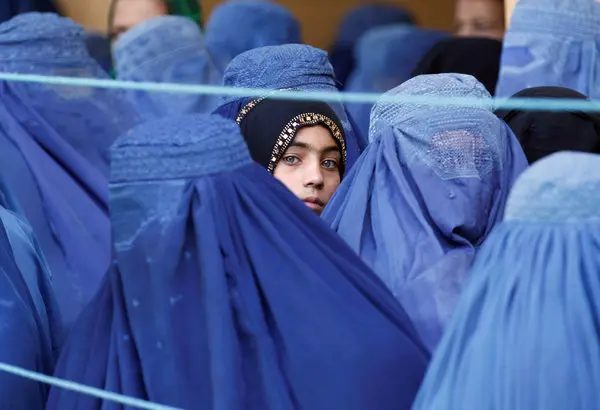
UN Report Reveals Staggering Gender Gap in Afghan Justice System: Women Four Times Less Likely to Access Legal Redress
A devstating new report from the United Nations has laid bare the profound gender inequality embedded in Afghanistan’s justice system, revealing that women are four times less likely than men to access formal dispute resolution and legal protection. The findings, released by the UN Assistance Mission in Afghanistan (UNAMA) and shared by UN Women, paint a stark picture of a population where half are effectively denied their legal rights, deepening their vulnerability under Taliban rule.
The report highlights a critical “justice gap,” showing that a mere 14% of women surveyed have access to formal justice mechanisms, compared to 53% of men. This sharp disparity leaves the vast majority of Afghan women without safe or reliable avenues to seek redress, claim their fundamental rights, or hold perpetrators of abuse and discrimination accountable.
“Barriers to justice weaken trust in institutions and make communities more vulnerable,” said Georgette Gagnon, the acting head of UNAMA. “When large segments of society cannot resolve disputes or seek protection, it creates a cycle of vulnerability and impunity that affects everyone.”
The report’s release comes amid an ever-tightening grip on women’s rights by the Taliban authorities, who have systematically dismantled two decades of progress since their return to power in August 2021. The current justice gap is both a symptom and a tool of this broader systemic oppression.
Women and girls have been barred from secondary and higher education, restricted from most forms of employment, and effectively erased from public life. Their access to justice is further crippled by a lack of female judges, lawyers, and police officers—many of whom have been forced from their jobs—and a judiciary increasingly reliant on restrictive interpretations of Islamic law that often silence women’s testimonies and claims.
Susan Ferguson, the UN special representative for women in Afghanistan, emphasized the dire real-world consequences of this exclusion. “Denying women access to judicial institutions threatens their very safety and independence,” she said. “For those experiencing domestic violence, land disputes, or economic coercion, the inability to seek legal protection traps them in dangerous and hopeless situations.”
The report serves as a urgent warning: without immediate reforms and a fundamental restoration of women’s legal rights, the justice gap in Afghanistan will not only persist but deepen. This would leave millions of women and girls without any effective means to seek protection, challenge injustice, or secure a path toward safety and independence, cementing their status as invisible and unheard within the very system meant to uphold their rights.
Our Pashto-Dari Website

Support Dawat Media Center
If there were ever a time to join us, it is now. Every contribution, however big or small, powers our journalism and sustains our future. Support the Dawat Media Center from as little as $/€10 – it only takes a minute. If you can, please consider supporting us with a regular amount each month. Thank you
DNB Bank AC # 0530 2294668
Account for international payments: NO15 0530 2294 668
Vipps: #557320

Comments are closed.