

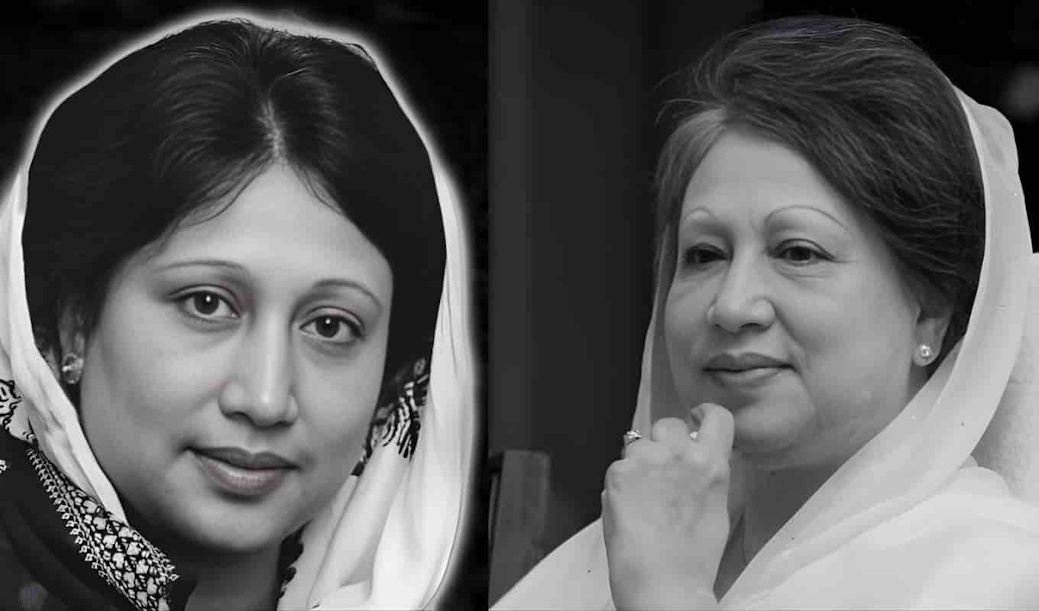
She had envisioned a historic homecoming, one where throngs of supporters would flood the streets of Dhaka and every corner of Bangladesh, heralding what she hoped would be her final, triumphant return to power. The stage was set for a comeback ahead of elections scheduled for early 2026. Instead, the crowds that gathered this week arrived in a somber, silent procession. They came not for a campaign rally, but for her funeral.
Bangladesh lost its first female prime minister and one of the most formidable, polarizing figures in its turbulent political history when Khaleda Zia died on Tuesday at the age of 80 after a prolonged and complex battle with illness. Her death at Dhaka’s Evercare Hospital, where she had been admitted in late November for a lung infection, marks the end of an era defined by her epic rivalry with Sheikh Hasina—a decades-long political duel that shaped the nation’s democracy, for better and for worse.
From ‘Shy Housewife’ to Political Matriarch
Born in 1945 in Dinajpur in what was then British India, Khaleda Zia’s life was irrevocably altered by her marriage at 15 to Ziaur Rahman, a dashing army officer who would become a hero of Bangladesh’s independence war and later its president. For years, she remained in the background, the “shy housewife” of public perception. That changed abruptly with her husband’s assassination in 1981. Thrust into the spotlight, she reluctantly took the helm of his political creation, the Bangladesh Nationalist Party (BNP), and displayed a resilience that stunned the nation.
She would go on to serve three terms as prime minister (1991-1996, 2001-2006, and a brief stint in 2007), becoming a symbol of both democratic aspiration and political hardball. Her initial rise, in alliance with her archrival Sheikh Hasina, helped topple military dictator Hussain Muhammad Ershad in 1990. Yet, the cooperation was short-lived, giving way to the “Battle of the Begums”—a bitter, personal, and deeply institutionalized feud that would gridlock Bangladeshi politics for a generation.
A Tenure of Contradictions
Zia’s legacy is a tapestry of stark contrasts. She is credited with consolidating a center-right political alternative to the secular, center-left Awami League and with empowering a generation of women in a conservative society. Her supporters revered her as a stoic mother figure, “Khaleda Ma,” who embodied defiance.
However, her tenures were also marred by controversy. The 1996 election, which the BNP won in a landslide amid an opposition boycott, was widely criticized as lacking legitimacy. Her rule saw the rise of hardline Islamist groups as political allies, a strategic shift that altered the nation’s social fabric. Critics accused her administration of rampant corruption, cronyism, and authoritarian tendencies—the very charges that would later be levied against her rival. Her final term ended in 2006 amid political chaos, leading to a military-backed caretaker government.

The Personal Cost of the Feud
The “Battle of the Begums” was not merely political; it became intensely personal and vengeful. After Hasina returned to power in 2009, the legal net tightened around Zia and her family. In 2018, she was imprisoned on corruption charges that her party and international rights groups decried as politically motivated. Even in failing health, her pleas for permission to travel abroad for advanced medical treatment were repeatedly denied by the Hasina government—a point of immense international contention and a stark illustration of the rivalry’s cruelty.
Her release in August 2024, following Hasina’s own ouster after a violent crackdown on student protesters and her subsequent exile, came too late to restore her health. It did, however, allow her a few final months of fragile freedom in her homeland.
An Unlikely, Poignant Tribute
In a testament to the profound complexity of their shared history, Sheikh Hasina, now in exile herself, issued a warm and statesmanlike condolence message. She acknowledged Zia’s “significant contributions” as the first woman prime minister and her role in the democratic struggle.
“This message is significant and shouldn’t be overlooked,” noted Michael Kugelman, Senior South Asia Fellow at the Atlantic Council. “The Hasina-Zia rivalry was one of the longest, deepest, and most bitter imaginable. That Hasina issued warm condolence messages… so soon after her passing was announced, speaks volumes.”
A Legacy That Lives On
Khaleda Zia’s political influence appears poised to extend beyond her death, channeled through the dynastic system she helped entrench. Her son, Tarique Rahman, long anointed as her heir, returned from 17 years of self-imposed exile in London in December. With Hasina sidelined and his mother gone, “Tarique Zia” stands as the BNP’s likely standard-bearer. His face now peers alongside his mother’s on party banners, signaling not a break from the past, but its continuation.
“Some might say Bangladesh has entered a new political era, given that Zia is gone and Sheikh Hasina… has been sidelined indefinitely,” Kugelman observed. “But dynastic politics die hard. Zia’s son could be the next prime minister.”
Khaleda Zia’s story is the story of modern Bangladesh: a relentless struggle for democracy punctuated by personal vendettas, a celebration of female empowerment alongside entrenched patronage, and a political culture where endings are never truly final. She was admired and reviled, a liberator and an obstructer, a victim and a perpetrator. How Bangladesh remembers her will depend less on a fixed judgment of her past, and more on the unpredictable and unsettled future of the nation she helped shape—and divided—so profoundly.
Our Pashto-Dari Website

Support Dawat Media Center
If there were ever a time to join us, it is now. Every contribution, however big or small, powers our journalism and sustains our future. Support the Dawat Media Center from as little as $/€10 – it only takes a minute. If you can, please consider supporting us with a regular amount each month. Thank you
DNB Bank AC # 0530 2294668
Account for international payments: NO15 0530 2294 668
Vipps: #557320

Comments are closed.