
U.S. Strategy 2026: Afghanistan’s Removal from the “Terror Hub” Designation and the Expansion of a Regional Threat Framework
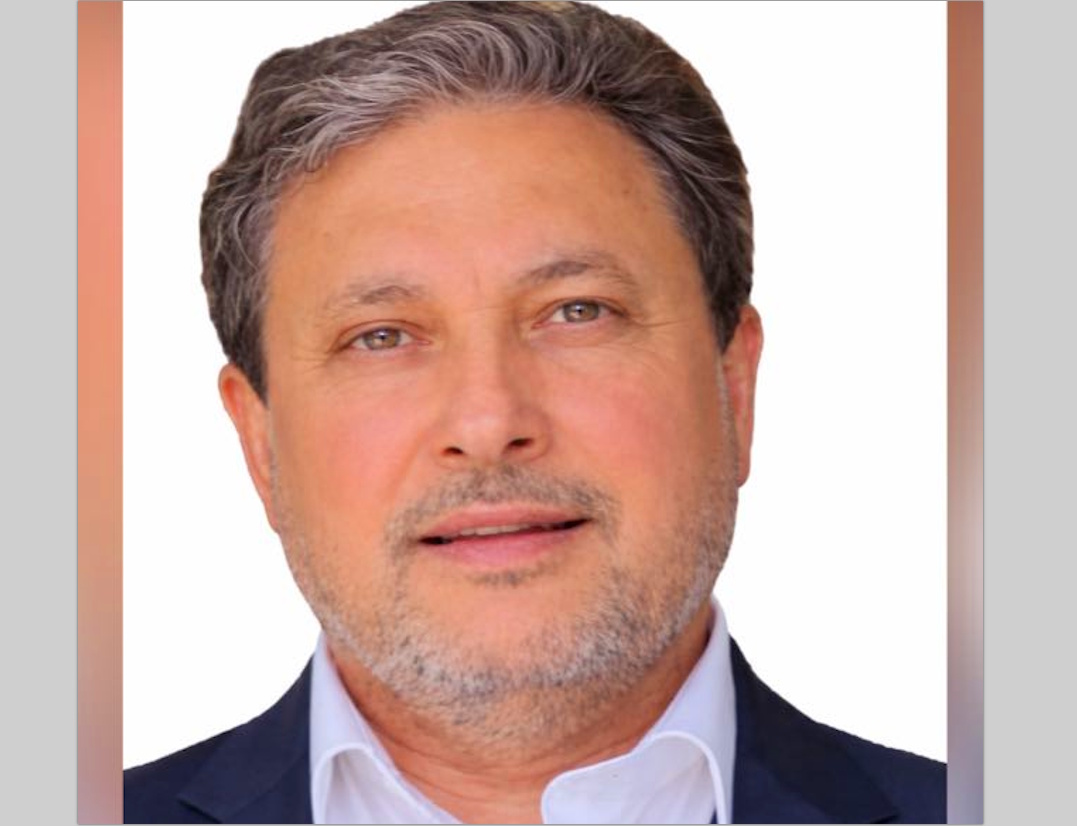
Prof.Dr.Ubaidullah Burhani

The United States Counterterrorism Strategy of 2026 marks a significant evolution in Washington’s conceptual and operational approach toward Afghanistan and the wider region. The shift is evident not only in terminology but also in the redefinition of threat architecture and its geopolitical referents. Afghanistan is no longer portrayed as the singular epicenter of global terrorism, as was predominant in earlier U.S. strategic discourse. Instead, the strategy situates terrorism within a broader transnational and regional framework, linking ISIS-Khorasan to an interconnected security environment extending from Pakistan to Central Asia and parts of the Middle East.
This recalibration reflects a deeper strategic reassessment of long-standing assumptions that shaped two decades of U.S. engagement in Afghanistan. It implicitly acknowledges that terrorism in the region cannot be adequately understood through a state-centric lens focused exclusively on Afghanistan. Rather, it is increasingly viewed as the product of a complex regional ecosystem characterized by porous borders, institutional fragility, overlapping spheres of influence, and persistent geopolitical competition.
A key dimension of this shift is the departure from earlier narratives that framed Afghanistan as a failed state serving as a permanent sanctuary for terrorism. Such narratives were often reinforced by regional actors in diplomatic and strategic contexts. The 2026 strategy, however, challenges this reductionist framing by identifying ISIS-Khorasan as a dispersed, cross-border threat network, thereby broadening the analytical and operational scope to include Pakistan and adjacent regions.
From an intelligence and security standpoint, the strategy underscores a growing recognition that ISIS-Khorasan has evolved beyond a territorially confined organization. It now operates as a decentralized, transnational network exploiting governance gaps, weak border controls, and regional instability. Consequently, the U.S. approach moves beyond reliance on pressure mechanisms directed solely at Kabul, toward a more integrated regional containment strategy encompassing financial disruption, border security cooperation, and transnational counter-recruitment efforts.
The document also reflects a structural adjustment in U.S. priorities following its military withdrawal from Afghanistan. In the absence of a permanent ground presence, Washington can no longer directly shape internal security dynamics as it once did. This limitation has encouraged a doctrinal shift from a “state centered sanctuary model” to a “cross-regional threat ecosystem” framework. It also facilitates a redistribution of U.S. security engagement across Central Asia, the Gulf, and the Indian Ocean region, emphasizing indirect influence over direct intervention.
For Afghanistan, this reconfiguration produces a dual outcome. On one hand, its removal from the designation of exclusive terrorist hub creates limited diplomatic space for engagement, potentially easing aspects of political isolation and enabling broader economic and regional interaction. On the other hand, Afghanistan remains firmly embedded within U.S. security assessments as part of a fragile and interconnected threat environment, particularly in relation to ISIS-Khorasan activity.
Regionally, the implications are equally significant. Pakistan is likely to face increased scrutiny regarding its longstanding narrative of being the primary victim of terrorism detached from broader regional dynamics. Similarly, Central Asian states are expected to adopt more cautious and nuanced positions regarding threat attribution, given the explicit acknowledgment of multi-source instability in U.S. strategic framing.
Ultimately, the 2026 strategy reflects a broader intellectual and operational transition in U.S. counterterrorism doctrine. It moves away from monocausal and state-reductionist explanations of terrorism toward a more sophisticated understanding rooted in geopolitical complexity, transnational networks, and systemic regional fragility.
Conclusion: Afghanistan’s Strategic Repositioning within a Regional Security Architecture
This strategic shift signals a redefinition of Afghanistan’s role within the international security landscape. While it is no longer characterized as the exclusive center of global terrorism, it remains embedded within a broader and more diffuse regional threat matrix. This duality simultaneously reduces the intensity of political isolation while sustaining security-related scrutiny.
Afghanistan, therefore, occupies an increasingly ambiguous position: no longer the primary node of crisis, yet not external to it. It has effectively transitioned into a component of a wider regional security architecture in which its strategic future depends on its ability to recalibrate its international role and integrate constructively into regional frameworks that mitigate isolation and reduce the risk of becoming a proxy arena for competing powers.
In essence, the 2026 U.S. strategy does more than re-map threat perceptions; it fundamentally repositions Afghanistan from a singularly defined source of instability to a structurally embedded node within a complex regional security network. This conceptual shift is likely to carry long-term implications for the security dynamics of South and Central Asia.
The original article was published in Arabic on the White House platform
in Washington, D.C.
Washington and the Gulf: From Comprehensive Security Guarantee to Conditional Partnership
Our Pashto-Dari Website

Support Dawat Media Center
If there were ever a time to join us, it is now. Every contribution, however big or small, powers our journalism and sustains our future. Support the Dawat Media Center from as little as $/€10 – it only takes a minute. If you can, please consider supporting us with a regular amount each month. Thank you
DNB Bank AC # 0530 2294668
Account for international payments: NO15 0530 2294 668
Vipps: #557320

Comments are closed.