

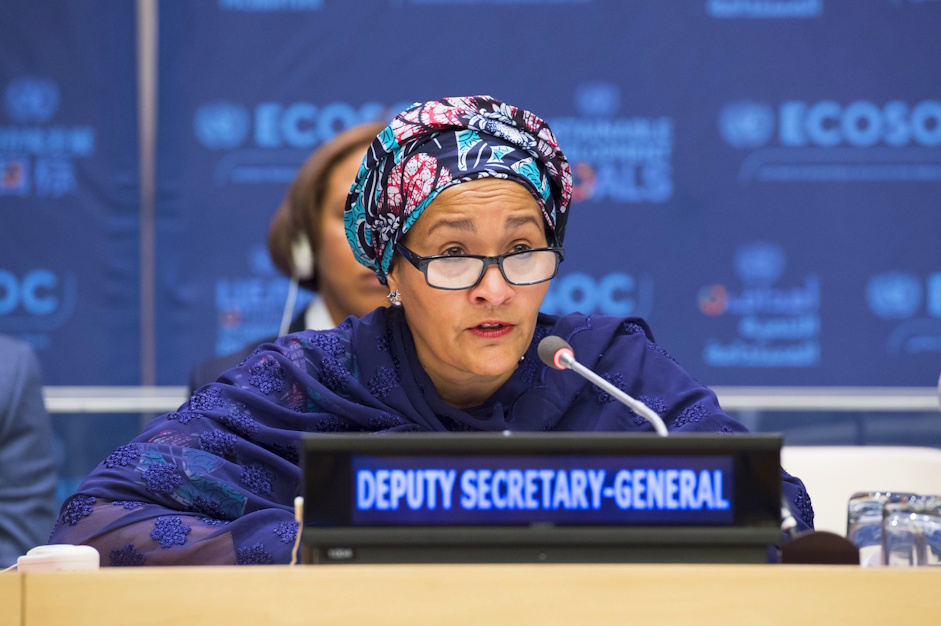
U.N. Deputy Secretary-General Amina Mohammed has issued a forceful appeal to the global community, urging nations not to remain silent in the face of systematic discrimination against women and girls in Afghanistan. Her remarks underscore a growing international alarm over what the U.N. has termed “gender apartheid.”
Speaking on Sunday, Mohammed detailed a severe and widespread rollback of fundamental rights, noting that millions now face near-total restrictions on their education, employment, freedom of movement, and access to public life.
“The international community cannot afford to be indifferent to these grave violations,” Mohammed stated. “Women’s rights are an inalienable part of universal human rights, and their deliberate erosion in Afghanistan demands a coordinated and robust response. We must see effective measures to protect and empower Afghan women and girls.”
Since the Taliban’s return to power in August 2021, the de facto authorities have issued over 50 edicts specifically targeting women and girls. These have included the closure of secondary schools and universities for women, the ban on Afghan women working for national and international NGOs, and stringent rules requiring a male guardian (mahram) for travel and access to public spaces like parks and baths. The cumulative effect has been the effective erasure of women from public, economic, and social spheres.
Humanitarian and Rights Crisis Deepens
This discriminatory framework has exacerbated a severe humanitarian crisis. By barring women from humanitarian work, the Taliban’s policies have crippled aid delivery in a country where millions face acute hunger. Human rights organizations, including Amnesty International and Human Rights Watch, have repeatedly called for sustained diplomatic pressure, accountability mechanisms, and targeted humanitarian support designed to bypass restrictive policies.
Long-Term Consequences
Analysts warn that the long-term consequences are devastating, extending far beyond the immediate humanitarian emergency. The destruction of women’s education and economic participation will severely impair the country’s health sector, economy, and overall development for generations.
“The deliberate exclusion of half the population from society is not only a profound tragedy for individual women and girls but also a recipe for the irreversible stagnation of Afghanistan,” said one regional analyst. “The socio-economic and psychological impacts will be felt for decades.”
Calls for Concerted Action
In her address, Mohammed reiterated that immediate intervention and unwavering international collaboration are crucial. “Our task is to prevent further erosion and to tirelessly work toward the restoration of rights, dignity, and equal opportunities for every woman and girl in Afghanistan,” she said. “Silence is not an option.”
The appeal adds to a chorus of voices from global leaders and activists demanding that the situation of Afghan women remain high on the international agenda, linking any engagement with the Taliban de facto authorities to tangible and verifiable improvements in women’s rights.
Support Dawat Media Center
If there were ever a time to join us, it is now. Every contribution, however big or small, powers our journalism and sustains our future. Support the Dawat Media Center from as little as $/€10 – it only takes a minute. If you can, please consider supporting us with a regular amount each month. Thank you
DNB Bank AC # 0530 2294668
Account for international payments: NO15 0530 2294 668
Vipps: #557320

Comments are closed.