

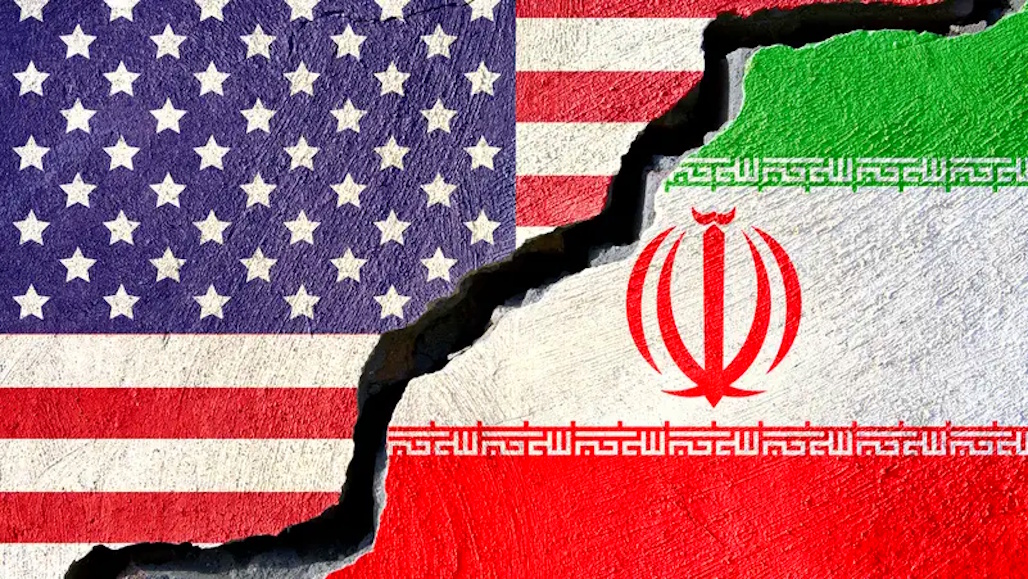
Middle East peace talks thrown into doubt as Iran says it needs to ‘reassess’ after overnight attacks; White House source suggests a deal could still be close.
TEHRAN/WASHINGTON – The future of Middle East peace talks was thrown into question on Wednesday after Iran’s foreign ministry said it needed to “reassess” its participation, while U.S. President Donald Trump warned that Iran would “have to pay the price” following an overnight exchange of military strikes. The escalation drew neighboring states back into an on-and-off war that has consumed the region since late February.
The tit-for-tat attacks, which came after Trump accused Iran of downing a U.S. Apache helicopter near the Strait of Hormuz, marked the most severe escalation since a fragile ceasefire was established in early April. Talks to turn that truce into a durable peace had already been stalling for weeks, with periodic flare-ups as both sides launched limited strikes and traded blame for violations.
The U.S. military launched strikes against Iran in the early hours of Wednesday, describing them as a “proportional response” to the downing of the helicopter, whose two crew members were rescued by a drone boat. The Pentagon said it had hit Iranian air defenses, ground control stations, and radar sites. Iran, however, reported attacks on Qeshm Island, the port city of Sirik, and explosions in the seaside city of Bandar Abbas.
In response, Iran’s Islamic Revolutionary Guard Corps (IRGC) launched a wave of retaliatory airstrikes, claiming hits on U.S. bases in Kuwait, Bahrain, and Jordan. The U.S. military said nearly all Iranian missiles and drones had been intercepted, with no immediate reports of American casualties or damage to facilities. Jordan, Kuwait, and Bahrain each confirmed that the Iranian projectiles had been intercepted over their territories.
Diplomatic Fallout and Contradictory Signals
Iran’s foreign ministry spokesperson, Esmail Baqaei, said the U.S. strikes jeopardized ongoing ceasefire negotiations. He accused Washington of undermining diplomacy with its attacks and contradictory messages, and also blamed Israel for harming the diplomatic process by continuing to violate the ceasefire in Lebanon.
“Following overnight events, we need to reassess,” Baqaei told reporters. “Any diplomatic process requires a minimum stable environment.”
Despite the attacks and escalating rhetoric, a senior White House official suggested that a deal with Iran could still be close. “Nothing changes where the deal stands right now,” an anonymous official told Politico. “There’s a military bucket and then there’s a negotiation bucket. So, two things can happen at the same time.”
In a sign that back-channel efforts continued, a delegation from Qatar which has been mediating between the U.S. and Iran landed in Tehran on Wednesday to hold talks on the latest developments, Iranian state media reported.
Trump’s Threats and Domestic Pressures
Trump, for his part, struck a belligerent tone. In a post on Truth Social, he wrote: “Iran’s military is a complete and total mess. Much of it, like their Navy and Air Force, doesn’t even exist anymore. They have been completely defeated. Iran is all talk and no action. The Bully of the Middle East is DEAD!!!”
Speaking to ABC News, the president said: “I believe the response should be very strong, very powerful, and that’s what this one is.” Fox News later reported, citing a phone interview, that Trump said he may order new strikes on Iran’s power plants and bridges because Tehran was taking too long to make a deal.
Trump is keen for a peace deal as U.S. midterm elections approach, with rising inflation and plummeting presidential approval ratings. But despite his frequent claims that an agreement is close, and several rounds of mediated talks, significant gaps remain between the two sides.
Iran is seeking the lifting of international sanctions, the unfreezing of billions of dollars in assets, and concessions over control of the Strait of Hormuz—a choke point for about a fifth of the global oil supply. Trump has insisted that any future peace deal must prevent Iran from developing a nuclear weapon, a goal Iran denies pursuing.
Hours before the U.S. strikes, Iran’s parliament speaker, Mohammad Bagher Ghalibaf, signaled defiance on X: “We prefer the language of diplomacy, but we speak other languages far more fluently. Break your commitments, and we’ll switch to what we speak best.”
The Lebanon Factor and Regional Spillover
A significant obstacle to a lasting U.S.-Iran deal has been the parallel fighting between Hezbollah and Israel in Lebanon. Iran has insisted that any comprehensive ceasefire must include the Lebanese front, while Israel and the U.S. have been eager to separate the two.
On Sunday, Iran and Israel traded strikes for the first time since the April ceasefire, after Israel hit the southern suburbs of Beirut. Iran has threatened to strike Israel again if it hits Lebanon’s capital. Israel continues dozens of daily strikes on south Lebanon, while Hezbollah fires on Israeli soldiers in the border zone.
Israeli strikes have killed more than 3,666 people in Lebanon since the latest conflict began, while Hezbollah attacks have killed at least 30 Israeli soldiers and three Israeli civilians. The interruption to global shipping and energy supplies through the Strait of Hormuz has already increased prices of food, energy, and other goods worldwide.
What Comes Next
For now, the region remains on edge. The IRGC has declared it is ready to give a “crushing and decisive” response if the U.S. attacks again. Meanwhile, Trump’s aides insist that military pressure and diplomacy can proceed in parallel.
But with Iran now “reassessing” its engagement, and Trump threatening broader strikes on infrastructure, the narrow window for a lasting peace appears to be closing even as mediators from Qatar rush to keep it open.
Our Pashto-Dari Website

Support Dawat Media Center
If there were ever a time to join us, it is now. Every contribution, however big or small, powers our journalism and sustains our future. Support the Dawat Media Center from as little as $/€10 – it only takes a minute. If you can, please consider supporting us with a regular amount each month. Thank you
DNB Bank AC # 0530 2294668
Account for international payments: NO15 0530 2294 668
Vipps: #557320

Comments are closed.