

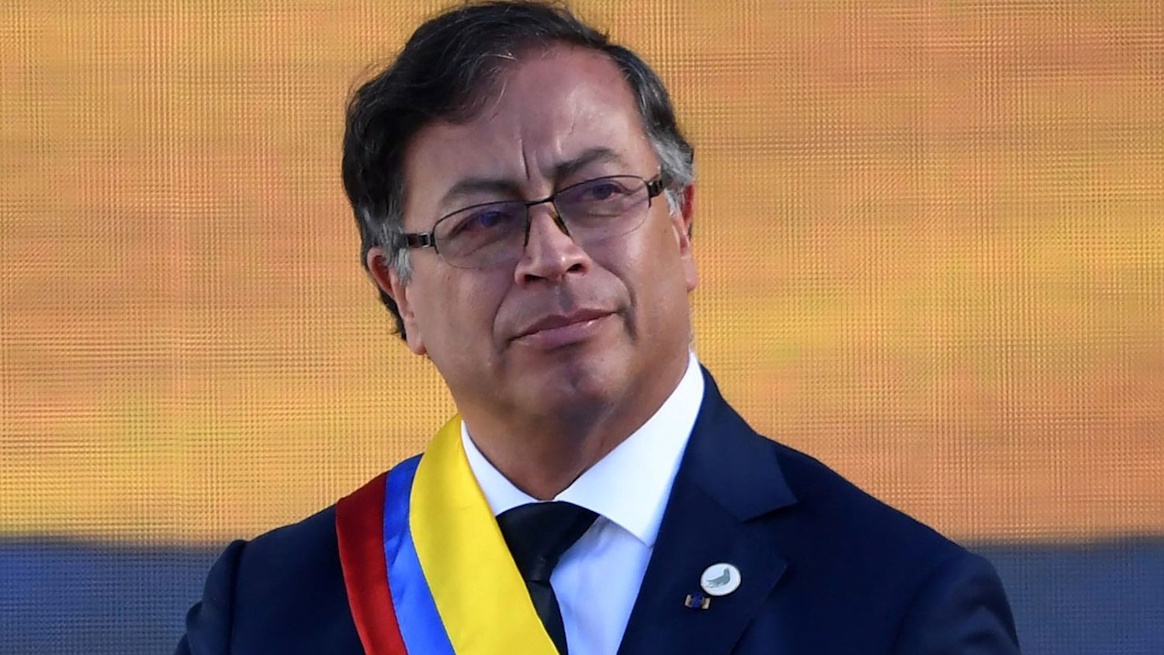
BOGOTÁ, Colombia – Colombian President Gustavo Petro declared on Monday that he is prepared to “take up arms” to defend his nation in response to escalating threats and military actions from the United States under President Donald Trump, including a weekend raid on Caracas that captured Venezuelan leader Nicolás Maduro.
Petro, Colombia’s first leftist president and a former M-19 guerrilla who laid down his arms under a 1989 peace accord, stated on the social media platform X: “I swore not to touch a weapon again… but for the homeland I will take up arms again.” The declaration marks a dramatic escalation in rhetoric between the two leaders and underscores the deepening regional instability following the U.S. military intervention in Venezuela.
A War of Words Intensifies
The confrontation between the two heads of state has been building for months. On Sunday, Trump targeted Petro with incendiary remarks, telling reporters the Colombian leader should “watch his ass” and describing him as “a sick man who likes making cocaine and selling it to the United States.” Trump provided no evidence for his claims, which echo his long-standing accusations that leftist leaders in Latin America are complicit in the drug trade.
In response, Petro fired back, framing Trump’s aggression as part of a broader pattern of U.S. militarization in the region. “This isn’t just about insults. It’s about a clear strategy of escalation—first bombing alleged drug boats, then seizing Venezuelan oil tankers, and now a military raid on a sovereign capital,” Petro wrote.
U.S. Military Actions and Sanctions
The Trump administration’s “Caribbean Initiative,” launched earlier this year, began with the destruction of vessels suspected of drug trafficking in international waters. It has since expanded into what U.S. officials call “resource-denial operations” against Venezuelan state assets. The operation culminated on Saturday with a daring military strike on Caracas that resulted in the capture of President Maduro, who is now reportedly held at a U.S. military facility outside the country.
In parallel, the U.S. has levied severe financial sanctions against Petro, his family, and key members of his administration, accusing them of involvement in narcotics trafficking. Last week, in a significant diplomatic blow, Washington formally removed Colombia from its list of certified allies in the war on drugs, jeopardizing millions in security assistance and complicating trade relations.
Petro’s Defense: A Call for Restraint and Intelligence-Led Policy
In a lengthy post on X, President Petro defended his government’s counternarcotics strategy, arguing that it prioritizes human life and long-term stability over militarized spectacle.
“Our policy is robust, but it is intelligent,” Petro wrote. “If you bomb even one of these [armed] groups without sufficient intelligence, you will kill many children. If you bomb peasants, thousands will turn into guerrillas in the mountains. And if you detain the president, whom a good part of my people love and respect, you will unleash the popular jaguar.”
His statement reflects a fundamental philosophical divide with the Trump administration, which favors overwhelming force, and hints at the potential for a massive popular uprising in defense of regional sovereignty.
Domestic and Regional Repercussions
The crisis has ignited fierce debate within Colombia. The country’s right-wing opposition, which maintains close ties to the Trump administration, has denounced Petro’s rhetoric as reckless and sympathetic to narcoterrorism. Many opposition figures are optimistic about their chances in upcoming legislative and presidential elections, hoping voter discontent with Petro’s confrontational stance will swing the balance of power.
Regionally, the capture of Maduro has sent shockwaves through Latin America. While several conservative governments have remained silent or offered tacit support, left-leaning nations from Mexico to Argentina have condemned the action as a violation of international law and a return to gunboat diplomacy. Emergency meetings of the Community of Latin American and Caribbean States (CELAC) and the Organization of American States (OAS) are scheduled for this week.
An Uncertain Future
As the standoff intensifies, analysts warn of the risk of a wider conflict. Petro’s guerrilla past and his vow to take up arms, however symbolic, signal a readiness for confrontation unseen in recent Colombian history. The Trump administration, for its part, shows no sign of de-escalation, framing its actions as a necessary battle against drug cartels and “rogue states.”
The coming days will test the resilience of Colombia’s institutions, the unity of Latin America, and the limits of U.S. power in a region increasingly unwilling to accept unilateral intervention. The “popular jaguar” Petro warned of may yet awaken, setting the stage for a turbulent chapter in hemispheric relations.
Our Pashto-Dari Website


Support Dawat Media Center
If there were ever a time to join us, it is now. Every contribution, however big or small, powers our journalism and sustains our future. Support the Dawat Media Center from as little as $/€10 – it only takes a minute. If you can, please consider supporting us with a regular amount each month. Thank you
DNB Bank AC # 0530 2294668
Account for international payments: NO15 0530 2294 668
Vipps: #557320

Comments are closed.