
Iran Calls Proposal to End War With US “Legitimate and Generous” as Trump Rejects Offer

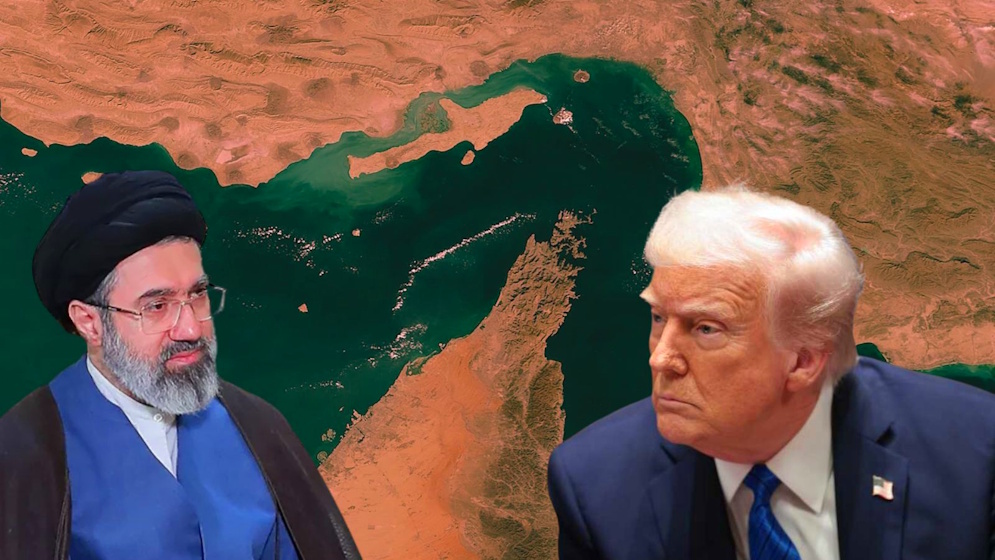
TEHRAN/WASHINGTON – Iran on Monday described its proposal to end hostilities with the United States and reopen the Strait of Hormuz as both legitimate and generous, while accusing Washington of maintaining unreasonable and one-sided demands that continue to obstruct diplomacy.
Iranian Foreign Ministry spokesperson Esmaeil Baghaei said Tehran’s offer reflected both national rights and a broader commitment to regional security.
“Our demands are legitimate,” Baghaei said during a televised press briefing. “We are calling for an end to the war, the lifting of the U.S. blockade and piracy, and the release of Iranian assets unjustly frozen in foreign banks under American pressure.”
Baghaei added that Iran’s conditions also include restoring safe passage through the Strait of Hormuz and creating lasting security arrangements across the Gulf region and Lebanon.
“These proposals represent a responsible and generous framework for regional peace and stability,” he said.
Trump Rejects Iran’s Response
The remarks came after U.S. President Donald Trump swiftly rejected Iran’s official response to a recent American peace initiative, calling it “totally unacceptable” and deepening fears that the nearly 10-week-old conflict could drag on.
“I don’t like it – TOTALLY UNACCEPTABLE,” Trump wrote on Truth Social, offering no further explanation.
The U.S. proposal, delivered days earlier, had reportedly sought an immediate halt to fighting as a first step toward broader negotiations on more contentious issues, including Iran’s nuclear activities and regional military posture.
Iran’s response, released Sunday, emphasized a comprehensive cessation of hostilities across all fronts, particularly in Lebanon, where Israeli forces continue to clash with Iran-backed Hezbollah fighters.
Tehran also reportedly demanded compensation for wartime damage, reaffirmed its sovereignty over the Strait of Hormuz, and insisted Washington end its naval blockade, guarantee against future attacks, lift sanctions, and remove restrictions on Iranian oil exports, according to Iranian state television and the semi-official Tasnim news agency.
Oil Prices Surge as Hormuz Remains Choked
Trump’s rejection immediately rattled global energy markets.
Oil prices surged by more than $4 per barrel on Monday, reflecting mounting concerns that the diplomatic deadlock will prolong instability around the Strait of Hormuz, one of the world’s most vital energy corridors.
Before the conflict erupted on February 28, nearly 20 percent of global oil and liquefied natural gas shipments passed through the narrow waterway. Since then, the strait has become a central pressure point in the conflict, with shipping traffic severely reduced.
“The oil market continues to trade like a geopolitical headline machine,” said Priyanka Sachdeva, senior market analyst at Phillip Nova.
“Prices are swinging sharply based on every statement, rejection, or warning coming from Washington and Tehran.”
Shipping data from Kpler and LSEG showed that only three crude tankers successfully exited the strait last week, many reportedly switching off their tracking systems to reduce the risk of Iranian targeting.
Political Pressure Mounts in Washington
The prolonged conflict is increasingly unpopular among American voters, many of whom are facing sharply rising gasoline prices less than six months before congressional elections that could determine whether Trump’s Republican Party retains control of Congress.
Washington has also struggled to build international backing for expanded maritime operations in the Gulf.
Several NATO allies have refused U.S. requests to contribute naval forces to secure the Strait of Hormuz unless a broader internationally mandated peace framework is established.
This diplomatic resistance has narrowed Washington’s options and increased pressure on Trump to produce a political breakthrough.
Trump Heads to Beijing as China’s Role Grows
Trump is expected to arrive in Beijing on Wednesday, where Iran is expected to feature prominently in talks with Chinese President Xi Jinping.
The White House has increasingly leaned on China one of Iran’s largest economic partners to use its influence to push Tehran toward a settlement.
With global energy markets under strain, China’s mediation role could prove critical.
Addressing whether military operations against Iran had effectively concluded, Trump said in remarks aired Sunday:
“They are defeated, but that doesn’t mean they’re done.”
Netanyahu Signals Conflict Far From Over
Israeli Prime Minister Benjamin Netanyahu echoed that sentiment, insisting that the conflict remains unfinished.
“There is more work to be done,” Netanyahu said in an interview with CBS News’ 60 Minutes, citing the need to eliminate Iran’s enriched uranium stockpiles, dismantle enrichment facilities, and neutralize Tehran’s ballistic missile capabilities and regional proxy networks.
Netanyahu said diplomacy would be the preferred method for removing enriched uranium but declined to rule out military action.
“The best solution would be diplomatic,” he said. “But all options remain on the table.”
He also acknowledged Israeli planners had underestimated Iran’s ability to disrupt maritime traffic through the Strait of Hormuz.
“It took a while for them to understand how significant that risk is,” Netanyahu said. “They understand it now.”
Iran Vows Resistance
Iranian President Masoud Pezeshkian responded with a defiant message on social media, declaring that Tehran would not yield under pressure.
“Iran will never bow down to the enemy,” he wrote. “We will defend our national interests with strength and determination.”
Despite ongoing diplomatic efforts, regional tensions remain high.
On Sunday, the United Arab Emirates said it intercepted two drones launched from Iranian territory. Qatar condemned a drone strike that hit a cargo vessel originating from Abu Dhabi in its territorial waters, while Kuwait reported intercepting hostile drones that entered its airspace.
Meanwhile, clashes continue in southern Lebanon between Israeli forces and Hezbollah fighters despite a U.S.-brokered ceasefire announced on April 16.
Netanyahu cautioned that even if hostilities with Iran formally end, fighting in Lebanon may continue.
The persistence of violence across multiple fronts underscores the fragility of current diplomatic efforts and highlights the growing risk that the conflict could spiral into a broader regional war with global economic consequences.

Support Dawat Media Center
If there were ever a time to join us, it is now. Every contribution, however big or small, powers our journalism and sustains our future. Support the Dawat Media Center from as little as $/€10 – it only takes a minute. If you can, please consider supporting us with a regular amount each month. Thank you
DNB Bank AC # 0530 2294668
Account for international payments: NO15 0530 2294 668
Vipps: #557320

Comments are closed.