

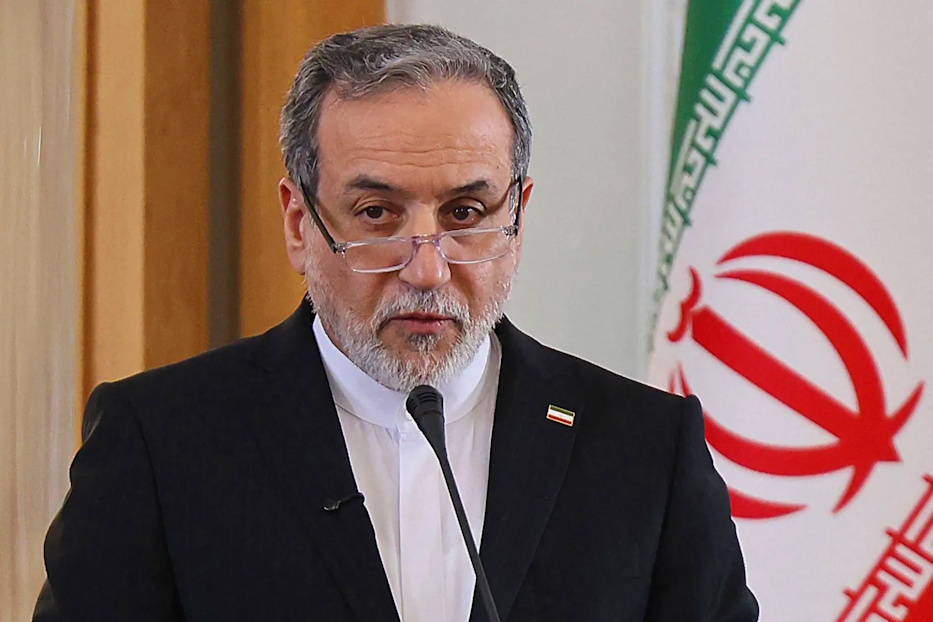
TEHRAN/BEIJING/WASHINGTON – Iran will only accept “a fair and comprehensive agreement” in any negotiations with the United States aimed at ending the widening Middle East conflict, Foreign Minister Abbas Araghchi said on Wednesday. His remarks came shortly after former President Donald Trump claimed “great progress” had been made toward a final deal.
Speaking to reporters in Beijing following a meeting with China’s top diplomat, Wang Yi, Araghchi struck a cautious but firm tone. “We will do our best to protect our legitimate rights and interests in the negotiations,” he said, according to Iranian state media. “We only accept a fair and comprehensive agreement.”
Araghchi did not directly address Trump’s recent offer to temporarily pause U.S. naval escort operations in the Strait of Hormuz—a gesture Trump described as an incentive to facilitate a breakthrough between the two long-standing adversaries.
The Strait Crisis: A Chokehold on Global Energy
The Strait of Hormuz, a vital waterway through which approximately 20% of the world’s oil supplies normally pass, has been effectively closed since the outbreak of hostilities on February 28. The conflict began with coordinated U.S. and Israeli airstrikes against Iranian military and nuclear-related targets, prompting Tehran to retaliate by mining the strait and deploying swarms of drones, missiles, and fast-attack craft.
The closure has triggered a global energy crisis, sending fuel prices soaring and straining economies worldwide. In response, the United States has blockaded Iranian ports and launched “Project Freedom,” a military-led effort to escort commercial vessels through the strait under heavy guard.
In a post on his Truth Social platform, Trump outlined a potential diplomatic opening: “We have mutually agreed that, while the Blockade will remain in full force and effect, Project Freedom … will be paused for a short period of time to see whether or not the Agreement can be finalized and signed.”
Market Reaction and Uncertainty
Following Trump’s announcement, oil prices extended their declines. Brent crude futures fell another 1.2% to 108.60abarrel,addingtoa4101.06 a barrel, after closing down 3.9% the day before. Despite the dip, prices remain nearly double their pre-conflict levels.
The White House did not immediately respond to requests for comment on what specific progress had been made in talks or how long the proposed pause in naval escorts would last. Earlier on Tuesday, U.S. Secretary of State Marco Rubio and other senior administration officials reiterated that Iran must not be allowed to control maritime traffic through the strait.
On-the-Ground Hostilities and a Fragile Ceasefire
The U.S. military reported on Monday that it had destroyed several small Iranian attack boats, as well as cruise missiles and drones, in recent clashes. Despite the ongoing tensions, a fragile ceasefire brokered four weeks ago through Qatari and Omani intermediaries has so far held, offering a narrow window for diplomacy.
Trump: Iran Wants Peace, Has ‘Peashooters’ Left
Speaking to reporters in the Oval Office, Trump struck an alternately dismissive and optimistic tone. “Iran’s military has been reduced to firing peashooters,” he said, claiming that Tehran’s aggressive public rhetoric belies its genuine desire for peace. “Great progress has been made toward a Complete and Final Agreement with Representatives of Iran,” he wrote on Truth Social earlier in the day.
The conflict, which has killed thousands and spread beyond Iran’s borders to Lebanon, the Gulf states, and Yemen, has also roiled the global economy. The head of the International Monetary Fund warned on Tuesday that even if the fighting ended immediately, it would take three to four months to manage the economic fallout, including supply chain disruptions and energy market volatility.
Domestic Pressures and Stakes for Washington
The crisis is increasingly becoming a political liability for the Trump administration ahead of crucial midterm elections in November. Rising gasoline prices already a flashpoint for American voters are threatening to erode support among key swing-state constituencies.
Trump has consistently justified the U.S.-Israeli military campaign as necessary to eliminate what he calls “imminent threats” from Iran, specifically citing Tehran’s nuclear and ballistic missile programs, as well as its financial and tactical support for Hamas and Hezbollah militias.
Iran, for its part, has denounced the attacks as a violation of its sovereignty. Tehran maintains that, as a signatory to the Nuclear Non-Proliferation Treaty (NPT), it retains the right to develop nuclear technology for peaceful purposes, including uranium enrichment.
Diplomacy Stalled
Diplomatic efforts to end the conflict have so far yielded little tangible result. U.S. and Iranian officials have held only one round of face-to-face peace talks, held in Oman last month. Subsequent attempts to arrange further meetings have failed, with each side accusing the other of bad faith and maximalist demands.
As the ceasefire holds for now, the coming days will be critical in determining whether Trump’s claimed “great progress” can translate into a verifiable agreement or whether the pause in hostilities proves to be another prelude to renewed escalation.
زموږ انګلیسي ویبپاڼه:

Support Dawat Media Center
If there were ever a time to join us, it is now. Every contribution, however big or small, powers our journalism and sustains our future. Support the Dawat Media Center from as little as $/€10 – it only takes a minute. If you can, please consider supporting us with a regular amount each month. Thank you
DNB Bank AC # 0530 2294668
Account for international payments: NO15 0530 2294 668
Vipps: #557320

Comments are closed.